
Juicing and blending are two popular ways to enjoy fruits and vegetables, but they offer different benefits. Juicing vs blending comes down to differences in fibre content, digestion, and nutrient absorption. Understanding these key differences can help you choose the option that best fits your health goals.
Juicing Vs Blending: Key Differences Explained
This article will guide you through the practical and scientific differences between juicing and blending so you can decide what works for your lifestyle and health goals. You’ll get clear comparisons, actionable tips, device choices, and realistic expectations about nutrients, fiber, digestion, and convenience.
What is Juicing?
Juicing separates the liquid from fruits and vegetables, giving you a concentrated beverage of vitamins, minerals, and plant compounds. You’ll be left with a smooth, pulp-free drink that’s quick to consume and easy to digest.
How Juicers Work
Juicers use mechanisms like centrifugal shredding or slow cold-pressing to extract liquid and leave the fiber behind as pulp. You’ll find that method matters: cold-press juicers preserve more nutrients and cause less oxidation than high-speed centrifugal models.
Types of Juicers
You’ll encounter a few main types of juicers: centrifugal, masticating (slow), and triturating (twin-gear). Each has strengths and weaknesses around yield, nutrient retention, noise, and cost.
- Centrifugal: fast and generally inexpensive, but can heat the juice and cause rapid oxidation.
- Masticating: slower, quieter, and often yields more juice with better nutrient preservation.
- Triturating: often yields the most juice and best nutrient retention, good for leafy greens and wheatgrass.
What is Blending?
Blending pulverizes whole fruits and vegetables into a thick beverage that retains all the fiber. You’ll get smoothies that include pulp, skin, and seeds depending on what you blend.
How Blenders Work
Blenders use fast-spinning blades to break down fiber and cell walls, creating a homogeneous mixture. High-speed blenders can extract nutrients more effectively from tough ingredients and create very smooth textures.
Types of Blenders
You’ll choose among standard countertop blenders, high-speed blenders, and personal/immersion blenders. High-speed models handle nuts, seeds, and fibrous greens best, while personal blenders are convenient for single servings and portability.
Quick Comparison Table
This table gives you a fast view of the primary differences, which can help you decide at a glance.
| Feature | Juicing | Blending |
|---|---|---|
| Fiber content | Low (most removed) | High (all retained) |
| Texture | Thin, smooth, pulp-free | Thick, smoothie-like |
| Nutrient concentration | High for water-soluble nutrients per volume | Lower per volume but includes fiber-bound nutrients |
| Satiety | Less filling | More filling |
| Speed of digestion | Rapid | Slower |
| Best for | Rapid nutrient delivery, detox protocols | Meal replacement, weight management |
| Equipment | Juicer (centrifugal, masticating, triturating) | Blender (standard, high-speed) |
| Prep & cleanup | More parts, can be time-consuming | Fewer parts, generally easier cleanup |
| Storage | Shorter shelf life | Typically longer shelf life if refrigerated |
Nutrients and Bioavailability
You’ll want to know what you’re actually getting from each method because the way you process produce changes nutrient availability.
Vitamins and Minerals
Juicing concentrates many water-soluble vitamins (like vitamin C and B vitamins) into the liquid, so per ounce you may get more of those nutrients than in an equal volume of a smoothie. When you blend, those vitamins remain but are diluted by the retained fiber and bulk.
Phytonutrients and Antioxidants
Both methods preserve phytonutrients, but the type and accessibility can change. Blending leaves more of the plant’s structural components intact, which can preserve certain phytonutrients bound to fiber. Juicing can make some antioxidants more readily absorbable because cell walls are more completely broken and the fiber is removed.
Enzymes
You’ll hear claims about enzymes being preserved in raw juices and smoothies. In practice, enzymes are sensitive to heat and time; cold-press juicing and low-heat blending help retain more enzymes than high-heat processing. Still, enzymes in food contribute less to human digestion than your body’s own digestive enzymes.
Fiber: The Big Difference
Fiber is the most significant nutritional difference between juicing and blending, and it affects everything from digestion to blood sugar.
Soluble vs Insoluble Fiber
When you blend, you keep both soluble and insoluble fiber, which slows digestion and stabilizes blood sugar. Juicing removes most insoluble fiber and significantly reduces the total fiber content, which can cause faster absorption of sugars.
How Fiber Affects Satiety and Gut Health
If you want to stay full longer and promote healthy bowel movements and gut microbiome diversity, blending is generally the better choice. Juices may be less satisfying, which can lead to additional snacking or hunger soon after drinking.
Blood Sugar and Glycemic Impact
You’ll notice different effects on blood sugar depending on whether you juice or blend.
Juicing and Blood Sugar Spikes
Because juices lack fiber, the natural sugars they contain can be absorbed quickly, potentially causing a faster rise in blood glucose. If you have insulin resistance, diabetes, or are sensitive to sugar spikes, you’ll want to be cautious with fruit-heavy juices.
Blending and Glycemic Control
Blended smoothies typically have a slower, more moderated glycemic response due to the presence of fiber. Pairing a smoothie with protein or healthy fats further stabilizes blood sugar.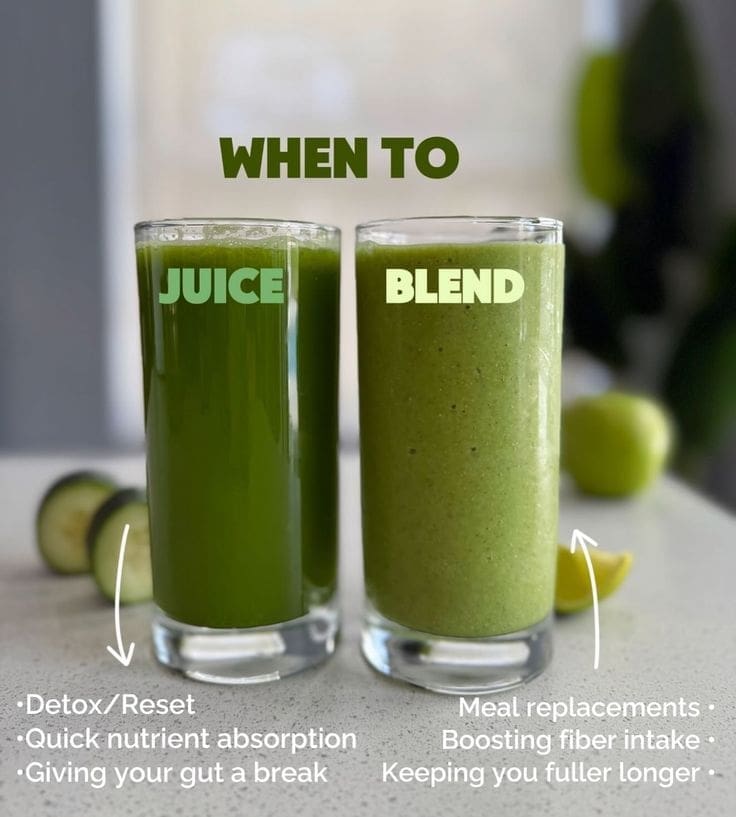
Calories, Satiety, and Weight Management
You’ll need to consider how each method fits into your calorie goals and how it affects hunger.
Juice for Low-Calorie, High-Nutrient Doses
Juices let you consume a large variety of produce in a small volume, which can be good if you aim for concentrated nutrients with fewer calories — but because juices aren’t filling, you might consume more calories later.
Smoothies as Meal Replacements
Blended smoothies can be calorie-dense and filling, making them a good meal replacement when you add protein, healthy fats, and fiber. This can help you control overall calorie intake if you use smoothies to replace a meal without adding excessive sugars.
Taste and Texture Considerations
Taste and texture matter because they determine whether you’ll stick with the habit.
Juices Taste Lighter and Brighter
You’ll find juices to have a bright, pure taste because all flavors are concentrated without the bulk of fiber. If you enjoy crisp, refreshing drinks, juicing will likely appeal to you.
Smoothies Are Creamier and More Versatile
Blends offer creamy, satisfying textures and allow you to include ingredients like yogurt, nut butter, or oats for complex flavors and textures that feel more like a meal.
Cost, Waste, and Yield
You’ll want to think about cost-efficiency and how much waste you’re willing to generate.
Juicing Often Produces More Waste
Since juicing discards the pulp, you may need more raw produce to make the same volume of drink compared to blending. This increases cost and food waste unless you find ways to reuse the pulp.
Blending Makes Fuller Use of Ingredients
When you blend, you use the whole fruit or vegetable, which is generally more economical and reduces waste. You’ll get more bulk per ingredient, making smoothies cost-effective for meal replacement.
Pulp: Uses and Ideas
You’ll likely end up with pulp if you juice, and knowing how to reuse it will save money and reduce waste.
Ways to Use Juice Pulp
You can add pulp to soups, stews, muffins, crackers, compost, or crackers. Pulp can also be used in veggie burgers, granola, or as a base for crackers and baked goods, giving you an extra fiber boost.
Storage and Shelf Life
How long your beverage lasts depends on method and storage.
Juice Shelf Life
Fresh juice oxidizes quickly. Cold-press juices can last up to 72 hours refrigerated in airtight, vacuum-sealed containers, but taste and nutrient levels decline over time. Centrifugal juice oxidizes faster and is best consumed immediately.
Smoothie Shelf Life
Smoothies keep a little longer but still best when fresh. You can refrigerate for 24–48 hours, though texture separation and nutrient loss occur. Freezing is an option for smoothies but can alter texture upon thawing.
Cleaning and Prep Time
You’ll appreciate how time-consuming each method can be.
Juicer Cleanup
You’ll assemble and clean multiple parts — screens, pulp containers, filters — which can be time-consuming. Masticating and centrifugal juicers often require more hands-on cleaning than simple blenders.
Blender Cleanup
Blenders usually have fewer parts and can often be rinsed and run briefly with water and a little dish soap to self-clean. High-speed blenders may still require disassembly for thorough cleaning, but overall they’re often quicker.
Safety and Food Handling
You’ll want to maintain safe practices to reduce foodborne illness and oxidation.
Produce Safety
Wash produce thoroughly to remove pesticides and soil. Certain greens are more prone to microbial contamination, so proper refrigeration and prompt consumption are important for both juices and smoothies.
Pasteurization and Raw Juices
If you’re buying commercial juice, check whether it’s been pasteurized. Raw cold-pressed juices retain more nutrients but have a shorter shelf life and higher risk of microbial growth. Balance freshness with safety needs.
Who Should Prefer Juicing?
Juicing can be useful for specific goals and conditions.
- If you need a concentrated source of liquid nutrients and find it hard to eat enough produce, juicing can help.
- If you’re on a short-term medical or cleansing regimen approved by a professional, juicing may be advised.
- If you have certain digestive issues where fiber causes discomfort, juice may be easier to tolerate.
Always consult your healthcare provider before making dramatic changes, especially if you have a medical condition.
Who Should Prefer Blending?
Blending fits many everyday needs and long-term goals.
- If you want a satisfying meal replacement that supports weight management and stable blood sugar, blending is usually better.
- If you value fiber for gut health and fullness, choose smoothies.
- If you prefer minimal food waste and cost efficiency, blending is more economical.
Combining Juicing and Blending
You don’t have to pick just one; you can combine both to suit different moments in your day. You might start with a nutrient-dense green juice in the morning and enjoy a protein-rich smoothie for lunch. Combining allows you to benefit from quick nutrient delivery and satisfying fiber throughout the day.
Best Produce for Juicing vs Blending
Not all produce performs equally well in juice or smoothies. Here’s a guide to help you choose.
| Produce | Best for Juicing | Best for Blending | Notes |
|---|---|---|---|
| Apples | Yes | Yes | Adds sweetness; blend for fiber |
| Carrots | Yes | Yes | Juicing gives bright flavor; blending keeps fiber |
| Leafy Greens (spinach, kale) | Yes (especially in masticating juicers) | Yes (best in high-speed blenders) | Greens can be strong-tasting in juice; smoothies tame bitterness |
| Beets | Yes | Yes | Juice for concentrated flavor; blend with other ingredients to mellow |
| Citrus (orange, lemon) | Yes | Yes | Juice provides bright acidity; blends add pulp and pith |
| Berries | Can be juiced but yields less | Excellent for blending | Blends retain seeds and fiber |
| Celery | Yes | Yes | Popular as juice; blends can be fibrous and stringy |
| Avocado | No | Yes | Not suitable for juicing; great for creamy smoothies |
| Nuts & Seeds | No | Yes (soaked or ground) | Adds protein and healthy fats only in smoothies |
Recipes and Serving Ideas
You’ll want recipes you can actually make. Here are practical examples for each method.
Green Juice (Cold-Press Style)
Ingredients: cucumber, celery, green apple, lemon, spinach, ginger.
Method: Cold-press or masticate all ingredients, strain if needed, and serve immediately over ice.
Morning Smoothie (Balanced Meal)
Ingredients: banana, spinach, frozen berries, Greek yogurt or plant-based protein, almond butter, water or unsweetened milk.
Method: Blend until smooth. Adjust thickness with liquid. This gives you fiber, protein, and healthy fats to keep you full.
Beet-Carrot Immunity Juice
Ingredients: beets, carrots, orange, ginger.
Method: Juice and serve chilled. This concentrated option supplies beta-carotene, vitamin C, and antioxidants.
Oatmeal Smoothie (Energy Boost)
Ingredients: soaked oats, banana, cinnamon, chia seeds, milk.
Method: Blend for a thick, meal-like smoothie with complex carbs and fiber.
Tips for Buying Equipment
You’ll want to choose appliances that fit your budget, counter space, and lifestyle.
- For occasional use and low budget, a decent centrifugal juicer or a basic blender works fine.
- If you plan daily use and prioritize nutrient retention, invest in a masticating juicer or a high-speed blender (like a counter high-powered model).
- Consider warranties, ease of cleaning, and available parts when choosing.
Common Myths and Facts
You’ll encounter many claims, so here’s a reality check.
- Myth: Juicing removes all nutrients. Fact: Juices concentrate many nutrients, but lose fiber.
- Myth: Smoothies are always healthy. Fact: Smoothies can be high in sugar and calories if made with too much fruit or sweeteners.
- Myth: Juices detox your body. Fact: Your liver and kidneys primarily detoxify; juices can support nutrient intake but aren’t a magic detox.
Practical Daily Use and Scheduling
You’ll benefit from matching method to moment of day.
- Morning: A small juice can provide a quick nutrient boost if you don’t have appetite for solid food. A blended breakfast is better if you need a meal replacement.
- Midday: Smoothies make great lunch replacements or snack substitutes with protein and healthy fats.
- Pre/Post-Workout: Juices can offer quick-absorbing carbohydrates pre-workout; smoothies with protein are better post-workout for recovery.
Environmental Considerations
You’ll want to think about the footprint of your choice.
- Juicing often creates more organic waste in the form of pulp. Reusing pulp or composting can mitigate this.
- Blending reduces waste by using whole produce, which can be more sustainable.
Cost-Benefit Summary Table
This table helps you weigh costs, time, and outcomes.
| Factor | Juicing | Blending |
|---|---|---|
| Upfront equipment cost | Moderate to high | Low to high |
| Ongoing produce cost | Often higher | Often lower |
| Time to prepare/clean | Longer | Shorter |
| Waste generated | Higher (pulp) | Lower |
| Nutrient density per ounce | Higher (liquids) | Lower per ounce but more complete overall |
| Suitability as meal | Low | High |
Troubleshooting Common Problems
You’ll likely run into some issues as you begin.
- Juice tastes bitter: Add apple, cucumber, or lemon to balance.
- Smoothie too thick: Add water or unsweetened milk.
- Foam on juice: Use a cold-press juicer or skim foam before drinking.
- Blender won’t process greens: Add more liquid, chop greens, or blend with softer fruits first.
When to Consult a Professional
You’ll want personalized advice if you have medical conditions, nutrient deficiencies, or are considering a major dietary change.
- Talk to a registered dietitian for macronutrient balance.
- Consult a physician if you have diabetes, kidney disease, or other chronic conditions.
- If you’re pregnant or breastfeeding, get tailored guidance before starting restrictive juicing protocols.
Final Thoughts and Practical Takeaways
You’ll find that neither juicing nor blending is universally better; each has its place. Juicing gives you quick nutrient delivery and a bright, concentrated drink, while blending offers a filling, fiber-rich option that’s more sustainable and likely better for long-term health and weight management. Mix and match based on your goals, and use the tips here to get the most from both methods.
If you want, you can tell me your goals (weight loss, energy, gut health, convenience) and the type of equipment you have, and I’ll recommend a practical plan and a few recipes tailored to you.