
Juicing for Anti Inflammation
Juicing for Anti Inflammation can be a practical way to support your routine—especially if you’re looking to reduce joint discomfort, improve hydration, and increase your intake of nutrient-rich vegetables.
If you’re here, you want simple recipes and clear guidance you can actually follow—not complicated advice.
Who This Guide Is For
This guide is for anyone who wants:
- Simple, anti-inflammatory juice recipes
- Better daily energy and recovery
- Support for joint health and overall wellbeing
What Actually Works
Juicing works best when it’s done correctly:
- Focus on low-sugar, vegetable-based ingredients
- Keep portions controlled
- Use it alongside balanced meals
Ingredients like turmeric, ginger, leafy greens, and small amounts of fruit can support the body’s natural response to inflammation.
How to Use This Guide
- Start with simple recipes
- Keep your routine consistent
- Adjust based on how your body responds
Juicing is not a quick fix—it’s a simple tool that works when used consistently as part of a balanced routine.
Juicing for Anti Inflammation: How It Works
Inflammation is the body’s natural response to injury or stress.
- Acute inflammation is short-term and protective
- Chronic inflammation is ongoing and linked to issues like joint pain and metabolic problems
How Anti-Inflammatory Juices Help
- Plant compounds from ingredients like turmeric and ginger support the body’s natural balance
- Hydration helps circulation and can reduce stiffness
- Low-sugar juices help avoid blood sugar spikes that can worsen inflammation
Simple 3-Step Approach
- Choose low-sugar ingredients
Leafy greens with a small amount of fruit or berries - Add anti-inflammatory ingredients
Turmeric with black pepper or fresh ginger - Control portions
Keep servings around 150–250 ml and pair with protein or healthy fat
Why Juicing for Anti Inflammation Works
- Vegetable-based juices provide nutrients without excess sugar
- Small amounts of key ingredients support overall balance
- Pairing with food helps keep energy steady
Important Reminder
Juicing works best when combined with a balanced diet.
- Focus on whole foods alongside juice
- Include protein and healthy fats
- Don’t rely on juice alone
This keeps juicing simple, effective, and easy to maintain long term.
What Makes a Good Anti-Inflammatory Juice
A good anti-inflammatory juice is simple, low in sugar, and built around nutrient-dense ingredients.
What to Include
- Low-sugar vegetables
Leafy greens, cucumber, celery - Anti-inflammatory ingredients
Turmeric, ginger - High nutrient density
Dark leafy greens and fresh produce - Hydration support
Cucumber, celery, lemon - Controlled portions
Around 150–250 ml
Red Flags to Avoid
- Fruit-only juices
- Large servings (over 300 ml)
- Juice cleanses replacing meals
- Ignoring medication interactions
These are the main reasons people run into problems.
Glycaemic Index vs Glycaemic Load
- GI shows how quickly a food raises blood sugar
- GL considers portion size, which matters more in practice
Simple idea:
- Lower sugar ingredients = lower impact
- Larger portions = higher impact
Example:
- Apple-based juice → lower impact
- Pineapple-heavy juice → higher impact
What to Focus On
- Keep it vegetable-based
- Limit fruit
- Control portions
- Pair with food when needed
This helps keep blood sugar stable while still getting the benefits.
Actionable 6-Item Juicer Checklist
- Choose vegetables for each juice (spinach, cucumber, celery)
- Limit fruit to a small portion or ½ cup berries
- Add an anti-inflammatory ingredient (turmeric or ginger)
- Include lemon or cucumber for hydration
- Optionally add healthy fat (olive oil) or pair with nuts
- Keep servings around 150–250 ml and monitor blood sugar if needed
Juices work best when they replace a snack, not a balanced meal.
If you manage blood sugar or take medication, follow your usual plan and adjust carefully.
Top Ingredients and the Science
These are the core ingredients for Juicing for Anti Inflammation. Keep it simple and use them consistently.
Key Ingredients Overview
| Ingredient | Benefit | Suggested Use |
|---|---|---|
| Turmeric | Supports anti-inflammatory response | Small piece or ¼–½ tsp |
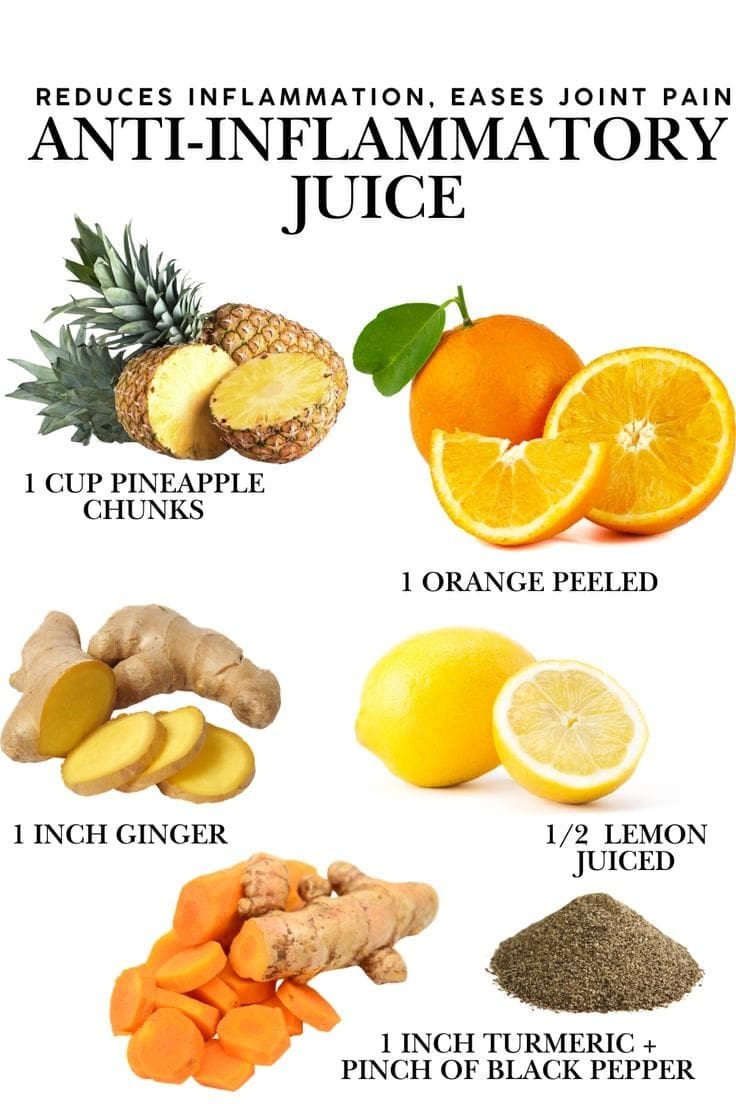
| Ginger | Helps reduce discomfort and supports digestion | 1 inch fresh |
| Pineapple | Supports recovery (use sparingly) | Small portion only |
| Spinach / Greens | Nutrient-dense, low sugar | 1–2 cups |
| Cucumber / Celery | Hydration and low calorie | Base ingredients |
How They Work (Simple)
- Turmeric supports the body’s natural response to inflammation
- Ginger helps with digestion and muscle recovery
- Pineapple can support recovery but is easy to overuse due to sugar
- Leafy greens provide key nutrients with minimal sugar
- Cucumber and celery help with hydration and balance
Important Tips
- Add black pepper with turmeric to improve absorption
- Keep fruit portions small
- Focus on vegetables as the base
- Use these ingredients regularly rather than in large amounts
Safety Notes
- Be cautious with turmeric and ginger if you take blood thinners
- Keep pineapple portions controlled
- Adjust based on your response
Juicing for Anti Inflammation: Proven Recipes
These recipes focus on low sugar, anti-inflammatory ingredients, and controlled portions.
Each makes about 120–200 ml. Pair with protein or healthy fats if needed.
Green Anti-Inflammatory
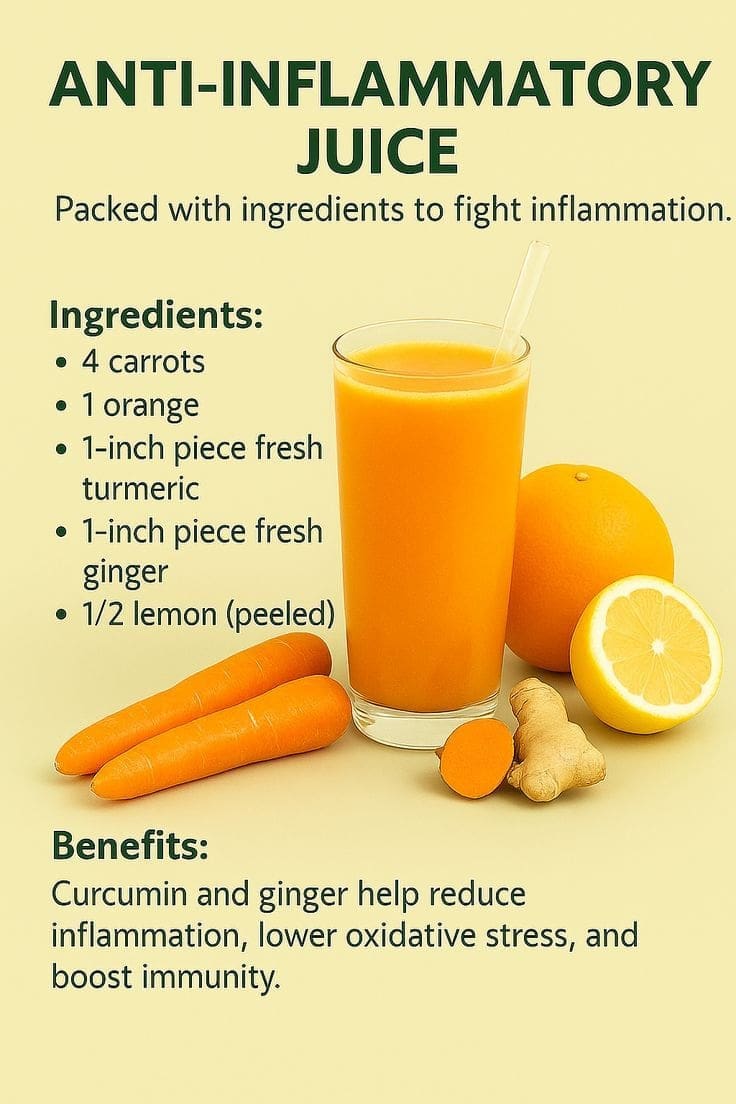
- Spinach, cucumber, small amount of green apple, ginger, lemon
- Carbs: ~8–10g
- Benefit: Low-sugar, hydrating, supports inflammation
Turmeric Glow Shot
- Turmeric, carrot, lemon, black pepper
- Carbs: ~6–8g
- Benefit: Anti-inflammatory support
- Use: Small shot (60–90 ml)
Pineapple Bromelain Lift
- Small amount of pineapple, cucumber, celery
- Carbs: ~12–14g
- Benefit: Supports recovery
- Note: Keep pineapple limited
Cucumber-Celery Hydrator
- Cucumber, celery, lemon
- Carbs: ~4–6g
- Benefit: Hydration with minimal sugar
Spinach and Fennel Low-Sugar
- Spinach, fennel, small amount of apple, ginger
- Carbs: ~7–9g
- Benefit: Digestive support
Evening Calm
- Spinach, small amount of beetroot, turmeric, lemon
- Carbs: ~10–12g
- Benefit: Supports recovery and relaxation
Ginger Citrus Shot
- Ginger, small citrus portion
- Carbs: ~6–9g
- Benefit: Strong anti-inflammatory support
- Note: Avoid grapefruit if on medication
Beet and Turmeric Recovery
- Beetroot, carrot, turmeric
- Carbs: ~12–14g
- Benefit: Supports exercise recovery
- Tip: Keep portions small
Celery and Apple Slim
- Celery, small amount of apple, lemon
- Carbs: ~9–11g
- Benefit: Balanced, mild and easy to drink
Anti-Inflammatory Berry Blend
- Blueberries, spinach, cucumber
- Carbs: ~10–12g
- Benefit: Antioxidant support
- Tip: Add chia on the side if needed
Practical Notes
- better for lower blood sugar impact
- Keep portions controlled
- Pair with protein or fats if needed
- Use consistently rather than increasing quantity
Comparison of Juicer Types and Pro Techniques
The juicer you choose affects quality, ease of use, and consistency.
Juicer Types (Simple Comparison)
| Type | Yield | Oxidation | Cleaning | Best Use |
|---|---|---|---|---|
| Centrifugal | Moderate | Higher | Quick | Fast, simple juices |
| Masticating | Higher | Lower | Moderate | Greens, turmeric, better quality |
| Triturating | Highest | Lowest | Longer | Maximum extraction, advanced use |
Which One Should You Choose?
- Centrifugal: best for speed and convenience
- Masticating: best overall balance for home use
- Triturating: only if you want maximum extraction and don’t mind extra effort
For most people, masticating is the best option.
Simple Techniques That Work
- Add softer greens first, then harder ingredients
- Alternate ingredients to improve flow
- Use cucumber or celery to push ingredients through
These reduce clogging and improve juice quality.
Improve Results
- Rinse with cold water between batches
- Save some pulp and add 1–2 tablespoons back if needed
- Keep portions controlled
Storage and Cleaning Tips
- Clean your juicer immediately after use
- Turmeric can stain—wash straight away
- Store juice in airtight glass containers
- Keep refrigerated and use within 24–48 hours
- Fill containers fully to reduce air exposure
Sugar, Fibre and Blood Sugar Control
Juicing affects blood sugar mainly because it removes fibre. Without fibre, sugar is absorbed faster, which can lead to spikes.
Why Fibre Matters
- Whole foods → slower digestion
- Juice → faster absorption
- Result → quicker rise in blood sugar
How to Reduce Blood Sugar Spikes
- Keep portions around 150–250 ml
- Limit fruit to small amounts
- Pair juice with protein or healthy fat
- Add a little pulp back if possible
These simple steps make a big difference.
Simple GI vs GL Explanation
- GI (Glycaemic Index): how fast sugar enters the bloodstream
- GL (Glycaemic Load): how much sugar is in the portion
Easy rule:
- Lower sugar ingredients = lower impact
- Bigger portions = higher impact
Diabetes-Friendly Rules
- Test blood sugar after new juices
- Start with small servings
- Avoid fruit-heavy combinations
- Adjust based on your response
Medication Interactions
Be careful if you use:
- Blood thinners (turmeric, ginger)
- Diabetes medication (can affect glucose levels)
- Other prescribed treatments
Always check before making changes.
What Actually Works
- Vegetable-based juices
- Small portions
- Consistent tracking
- Pairing with meals
Safety, Juice Cleanses, Long-Term Benefits and Realistic Expectations
Juicing can help—but only when used properly. Most problems come from overdoing it or relying on juice alone.
Juice Cleanse Reality
- Short-term use may improve hydration and vegetable intake
- Juice-only cleanses are not a long-term solution
- Results usually come from reduced calories, not “detox”
Long-Term Benefits (When Done Properly)
- Increased vegetable intake
- Better nutrient balance
- Support for overall routine
These benefits only happen when juicing is part of a balanced diet.
Safety Checklist
- Limit fruit-heavy juices
- Keep portions around 150–250 ml
- Don’t replace meals—especially if on medication
Watch for:
- Dizziness
- Unusual bruising or bleeding
- Digestive issues
If symptoms appear, stop and review.
Simple Long-Term Plan
- Use 1–2 juices per week
- Focus on vegetable-based recipes
- Track how you feel and adjust
What Actually Matters
- Consistency over time
- Balanced meals alongside juice
- Paying attention to your body
7-Day Anti-Inflammatory Juicing Plan
This is a simple, practical plan you can follow and adjust based on your results.
Day 1 (Morning)
Green Anti-Inflammatory (200 ml) + almonds
- Goal: establish baseline (energy, stiffness)
Day 2 (Morning)
Turmeric Glow Shot (60–90 ml)
- Goal: check digestion and tolerance
Day 3 (Pre-Workout or Morning)
Cucumber-Celery Hydrator (200 ml)
- Goal: support hydration and movement
Day 4 (Morning)
Pineapple Bromelain Lift (150 ml) + protein snack
- Goal: monitor response (especially blood sugar if relevant)
Day 5 (Evening)
Evening Calm (200 ml)
- Goal: support recovery and sleep
Day 6 (Morning)
Spinach and Fennel Low-Sugar (200 ml)
- Goal: digestion and reduced stiffness
Day 7 (Morning)
Berry Blend or Green Juice (200 ml) + nuts
- Goal: overall weekly check
What to Track
- Energy levels
- Joint stiffness or discomfort
- Weight (weekly)
- Blood sugar (if relevant)
Simple Adjustments
- If sugar feels high → reduce fruit
- If digestion is off → reduce ginger or pineapple
- If results are good → repeat the plan
Prep Tips
- Wash and prep ingredients in advance
- Store portions ready to use
- Keep recipes simple and repeatable
Special Populations: Womens Health, Men Over 40 and Older Adults
Juicing can be adjusted depending on individual needs. Keep it simple and practical.
Womens Health
- Focus on magnesium-rich greens (spinach, kale)
- Use turmeric for anti-inflammatory support
- Pair juice with protein for better balance
Keep portions controlled and adjust based on symptoms.
Men Over 40
- Prioritise low-sugar, vegetable-based juices
- Include small amounts of ginger and turmeric
- Pair with healthy fats or protein
Keep routines simple so they’re easy to maintain.
Older Adults
- Smaller servings (100–150 ml)
- Easier nutrient intake if chewing is difficult
- Pair with protein to support strength
Be mindful of medication interactions.
Simple Adjustments That Help
- Use smaller, more frequent servings if needed
- Keep recipes consistent
- Monitor how your body responds
5-Step Action Plan
- Choose a juicer that fits your routine
- Buy core ingredients: spinach, cucumber, celery, ginger, turmeric, lemon
- Start with 1–2 simple recipes
- Keep portions around 150–250 ml
- Track how your body responds
Basic Shopping List
Fridge:
Spinach, cucumber, celery, kale, lemons, ginger, turmeric, berries, green apples
Pantry:
Black pepper, olive oil, nuts, glass bottles
What to Track
- Energy levels
- Joint discomfort
- Weight (weekly)
- Blood sugar (if relevant)
Keep It Simple
- Use juice a few times per week
- Focus on vegetable-based recipes
- Pair with balanced meals
Consistency matters more than complexity.
Key Takeaways
- Stick to low-sugar, vegetable-based juices
- Keep portions controlled
- Use juicing as support—not a replacement
- Monitor your response and adjust
- Keep your routine simple and repeatable
Recommended Book:
As an Amazon Associate, we earn from qualifying purchases
Disclaimer
This content is for informational and educational purposes only and is not intended as medical advice. Always consult a qualified healthcare professional before making changes to your diet, especially if you have a medical condition, are pregnant, or are taking medication