
Juicing For Beginners With Diabetes focuses on making smart ingredient choices and portion control to avoid blood sugar spikes. With the right approach, juicing can be used as a supportive habit rather than a risk to glucose management.
Juicing For Beginners With Diabetes Explained
Juicing can feel tempting because it promises concentrated nutrients and an easy way to increase your intake of fruits and vegetables. If you have diabetes, you need to understand how juicing affects blood sugar, how to choose ingredients that support stable glucose, and how to integrate juices into a balanced eating plan. This guide gives you clear, practical information so you can make informed choices.
What is juicing?
Juicing means extracting liquid from fruits and vegetables while discarding most of the fiber and pulp. The result is a clear or cloudy liquid that contains vitamins, minerals, and plant compounds in a concentrated form. You can make fresh juice at home using a centrifugal juicer, masticating juicer, or even a blender followed by straining.
Many people start Juicing For Beginners With Diabetes by limiting fruit and prioritizing low-glycaemic ingredients.
How juicing differs from blending (smoothies)
When you blend fruits and vegetables into smoothies, you keep their fiber intact. With juicing, most insoluble fiber is removed, leaving mostly water, sugars, and soluble nutrients. That difference matters because fiber slows digestion and helps control blood sugar responses.
Why juicing is a special concern for people with diabetes
You need to manage carbohydrate intake carefully to avoid rapid spikes in blood glucose. Because juice removes fiber and concentrates the sugars from fruits and some vegetables, it can produce faster and higher blood glucose responses than eating whole produce. Understanding this helps you reduce risk and use juicing safely.
How carbohydrates in juice affect blood glucose
Carbohydrates in juice come mainly from simple sugars such as glucose, fructose, and sucrose. Without fiber to slow absorption, these sugars can enter your bloodstream quickly. The glycemic load (how much and how quickly food raises blood sugar) tends to be higher for juice compared with whole foods containing the same ingredients.
Why you should monitor portion size and frequency
Portion size is crucial. A small glass of low-sugar vegetable juice may be acceptable as an occasional addition to a meal, while a large fruit-heavy juice could cause a significant blood sugar spike. Frequency matters too — consuming multiple juices a day without balancing with protein, fat, or fiber can make blood glucose harder to control.
Health benefits of juicing (and how they relate to diabetes)
Juicing has some clear benefits when done thoughtfully. It can help increase micronutrient intake, provide hydration, and encourage consumption of vegetables you might otherwise avoid. However, you must weigh these benefits against possible drawbacks for blood sugar control.
Nutrient concentration and variety
Juices can deliver vitamins (like C and A), minerals (like potassium), and phytonutrients (like carotenoids) in a single serving. That can help you get more diverse plant compounds into your diet even if you struggle to eat whole veggies.
Antioxidants and anti-inflammatory compounds
Many vegetables and some fruits are rich in antioxidants and anti-inflammatory compounds. These can support overall health and may help reduce oxidative stress — a concern for people with diabetes who are at increased risk of complications.
Potential downsides: rapid sugar absorption and calorie density
The main downside for diabetes is rapid sugar absorption without fiber, which can spike blood sugar. Juices can also be calorie-dense when made from many high-sugar fruits, which could hamper weight management goals if consumed in large amounts.
Comparing juices: low-sugar vs high-sugar ingredients
Choosing ingredients thoughtfully is the most important step. Favor vegetables and low-sugar fruits, and limit high-sugar additions. The table below gives a practical comparison to help you choose.
| Ingredient category | Good choices (lower sugar) | Use sparingly (higher sugar) |
|---|---|---|
| Leafy greens | Spinach, kale, Swiss chard, Romaine | – |
| Cruciferous vegetables | Broccoli sprouts, cauliflower (small amounts) | – |
| Low-sugar vegetables | Cucumber, celery, zucchini, green bell pepper | – |
| Root vegetables | Small amounts of carrot, beet (limit portion) | Large amounts of carrot, beet |
| Low-sugar fruits | Lemon, lime, green apple (small), berries (limited) | – |
| High-sugar fruits | Banana, mango, pineapple, grapes, orange | – |
| Sweet vegetables | Sweet corn, peas | – |
| Herbs/spices | Ginger, turmeric, mint, parsley | – |
| Add-ins | Unsweetened plant milk (small), water, ice | Honey, agave, fruit juice concentrates |
How to interpret that table for daily juicing
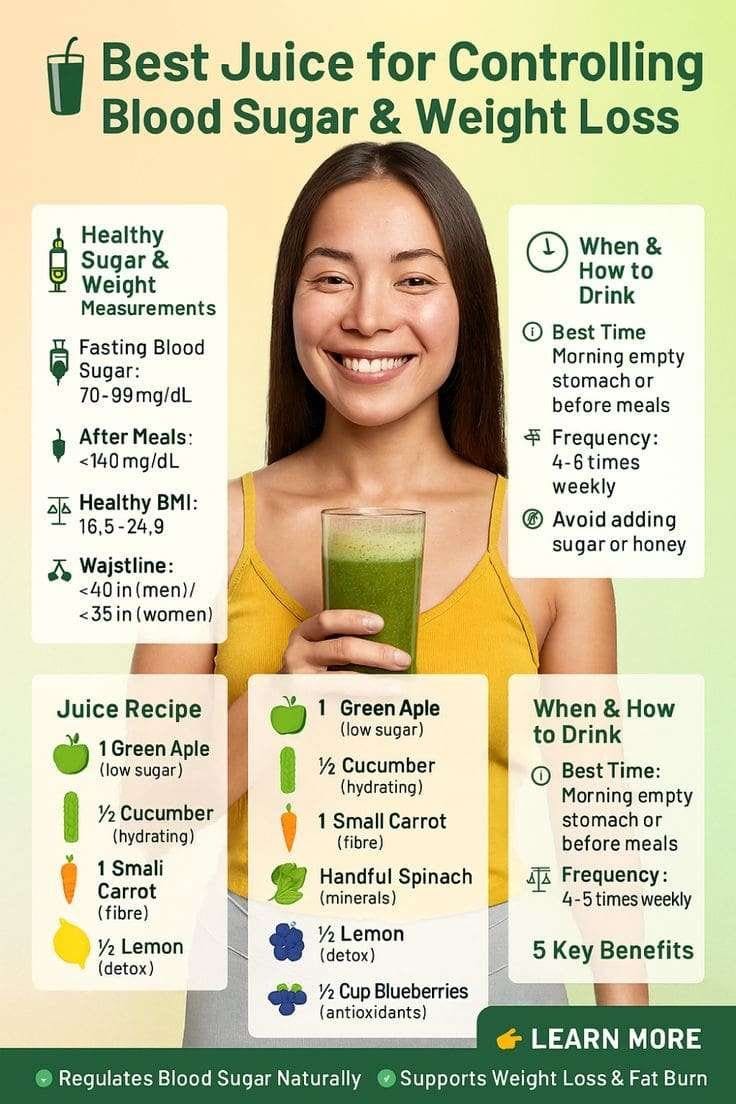
Aim to build juices around leafy greens, cucumber, celery, and a small portion of a low-sugar fruit like green apple or a few berries. Avoid making the juice primarily fruit-based. Adding herbs like mint or parsley enhances flavor without raising sugar.
Glycemic index vs glycemic load: what you need to know
Glycemic index (GI) ranks individual foods by how quickly they raise blood sugar, but it assumes a standard portion. Glycemic load (GL) accounts for both the GI and the amount of carbohydrate in a typical serving. For juice, GL is usually more useful since juices can concentrate carbohydrates; even a low-GI food can have a high GL when consumed in a concentrated form.
Practical example
A medium apple has fiber, slowing absorption and giving a moderate GL. Apples juiced lose most fiber; the same amount of sugar in a glass of apple juice results in a higher GL and a faster blood glucose rise. Always consider both the type of ingredient and the amount used.
Best practices for juicing safely with diabetes
Follow a few simple rules to reduce blood sugar spikes and get benefits from juicing without undue risk.
1. Build juices around vegetables, not fruit
Make at least 70–80% of your juice vegetables. Use a small amount of fruit only for flavor, not as the base. This approach keeps sugar lower and increases micronutrients.
2. Include a protein or healthy fat source with your juice
Drinking juice on its own will produce a faster glucose response than consuming juice as part of a meal with protein or fat. Pair juice with Greek yogurt, a handful of nuts, an ounce of cheese, or a small protein shake to slow absorption.
3. Watch portion sizes
Limit yourself to 4–8 ounces (about 120–240 ml) per serving for most juices. Larger servings significantly increase carbohydrate intake. If glucose control is unstable, start with even smaller portions (2–4 ounces) and test your blood sugar.
4. Time juices around meals, not on an empty stomach
Have your juice with or after a balanced meal rather than first thing in the morning on an empty stomach. Combining it with protein, fat, or fiber reduces glycemic impact.
5. Check blood glucose and adjust
Use your blood glucose meter or continuous glucose monitor (CGM) to test before and 1–2 hours after trying new juice recipes. Track how different combinations affect you personally and adjust ingredients and portion sizes.
6. Avoid added sweeteners
Don’t add honey, agave, sugar, or sweetened syrups. You’ll get all the necessary sweetness from limited fruit if needed.
7. Prefer fresh-made juice and mindful storage
Fresh juice is best, but if you must store it, keep it refrigerated and consume within 24–48 hours. Some nutrients degrade over time, and bacterial growth is a risk. See the storage section below for specifics.
Low-sugar juice recipes for people with diabetes
Here are some practical recipes built on low-sugar vegetables and small amounts of fruit. Each recipe yields roughly 6–8 ounces depending on juicer efficiency. Remember to test your blood sugar and pair the juice with a protein or healthy fat.
| Recipe name | Ingredients | Estimated carbs per serving* |
|---|---|---|
| Green Basic | 2 cups spinach, 1 cucumber, 1 green apple (small), 1/2 lemon | 12–15 g |
| Cucumber-Mint Refresher | 2 cucumbers, handful of mint, 1/4 lime | 5–8 g |
| Celery-Ginger Glow | 6 stalks celery, 1-inch ginger, 1/2 green apple | 8–10 g |
| Beet-Trim (small beet) | 1 small beet, 1 carrot (small), 1/2 apple, squeeze lemon | 18–22 g (use sparingly) |
| Tomato-Veggie | 2 large tomatoes, 1/2 red bell pepper, celery, parsley | 8–12 g |
| Berry-Veg Boost | 1 cup strawberries, 1 cup kale, 1/2 cucumber | 12–14 g |
*Carb estimates vary by produce size and juicer yield. Use nutrition tools for precise counts.
Tips for using these recipes
- If a recipe seems high in carbs for your needs, reduce or remove the fruit and add more leafy greens and cucumber.
- Small beets and carrots add flavor and nutrients but raise carbs; limit their quantity.
- You can dilute concentrated flavors with water or unsweetened iced herbal tea to reduce carb density.
Juicing vs smoothies: which is better for diabetes?
Both have pros and cons. Smoothies keep fiber and generally produce a slower blood glucose response, while juices offer concentrated micronutrients and are often easier to consume for those who dislike chewing vegetables. For blood sugar control, smoothies are usually the safer choice because of preserved fiber.
Quick comparison table
| Feature | Juicing | Smoothies |
|---|---|---|
| Fiber content | Low (most removed) | High (kept in) |
| Blood sugar impact | Faster, higher spikes | Slower, lower spikes |
| Nutrient concentration | High per volume | Moderately high, more filling |
| Satiety | Less filling | More filling |
| Best for | Quick nutrient boost | Meal replacement or snack |
How to add fiber to a juice-like drink
If you want the nutrient density of juices but with more fiber, make a smoothie instead. Alternatively, add a tablespoon of chia seeds or ground flaxseed after juicing to increase soluble fiber and slow digestion.
Equipment choices and what matters
Your choice of equipment influences yield, nutrient retention, and convenience. Two main types are centrifugal and masticating juicers. Blenders can be used for smoothies or to make “whole-juice” by blending then straining less.
Centrifugal juicers
These are faster and less expensive. They use a high-speed blade to separate juice from pulp, but they can introduce heat and oxidation, which may reduce some nutrients and shorten shelf life.
Masticating juicers
These operate more slowly and press produce to extract juice. They often yield more juice, especially from leafy greens, and produce less heat and oxidation. They’re generally better for nutrient retention but cost more and take longer.
Blenders
Blenders keep everything, creating smoothies. You can make green smoothies or blended “juices” and control fiber. High-speed blenders can break down tough fibers for a smoother texture.
Basic equipment checklist
| Item | Why it matters |
|---|---|
| Juicer (centrifugal or masticating) or high-speed blender | Primary tool to make juice or smoothies |
| Fine mesh strainer/cheesecloth (optional) | For filtering blended mixtures to reduce pulp |
| Airtight bottles or jars | For short-term storage in the fridge |
| Cutting board and sharp knife | For prepping produce |
| Measuring cup or food scale | To estimate serving sizes and carb counts |
| Vegetable brush | To clean produce thoroughly |
Food safety and storage
Fresh juice can be more susceptible to microbial growth because of its moisture and nutrient content. Proper handling reduces risk.
Safe handling tips
- Wash produce thoroughly under running water. Use a vegetable brush for firm produce.
- Wash your hands and all equipment before juicing.
- Chill produce and juice before serving when possible.
- Consume fresh juice within 24–48 hours; refrigerate immediately in airtight containers.
- If juice smells off, changes color drastically, or foams unusually, discard it.
How oxidation affects juice
Cutting and juicing expose plant cells to oxygen, which can degrade some vitamins (like vitamin C) and change flavor. Masticating juicers and adding a squeeze of lemon can slow oxidation.
Monitoring glucose and adjusting your approach
Juicing affects individuals differently. You should use objective measurements to guide your choices.
How to test practically
Measure fasting glucose, then try a standard serving of a new juice recipe. Check blood glucose 30, 60, and 120 minutes after consumption to see peak and return to baseline. Record results and note how you felt (energy, hunger, symptoms).
What to do if your glucose spikes
- Reduce portion size.
- Swap out some fruit for additional leafy greens or cucumber.
- Add protein or healthy fat with your juice.
- Consider switching to smoothies for that particular recipe.
- Talk with your healthcare provider about medication adjustments if spikes persist.
Interactions with medications and medical conditions
Juice ingredients can interact with medications. For example, grapefruit is known to affect many drugs. Similarly, high potassium juices (like those with beet or tomato) can matter if you have kidney disease or take potassium-sparing medications.
Discuss with your healthcare team
Before introducing regular juicing, tell your doctor, diabetes educator, or pharmacist about your plans. They can advise based on your medications (like ACE inhibitors, ARBs, statins, or warfarin) and kidney function.
Juicing as part of a meal plan
Juice should complement, not replace, well-balanced meals. Use small juices as a supplement to increase vegetable intake or as a flavorful side, not the sole source of nutrients.
How to pair juices within meals
- Breakfast: Combine a 4–6 oz green juice with a protein-rich breakfast like eggs or Greek yogurt.
- Lunch: Have a small vegetable juice alongside a salad with lean protein and healthy fats.
- Snack: Use a low-sugar juice with a handful of nuts or cottage cheese.
- Avoid replacing entire meals with juice unless under medical supervision and planned with your care team.
Weight management and juicing
If weight loss is a goal, be mindful of the calories in concentrated fruit juices. Juices can contribute to caloric intake without making you feel full. Favor low-calorie vegetable juices and pair them with protein and fiber-rich foods to support satiety.
Using juice to support healthy habits
You can use small, low-sugar juices as a way to add micronutrients and as a transition to eating more whole vegetables. But for long-term weight and glucose control, whole foods and balanced meals are more sustainable.
Common myths and clarifications
Many claims about juicing aren’t supported by strong evidence. Here are common misconceptions and the facts you should know.
Myth: Juice cleanses reset your metabolism
Short-term juice cleanses may lead to calorie deficits and temporary weight loss, but they don’t “detox” the body beyond what the liver and kidneys already do. For people with diabetes, fasting-style cleanses can be risky and should only be done under medical supervision.
Myth: Fruit juice is always healthy
While fruit juice contains vitamins, it also has concentrated sugars and lacks fiber. If you have diabetes, fruit juice can easily raise blood glucose. Whole fruit is generally a better choice.
Myth: Juice is the best way to get nutrients
Juice is one way to increase vegetable and fruit intake, but whole produce provides fiber and satiety that juice cannot fully replace. A mix of whole fruits and vegetables, smoothies, and occasional juices provides a balanced approach.
Sample 7-day plan for cautious juicing with diabetes
Below is a gentle plan showing how to add small juices into a weekly routine while prioritizing blood sugar control. Pair each juice with a protein or fat source.
| Day | Juice (about 4–6 oz) | Pairing |
|---|---|---|
| Monday | Green Basic (spinach, cucumber, small green apple) | 2 boiled eggs |
| Tuesday | Cucumber-Mint Refresher | Handful of almonds |
| Wednesday | Celery-Ginger Glow (small apple) | Plain Greek yogurt |
| Thursday | Tomato-Veggie | Whole grain slice with peanut butter |
| Friday | Berry-Veg Boost (limited berries) | Small serving cottage cheese |
| Saturday | Light lemon-spinach (spinach, lemon, cucumber) | Smoked salmon or tofu |
| Sunday | Veggie mix with 1 small carrot | Small handful walnuts |
How to adapt the plan
If your glucose rises too much, reduce juice size, skip fruit, or switch to smoothies containing whole fruits and vegetables. Use the plan as a starting point rather than a rigid schedule.
When to avoid juicing or see professional help
If you have frequent hypoglycemia, labile glucose, advanced kidney disease, or you’re pregnant, consult your healthcare team before starting regular juicing. Also seek help if you notice unpredictable blood sugar responses despite adjustments.
Signs to stop and consult
- Repeated high post-meal glucose readings after juices
- Unexpected hypoglycemia when combining juice with certain medications or insulin
- New gastrointestinal symptoms or allergic reactions
- Any other concerning symptom linked to a new diet change
Final practical tips and checklist
This short checklist helps you put everything into practice safely.
- Start small: 2–4 oz servings when trying a new recipe.
- Make vegetables the base: aim for 70–80% vegetables.
- Add protein/fat: pair juice with nuts, dairy, or protein.
- Test and log: check blood glucose before and after.
- Avoid added sugars: no honey, maple, or syrups.
- Store properly: refrigerate and use within 24–48 hours.
- Talk to your healthcare team: especially if you take medications or have kidney issues.
Summary: How to make juicing work for you
Juicing can be part of a diabetes-friendly eating approach if you prioritize vegetable-based recipes, control portions, pair juice with protein or fats, and monitor your blood sugar. Smoothies often provide better blood sugar control because of preserved fiber, but small, well-planned juices can offer concentrated nutrients and variety. Use objective data from your meter or CGM to guide adjustments, and coordinate changes with your healthcare team as needed.
If you want, I can create personalized low-sugar juice recipes tailored to your current medications, glucose targets, and favorite flavors, or help design a meal plan that balances juices with whole-food meals. Which would you prefer?
Disclaimer.
This content is for informational and educational purposes only and is not intended as medical advice. Always consult a qualified healthcare professional before making changes to your diet, especially if you have a medical condition, are pregnant, or are taking medication.
As an Amazon Associate, we earn from qualifying purchases.