
Juicing For Immune Support helps you deliver vitamins, minerals, and antioxidants that play a key role in keeping your immune system strong. By choosing the right fruit, vegetable, and spice combinations, you can create juices that support daily wellness without relying on supplements alone.
Juicing For Immune Support: The Right Combinations
Juicing can be a practical and delicious way for you to increase your intake of vitamins, minerals, and phytonutrients that support immune function. This article shows you the right combinations, why they work, and how to use them safely and effectively.
Why juice for immune support?
Juicing concentrates nutrients from fruits, vegetables, and herbs into an easily consumed form, making it simpler for you to get a high dose of immune-supporting compounds. When you choose the right combinations, you can enhance absorption and target specific immune needs without relying on supplements alone.
How the immune system works — a quick overview
Your immune system is a complex network of cells, tissues, and organs that protect you from infection and help repair damage. Key players include white blood cells, antibodies, the gut-associated lymphoid tissue, and signaling molecules like cytokines, all of which respond to nutrition and lifestyle.
Why nutrition matters for immune health
What you eat directly influences your immune resilience. Vitamins, minerals, antioxidants, and certain plant compounds modify immune cell function, inflammation, and your microbiome balance. Juicing can deliver concentrated forms of these nutrients, especially when you combine ingredients strategically.
Key nutrients that support immunity
These nutrients are especially relevant when you’re juicing for immune support. Each one plays a distinct role, and including multiple sources in your juices will help you maintain balance.
| Nutrient | Immune role | Good juicing sources |
|---|---|---|
| Vitamin C | Antioxidant, supports white blood cells and barrier health | Citrus (orange, lemon), kiwi, strawberries, red bell pepper |
| Vitamin A (beta-carotene) | Maintains mucosal barriers and supports immune cell function | Carrot, sweet potato (juice blends), red bell pepper |
| Vitamin E | Antioxidant protecting membranes and immune cells | Spinach, kale, wheatgrass (small amounts) |
| Vitamin D | Regulates immune responses (not abundant in juice) | Fatty fish, eggs, fortified foods; consider supplementation if low |
| Zinc | Required for immune cell development and function | Not high in juices; consider whole foods like legumes, nuts, or supplements if deficient |
| Selenium | Antioxidant enzyme cofactor | Brazil nuts (use caution adding whole nut milks) |
| Iron | Needed for immune cell proliferation | Beetroot, spinach (non-heme iron with vitamin C to enhance absorption) |
| Folate (B9) | Supports cell division and immune cell development | Leafy greens, beets |
| Polyphenols (flavonoids, carotenoids) | Antioxidant and anti-inflammatory effects | Berries, apples, citrus, carrots, turmeric, ginger |
| Probiotics/prebiotics | Support gut immunity | Fermented drinks (kombucha, water kefir) and prebiotic veg (onion, garlic — not commonly juiced raw in large amounts) |
Best fruits and vegetables for immune-support juices
Choosing the right produce helps you target specific immune pathways. Here are reliable choices and why they matter.
- Oranges and citrus: High in vitamin C and bioflavonoids, they support barrier defenses and antioxidant capacity.
- Carrots: Rich in beta-carotene, which your body converts to vitamin A for mucosal integrity.
- Kale and spinach: Provide folate, vitamin C, and small amounts of vitamin E, plus polyphenols.
- Beets: Offer folate, nitrates that improve blood flow, and betalains with anti-inflammatory properties.
- Ginger: Strong anti-inflammatory and antiviral properties, helps digestion and circulation.
- Turmeric: Curcumin reduces inflammation and supports immune modulation, best combined with black pepper and a fat source for absorption.
- Red bell pepper: Exceptionally high in vitamin C with a sweeter flavor to balance greens.
- Berries (blueberries, strawberries): Rich in polyphenols and vitamin C, supporting antioxidant defenses.
- Garlic: Antimicrobial and immune-boosting compounds like allicin, but use cautiously in juice for strong flavor.
- Lemon: Concentrated vitamin C and acidity that brightens flavor and aids iron absorption.
Herbs and extras that increase juice benefits
Small amounts of certain herbs and extras can amplify immune benefits and improve synergy.
- Black pepper: Enhances curcumin absorption from turmeric. A pinch goes a long way.
- Fresh ginger: Add 1–2-inch pieces for anti-inflammatory and digestive support.
- Turmeric root: Use small pieces and pair with black pepper and some healthy fat elsewhere in your meal.
- Fresh garlic: One small clove can add antimicrobial activity, but the smell is strong.
- Parsley and cilantro: Provide vitamin C, antioxidants, and trace minerals while freshening flavor.
- Honey: Raw honey has antimicrobial and soothing properties; use small amounts and not for infants under 1 year.
- Apple cider vinegar: Small amounts may support gut health and flavor complexity, but don’t overdo it.
Juicing vs blending — which is right for you?
Juicing extracts the liquid and nutrients while removing most fiber; blending keeps the whole fruit or vegetable, preserving fiber and providing more sustained energy. Understanding the difference helps you choose based on goals.
| Feature | Juicing | Blending |
|---|---|---|
| Fiber content | Low (most fiber removed) | High (whole produce retained) |
| Nutrient density per sip | High (concentrated) | Moderate (diluted in whole-food matrix) |
| Blood sugar impact | Can raise blood sugar quickly if fruit-heavy | Slower absorption due to fiber |
| Satiety | Less filling | More filling |
| Best for | Quick nutrient boosts, concentrated vitamins | Meal-replacement, gut health, balanced energy |
If your goal is direct immune support, combine both approaches: use juices for concentrated nutrient shots and blended smoothies for balanced meals.
Principles to combine ingredients for maximum benefit
Combining ingredients thoughtfully increases absorption and functional benefit. These principles help you design effective immune-supporting juices.
- Pair vitamin C sources with plant iron sources to boost non-heme iron absorption. For example, add lemon to spinach-beet juice.
- Include small amounts of healthy fat (avocado, a splash of cold-pressed olive oil, or a handful of nuts in a smoothie) when you use carotenoid-rich ingredients like carrots and kale to improve uptake. You can’t add much fat to pure juiced recipes, but pair the juice with a meal containing fat.
- Add black pepper to turmeric-containing juices to increase curcumin bioavailability. Use a pinch, not a lot.
- Use ginger or lemon for flavors that cut through bitterness and support digestion, which helps you absorb nutrients better.
- Avoid excessive fruit in a single juice to reduce sugar spikes. Aim for a balance of vegetables and 1 serving of fruit for sweetness.
Top juice recipes for immune support
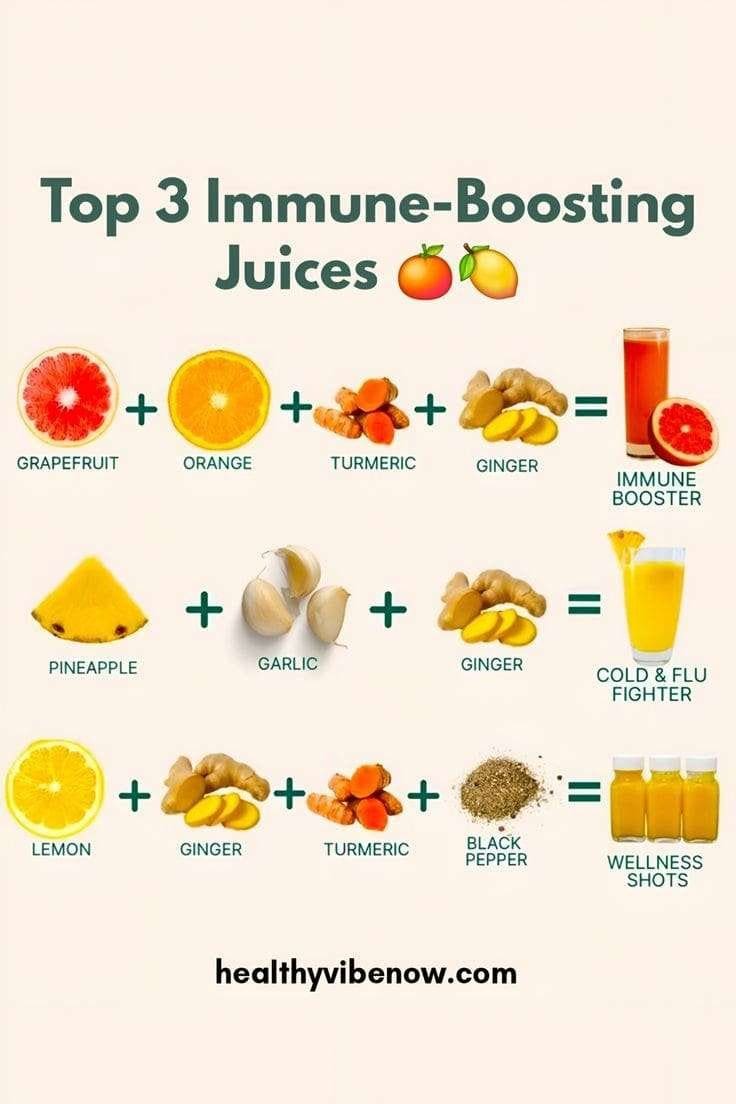
These recipes are designed to be effective, balanced, and tasty. Quantities are for one 12–16 oz serving unless noted. You’ll find explanations of why each combo works and serving suggestions.
Sunrise Citrus Shield
Ingredients: 2 oranges, 1/2 lemon (peeled), 1 carrot, 1 small piece of ginger (1-inch), 1/2 red bell pepper.
Why it works: This juice is loaded with vitamin C, beta-carotene, and antioxidants to support barrier function and antioxidant defenses. Ginger adds anti-inflammatory support and digestive assistance.
How to use: Drink in the morning or as an afternoon pick-me-up. Pair with a protein or healthy fat if you need more sustained energy.
Green Vitality Boost
Ingredients: 2 cups kale (stems optional), 1 green apple, 1/2 cucumber, 1/2 lemon (peeled), 1/2-inch ginger.
Why it works: Folate, vitamin C, and chlorophyll support detox pathways and immune cell function. Apple provides a touch of sweetness and polyphenols.
How to use: Drink before or after a light meal. If you’re sensitive to oxalates, moderate kale and rotate with spinach.
Beet & Berry Immuno-Repair
Ingredients: 1 small beet (peeled), 1 cup mixed berries (blueberries, strawberries), 1/2 orange, 1/2-inch ginger.
Why it works: Beets give folate and anti-inflammatory betalains, while berries contribute polyphenols and vitamin C for antioxidant protection.
How to use: Slightly earthy flavor that’s great mid-day. The berry fiber is reduced in juice, so consider pairing with yogurt or nuts.
Golden Turmeric Tonic
Ingredients: 1-inch fresh turmeric root, 1 apple, 1/2 carrot, pinch of black pepper, 1/2 lemon.
Why it works: Curcumin provides anti-inflammatory support; black pepper increases absorption. Apple and carrot balance flavor and add beta-carotene.
How to use: Use in small amounts, especially if you’re taking blood thinners — consult your provider. Enjoy once a day as an anti-inflammatory boost.
Garlic & Citrus Defender (use cautiously)
Ingredients: 1 small garlic clove, 1 orange, 1 parsley sprig, 1/2 lemon.
Why it works: Garlic offers antimicrobial compounds; citrus provides vitamin C. Parsley adds extra vitamin C and minerals.
How to use: Drink in small amounts when you feel a scratchy throat or early cold symptoms. The taste is assertive — dilute or mix into a smoothie if needed.
Cooling Aloe & Cucumber Soother
Ingredients: 1/2 cup fresh aloe vera gel (pulp), 1 cucumber, 1/2 green apple, juice of 1 lime.
Why it works: Aloe supports gut health and mucosal repair, cucumber adds hydration, and lime provides vitamin C.
How to use: Best for hydration and comfort during recovery. Use only edible-grade fresh aloe and small amounts.
Spiced Root Recovery
Ingredients: 1 small carrot, 1 small beet, 1-inch ginger, 1/2-inch turmeric, pinch black pepper.
Why it works: This anti-inflammatory root blend supports circulation, detox, and antioxidant defenses.
How to use: Great after an intense workout or when you want an anti-inflammatory lift.
Recipe table for quick reference
| Recipe | Key immune nutrients | Flavor profile | Best time to drink |
|---|---|---|---|
| Sunrise Citrus Shield | Vitamin C, beta-carotene | Bright, sweet | Morning/afternoon |
| Green Vitality Boost | Folate, vitamin C | Fresh, green | Morning |
| Beet & Berry Immuno-Repair | Folate, polyphenols | Earthy, fruity | Mid-day |
| Golden Turmeric Tonic | Curcumin, beta-carotene | Warm, spicy | Once daily |
| Garlic & Citrus Defender | Allicin, vitamin C | Pungent, sharp | Symptom onset |
| Aloe & Cucumber Soother | Hydration, mucosal support | Mild, fresh | Recovery/rehydration |
| Spiced Root Recovery | Anti-inflammatory | Spicy, earthy | Post-exertion |
Timing and frequency — how much and when
Juices are best used as nutrient-dense additions to your overall diet rather than complete meal replacements (unless thoughtfully designed). Drinking one 8–16 oz immune-focused juice daily is a reasonable approach for most people. If you want to consume more, balance with whole-food meals to preserve fiber and stabilize blood sugar.
- Morning: A vitamin C-rich juice can boost antioxidant defenses and start your day.
- Midday: Use a green or vegetable-forward juice to add folate and minerals.
- When unwell: Choose warming, anti-inflammatory blends with ginger and turmeric, and add garlic in small amounts if tolerated.
Storage and shelf-life
Fresh juice is most potent immediately. Light, oxygen, heat, and time degrade nutrients, especially vitamin C.
| Storage method | Shelf-life | Notes |
|---|---|---|
| Room temperature | <30 minutes< />d> | Nutrients start to degrade quickly |
| Refrigerator, sealed glass | 24–72 hours | Best within 24 hours; some enzymes persist up to 72 h |
| Freezer (in airtight containers) | Up to 6 months | Some texture/flavor loss, thaw overnight in fridge |
To preserve nutrients, store juice in airtight glass jars filled to the brim to reduce oxidation, keep refrigerated, and consume quickly. If you batch-prepare, freeze in single servings and thaw in the refrigerator.
Safety, contraindications, and interactions
While juicing can be beneficial, it’s not risk-free. Consider these safety points.
- Blood sugar: Fruit-heavy juices can spike blood sugar. If you have diabetes or insulin resistance, focus on vegetable-forward juices and include protein or fat with the drink.
- Blood-thinning medications: Turmeric and high-dose ginger can interact with anticoagulants. Consult your healthcare provider before regular use.
- Kidney stones: Some vegetables and fruits are high in oxalates (spinach, beet greens). If you’re prone to oxalate stones, moderate these ingredients.
- Potassium: Juices with high potassium content (banana smoothies, tomato juice) can be problematic for people with renal impairment.
- Infants: Never give honey to babies under 12 months; raw juices can contain pathogens — avoid giving fresh juice to infants.
- Allergies: Be aware of food allergies and cross-reactivity (e.g., ragweed allergy and melons).
- Gastrointestinal sensitivity: High amounts of raw garlic, ginger, or celery can trigger reflux or stomach upset in some people.
If you take prescription medications, especially blood thinners, immunosuppressants, or drugs metabolized by the liver, ask your clinician about potential interactions with certain herbs and high-dose nutrients.
Juicing for special groups
Adjust your approach depending on age, health, and life stage.
Children
Children benefit from nutrient-dense juices in small amounts, combined with whole foods. Limit sugar and avoid raw honey for under-1-year-olds. Use diluted juices (50% water) and keep servings small (2–4 oz) for toddlers.
Pregnancy and breastfeeding
You can use many immune-support juices, but avoid high amounts of certain herbs and strong immunomodulators unless approved by a provider. Ensure pasteurization or very fresh safe handling to minimize infection risk. Focus on folate, vitamin C, iron from paired sources, and balanced calories.
Elderly
Older adults may have higher nutrient needs but also medication sensitivities. Prioritize low-sugar, high-nutrient juices and ensure they’re balanced with whole meals to avoid rapid blood sugar shifts. Watch potassium and fluid balance if kidney function is reduced.
Athletes
Athletes can use juices for quick recovery, antioxidants, and anti-inflammatory support. Pair juices with protein for muscle repair and include carbs for glycogen replenishment.
Choosing a juicer — pros and cons
Selecting the right tool influences nutrient retention, yield, and cost. Here’s a quick comparison.
| Type | Pros | Cons |
|---|---|---|
| Centrifugal | Fast, affordable, good for hard produce | More heat and oxidation, less nutrient retention |
| Masticating (slow) | Higher yield, less oxidation, better for leafy greens | Slower, more expensive |
| Triturating (twin gear) | Best nutrient extraction and yield, good for fibrous roots | Most expensive, slower, complex cleanup |
| Manual (hand-press) | Portable, quiet, minimal heat | Labor-intensive, low yield |
If you prioritize nutrient preservation and leafy greens, choose a slow masticating or twin-gear machine. For quick convenience, centrifugal juicers work but use juice promptly.
Shopping and prepping tips
Buying and preparing produce correctly improves flavor, nutrient yield, and safety.
- Buy organic for produce that you juice with skins you’d normally consume (apples, kale, herbs), especially when pesticides are a concern.
- Use fresh, firm produce for better flavor and yield.
- Wash everything thoroughly. Even if you peel, washing prevents dirt and microbes from transferring during cutting.
- Trim wilted leaves and remove damaged spots.
- Peel citrus to avoid bitterness from pith when required. For root vegetables, scrub rather than peel to retain nutrients unless waxed.
- Keep a basic stock of immune-support staples: lemons, ginger, turmeric, carrots, apples, leafy greens, beets, and bell peppers.
Troubleshooting common juicing problems
If you encounter issues, practical fixes help.
- Bitter juice: Add apple or a small carrot for sweetness, or a squeeze of lemon. Avoid overusing bitter greens.
- Foam: Let the juice settle, then skim foam or store in the fridge briefly. Use slower juicers to reduce foam.
- Separation: Natural separation occurs; shake or stir before drinking. For a smoother mouthfeel, strain through a fine mesh or mix with a blender briefly.
- Strong flavor: Dilute with water, coconut water, or cucumber. Add parsley or mint to freshen.
Sample 7-day immune-support juice plan
This plan combines nutrient variety, flavor balance, and practical servings. Each day includes one 12–16 oz juice and suggestions to pair with meals for balance.
Day 1: Sunrise Citrus Shield (morning). Pair with a boiled egg or Greek yogurt.
Day 2: Green Vitality Boost (mid-morning). Pair with a handful of nuts for fat.
Day 3: Beet & Berry Immuno-Repair (afternoon). Pair with a lean protein like turkey or tofu.
Day 4: Golden Turmeric Tonic (morning). Pair with oatmeal that contains seeds for healthy fats.
Day 5: Aloe & Cucumber Soother (post-workout). Pair with a protein shake if needed.
Day 6: Spiced Root Recovery (morning). Pair with whole-grain toast and avocado.
Day 7: Garlic & Citrus Defender (at symptom onset or morning). Pair with a hearty soup for comfort and added nutrients.
Rotate ingredients to avoid sensitivity and ensure broad-spectrum nutrient intake.
Frequently asked questions
Answering common concerns helps you implement juicing safely.
Q: How long should I drink juice for immune support?
A: Use juices as part of a balanced diet rather than a long-term exclusive regimen. Daily immune-boosting juices for weeks can be fine, but maintain whole foods and fiber in regular meals. If you want a short-term boost, 7–21 days with varied recipes is common.
Q: Can juicing replace a multivitamin?
A: Fresh juices provide bioavailable nutrients but may not reliably provide certain nutrients like vitamin D or consistent zinc amounts. Use juices to complement a healthy diet; consult your provider about supplements if needed.
Q: Will juicing weaken my immune system if I stop?
A: No. Juicing doesn’t permanently change immunity. Consistent nutrition supports ongoing immune health, so aim for sustainable habits.
Q: Is store-bought cold-pressed juice as good as fresh?
A: Cold-pressed store juices can be high quality but may be pasteurized or have added sugars. Check labels for ingredients and shelf-life. Freshly prepared juice maximizes nutrient content.
Q: How can I reduce sugar in juices?
A: Use vegetable-forward recipes, limit high-sugar fruits, and incorporate citrus or green apple for moderate sweetness. Pair juices with protein or fat to blunt blood sugar spikes.
Q: Are there immune-boosting juices for colds?
A: Yes: garlic-citrus combinations, ginger-turmeric tonics, and vitamin C-rich orange-carrot blends can provide symptomatic relief and immune support.
Q: Can I take juices if I’m on medication?
A: Some herbs and strong phytonutrients interact with medications. Check with your healthcare provider if you take prescription drugs, especially blood thinners or immunosuppressants.
Practical tips for long-term success
- Rotate ingredients to cover a broad nutrient spectrum and reduce sensitivity.
- Keep portions reasonable; juice is concentrated and can be calorie-dense.
- Pair juices with balanced meals containing protein and healthy fats.
- Track how you feel — energy, digestion, sleep — and adjust recipes accordingly.
- Store juice properly and consume quickly for maximum benefit.
Final thoughts
Juicing can be an effective and enjoyable tool to support your immune system when you choose the right combinations and use them as part of a balanced diet. By pairing vitamin-rich produce, adding absorption enhancers like black pepper, and balancing juices with whole foods, you’ll create a sustainable approach that supports both immunity and overall wellness.
Disclaimer.
This content is for informational and educational purposes only and is not intended as medical advice. Always consult a qualified healthcare professional before making changes to your diet, especially if you have a medical condition, are pregnant, or are taking medication.
As an Amazon Associate, we earn from qualifying purchases.