Juicing for Womens Health
Juicing for Womens Health can be a practical way to support energy, reduce inflammation, and improve overall nutrition—when done correctly.
If you’re looking for simple, realistic ways to include more vegetables in your routine without relying on processed foods, juicing can help. The key is using the right ingredients, keeping portions controlled, and avoiding sugar-heavy combinations.
Who This Guide Is For
This guide is for women who want:
- Simple, effective juice recipes
- Support for energy, hormones, and daily wellbeing
- Practical guidance without complicated plans
What Actually Works
The focus should be on:
- Low-sugar, vegetable-based juices
- Consistent, manageable routines
- Balanced nutrition alongside regular meals
Juicing is not about quick fixes—it’s about making small improvements that add up over time.
What is Juicing for Womens Health?
Juicing for Womens Health is the use of portion-controlled vegetable- and fruit-based juices to support goals such as reducing inflammation, improving nutrient intake, supporting energy, and helping manage symptoms during perimenopause or menopause.
How to Use It Properly
- Choose ingredients: cucumber, celery, spinach, or kale
- Pick a juicer: masticating for greens, centrifugal for speed
- Control portions: keep servings around 120–180 ml
- Time it well: drink with or after meals if blood sugar is a concern
- Pair smartly: add protein or fat (eggs, yogurt, tofu, nuts)
- Store safely: refrigerate and use within 24–48 hours
Juice vs Smoothies vs Whole Foods
Juice is not the same as a smoothie or whole produce.
- Smoothies keep most of the fibre
- Juices remove much of the fibre
- Whole foods provide the most satiety
Juicing can still be useful because it concentrates vitamins and plant compounds in a smaller volume—but portion control becomes more important.
What to Keep in Mind
Juicing works best when it supports your routine, not replaces it.
- Focus on vegetables
- Keep portions controlled
- Use it alongside balanced meals
Juicing for Womens Health: Top Health Benefits
One of the main benefits of Juicing for Womens Health is how easily it helps increase nutrient intake.
If you struggle to eat enough vegetables, a small juice can deliver spinach, kale, cucumber, ginger, turmeric, and lemon in one serving—without needing a full meal.
Better Nutrient Intake
Juicing can help increase intake of:
- Vitamin C
- Folate
- Potassium
- Vitamin K
This is useful for women with busy routines who find it hard to eat enough greens consistently.
Anti-Inflammatory Support
Certain ingredients may help support the body’s natural response to inflammation:
- Turmeric (curcumin)
- Ginger (gingerols)
- Leafy greens and berries
These don’t act like supplements, but regular intake can support overall balance.
Antioxidant Support
Ingredients like kale, berries, and beetroot provide antioxidants that help manage oxidative stress.
This matters because inflammation and oxidative stress often go hand in hand.
The Trade-Off to Know
Juicing removes most of the fibre.
- Whole fruit: higher fibre and more filling
- Juice: lower fibre, faster absorption
That’s why portion control is important.
How to Use It Effectively
- Aim for 3–5 juices per week
- Keep portions around 120–250 ml
- Use juice alongside meals, not instead of them
Juicing works best as a support tool—something that helps you stay consistent, not a replacement for balanced eating.
Juicer Types and Juicing Techniques: Choosing What’s Best for Women
The type of juicer you use affects both nutrition and how easy it is to stay consistent.
Masticating Juicers (Cold Press)
- Better for leafy greens like kale and spinach
- Higher juice yield
- Less heat and oxidation
- Quieter operation
A strong choice if you’re making vegetable-based juices regularly.
Centrifugal Juicers
- Faster and more convenient
- Easier for quick routines
- Works well with simple ingredients
A good option if speed matters more than maximum nutrient retention.
Which One Should You Choose?
- Choose masticating if you use greens often and want better quality
- Choose centrifugal if you want speed and simplicity
Both work—the best one is the one you’ll actually use consistently.
Simple Juicing Techniques That Work
- Roll leafy greens into tight bundles before juicing
- Alternate soft and firm ingredients
- Use watery vegetables (like cucumber) to push ingredients through
These small adjustments reduce clogging and improve juice yield.
Practical Tips
- Combine celery and cucumber for lower sugar blends
- Add lemon for flavour and freshness
- Store juice in airtight glass containers
- Drink within 24–48 hours
- Clean your juicer straight after use
Anti-Inflammatory Ingredients and Recipes
When it comes to Juicing for Womens Health, many women are looking to reduce inflammation, ease bloating, and support overall balance.
The most effective ingredients are simple and widely available.
Key Anti-Inflammatory Ingredients
- Turmeric – supports the body’s natural response to inflammation
- Ginger – helps digestion and reduces discomfort
- Leafy greens – rich in vitamins and antioxidants
- Berries – high in beneficial plant compounds
- Pineapple (small amounts) – contains bromelain
These work best when used consistently in small amounts.
Important Tip
- Pair turmeric with black pepper or a small fat source
- This improves how well your body absorbs it
Simple Anti-Inflammatory Recipes
Turmeric-Ginger Glow
- Turmeric (small piece or ¼ tsp)
- Ginger (1 inch)
- Small apple
- Carrot
- ½ lemon
Benefit: Supports inflammation and digestion
Note: Keep apple portion small
Pineapple Green Calm
- Small amount of pineapple
- Cucumber
- Kale
- Ginger
- Lime
Benefit: Balanced blend with hydration and recovery support
Note: Keep pineapple limited
Berry Kale Shield
- Blueberries
- Kale
- Cucumber
- Lemon
Benefit: Antioxidant support with moderate sugar
Safety Notes
- Start with small servings
- Monitor how your body responds
- Be cautious if you take blood thinners or other medications
This approach keeps things simple while still giving you the benefits of anti-inflammatory ingredients.
Blood Sugar Management, Low-Glycaemic Juices and Diabetes
For women with prediabetes, a history of gestational diabetes, or type 1 or type 2 diabetes, Juicing for Womens Health should always start with blood sugar control.
Juice can raise glucose quickly because it removes much of the fibre that slows absorption. That’s why lower-sugar, vegetable-based options work best.
Why Vegetable Juices Work Better
- Lower carbohydrate content
- More stable blood sugar response
- Easier to use regularly
Ingredients like cucumber, celery, spinach, kale, and lemon are far better choices than fruit-heavy blends.
Simple Comparison
- Vegetable juice (120–150 ml): ~4–7g carbs
- Fruit-heavy juice (same size): ~15–25g carbs
This is usually the difference between stable energy and a spike.
Low-Glycaemic Recipe Ideas
Cucumber-Celery Lean
- Cucumber, celery, lemon
- Carbs: ~6g
- Tip: Add mint for flavour instead of fruit
Spinach-Lemon Green
- Spinach, cucumber, lemon
- Optional small amount of green apple
- Carbs: ~7g without apple
Kale-Cucumber Balance
- Kale, cucumber, celery
- Carbs: ~7g
- Tip: Reduce celery if needed
mportant Safety Notes
If you use insulin or glucose-lowering medication:
- Check blood sugar before drinking
- Recheck at 30–90 minutes
- Adjust based on your response
Type 1 diabetes usually requires more precise monitoring, while type 2 often benefits from replacing higher-sugar foods with low-glycaemic juices.
What to Focus On
- Keep portions small
- Prioritise vegetables
- Avoid fruit-heavy combinations
- Monitor your response
This approach helps you use juicing safely while keeping blood sugar under control.
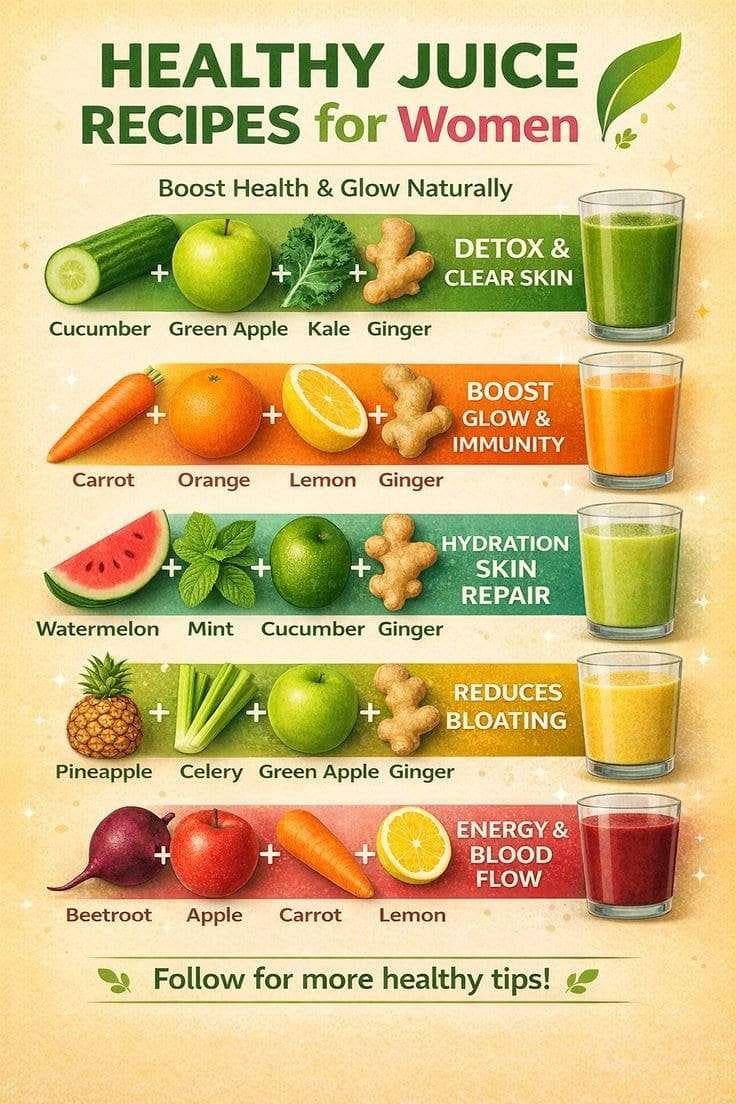
9 Best Juice Recipes for Women — Quick Recipes, Benefits and Portion Control
Juicing for Womens Health works best when recipes match a clear goal: better energy, lower inflammation, stable blood sugar, or improved digestion.
Each recipe below makes about 150 ml. Pair with protein or healthy fats to balance lower fibre.
Green Queen
- Kale, spinach, cucumber, small amount of green apple
- Carbs: ~10–12g
- Benefit: Supports nutrient intake (folate, vitamin K)
- Tip: Reduce apple for lower sugar
Celery Slim
- Celery, cucumber, lemon
- Carbs: ~5–6g
- Benefit: Hydration and blood sugar support
- Best for: Low-sugar routine
Tropical Spice
- Small amount of pineapple, turmeric, ginger, cucumber
- Carbs: ~9–10g
- Benefit: Anti-inflammatory support
- Tip: Keep pineapple limited
Apple and Fennel Detoxer
- Apple, fennel, cucumber, lemon
- Carbs: ~12–13g
- Benefit: Supports digestion
- Tip: Reduce apple for better blood sugar control
Orange Crush
- Small orange, carrot, turmeric
- Carbs: ~15–16g
- Benefit: Vitamin C and antioxidant support
- Use: Occasional, not daily
Blueberry Blast
- Blueberries, small amount of beetroot, cucumber
- Carbs: ~15–17g
- Benefit: Antioxidant and circulation support
- Tip: Pair with protein
Beetroot Bliss
- Beetroot, carrot, ginger, cucumber
- Carbs: ~14–15g
- Benefit: Supports blood flow and energy
- Tip: Reduce beet for lower sugar
Spinach Immunity
- Spinach, cucumber, lemon, ginger
- Carbs: ~4–5g
- Benefit: Low-sugar, nutrient-rich option
Turmeric Glow
- Turmeric, small amount of pineapple, cucumber, black pepper
- Carbs: ~7–8g
- Benefit: Anti-inflammatory support
- Tip: Keep portions small
Practical Notes
- Store juice in the fridge and use within 24–48 hours
- Drink with meals if sensitive to blood sugar changes
- Masticating juicers work better for greens
- Centrifugal juicers are fine for quick use
This keeps recipes simple, controlled, and easy to repeat.
How to Build a Low-Glycaemic Anti-Inflammatory Juice — 6-Step Formula
If your goal is lower inflammation and steadier blood sugar, keep it simple and repeatable.
6-Step Formula
- Choose a vegetable base
150–200g cucumber, celery, spinach, or kale - Add a small amount of fruit
¼–½ green apple, berries, or lemon for taste - Add an anti-inflammatory ingredient
Turmeric (small piece or ¼ tsp) + black pepper
or
Ginger (1 inch) - Use pineapple sparingly (optional)
30–50g only if needed - Control the portion
Keep servings around 120–180 ml - Pair with protein or fat
Eggs, tofu, yogurt, nuts, or seeds
Why This Works
- Vegetables keep sugar low
- Small fruit portions control spikes
- Anti-inflammatory ingredients add support
- Pairing with food stabilises energy
Simple Example
- Cucumber
- Celery
- Lemon
- Small amount of pineapple
This keeps carbohydrates moderate while still giving flavour.
Remove the pineapple and the sugar impact drops further.
Extra Tips
- For hormone support, include flax or soy alongside meals
- If you have autoimmune conditions, start with simple blends
- Adjust based on how your body responds
Safety, Medication Interactions and Long-Term Effects
Juicing can be helpful, but it’s not risk-free. Most problems come from doing too much, too often, without control.
Common Risks to Watch
- Drinking large portions too quickly
- Using too much fruit
- Relying on juice instead of balanced meals
- Not tracking how your body responds
Juice is easy to overconsume because it’s quick to drink but still contains concentrated sugars.
Key Medication Interactions
Some ingredients need extra caution:
| Ingredient | Be Careful If | Why |
|---|---|---|
| Turmeric | Blood thinners | May increase bleeding risk |
| Pineapple (bromelain) | Blood thinners, some antibiotics | May affect how medications work |
| Grapefruit | Certain medications | Can change drug metabolism |
| Spinach / kale (large amounts) | Kidney issues or low-oxalate diets | Higher oxalate levels |
If you take medication, avoid sudden changes.
Long-Term Use
Short-term use can help improve nutrient intake, but problems can happen if you rely on juice too much:
- Lower fibre intake
- Gaps in protein and nutrients
- Poor balance if meals are replaced
Juicing should support your diet—not replace it.
Practical Safety Rules
- Keep portions controlled
- Limit fruit-heavy juices
- Rotate ingredients (don’t use the same greens every day)
- Monitor blood sugar if relevant
When to Stop
Stop and review if you notice:
- Dizziness
- Ongoing digestive issues
- High blood sugar readings
- Unusual symptoms
Juicing works best when it’s controlled, balanced, and adjusted based on your response.
Weight Management, Menopause and Special Considerations
Juicing for Womens Health can support weight management—but only if it replaces higher-calorie choices, not adds to them.
A small, low-sugar juice can help reduce overall calorie intake. A large fruit-heavy juice can do the opposite.
Weight Management Basics
- Keep juice portions around 120–150 ml
- Use low-sugar, vegetable-based recipes
- Replace snacks or sugary drinks—not meals
A simple approach works best.
Practical Daily Approach
- One juice in the morning
- Optional second juice later in the day
- Balanced meals with protein, vegetables, and whole foods
This keeps energy steady without increasing total intake too much.
Menopause and Hormone Support
During perimenopause and menopause, focus on:
- Calcium-rich greens (kale, bok choy)
- Vitamin C (citrus, peppers)
- Stable energy from balanced meals
Helpful additions alongside juice:
- Flaxseed
- Soy foods
- Greek yogurt
- Tofu
These support overall balance without overcomplicating things.
Simple Adjustments That Help
- Add ginger if bloating or digestion is an issue
- Keep caffeine lower if it affects symptoms
- Use steady, repeatable recipes rather than constantly changing
What to Track
- Weight
- Energy levels
- Waist measurements
- Blood sugar (if relevant)
Check progress every few weeks and adjust if needed.
Important Note
Juicing supports your routine—it doesn’t replace proper nutrition.
- Keep meals balanced
- Avoid relying on juice alone
- Focus on consistency
Case Studies, Testimonials and Practical Meal Plans
Real progress comes from simple changes that you can stick to. Juicing for Womens Health works best when it replaces less healthy habits—not when it’s added on top.
Real-World Examples
Case 1 — Weight Management
A woman replaced an afternoon snack with a cucumber, celery, and lemon juice paired with Greek yogurt.
- Gradual weight loss
- Fewer cravings
- More consistent routine
Case 2 — Blood Sugar Support
Another woman reduced sugary drinks and added vegetable-based juices a few times per week.
- Improved blood sugar control
- More stable energy levels
Case 3 — Inflammation and Diet Upgrade
A third combined simple juicing with a balanced, whole-food diet.
- Improved overall routine
- Better consistency with healthy eating
Simple 7-Day Starter Approach
- Morning: 150 ml green juice
- Afternoon: 150 ml low-sugar juice
- Meals: protein, vegetables, and whole foods
Example Day
- Breakfast: eggs and oats
- Lunch: salmon salad
- Dinner: lentils with vegetables
- Snacks: yogurt and berries
Basic Shopping List
- Cucumber
- Celery
- Spinach
- Kale
- Lemons
- Green apples
- Ginger
- Turmeric
- Berries
- Carrots
- Beetroot
Troubleshooting
- Lightheaded: avoid drinking juice on an empty stomach
- Digestive issues: reduce ginger and pineapple
- High blood sugar: remove higher-sugar ingredients and retest
This approach keeps things simple, realistic, and easy to follow.
Conclusion — Actionable Next Steps
The best way to use Juicing for Womens Health is to keep it simple and consistent.
Start with the basics:
- Choose the right juicer (masticating for greens, centrifugal for speed)
- Try two low-sugar recipes this week
- Keep portions around 120–150 ml
What to Focus On
- Track how you feel (energy, digestion, cravings)
- Monitor blood sugar if relevant
- Keep meals balanced alongside juicing
Review your progress after a couple of weeks—not after one day.
Keep It Safe
If you:
- Take medication
- Have autoimmune conditions
- Manage blood sugar issues
Check before using strong or fruit-heavy recipes regularly.
Simple Approach That Works
- Use juice a few times per week
- Keep recipes simple and repeatable
- Don’t replace meals with juice
Consistency will always beat extreme changes.
Key Takeaways
- Stick to vegetable-based juices for better balance
- Keep portions small and controlled
- Use juicing to support—not replace—your diet
- Track your response and adjust
- Keep it simple so you can stay consistent
Recommended Book:
Juicing for Women’s Health: Support hormones and overall wellness
As an Amazon Associate, we earn from qualifying purchases
Disclaimer
This content is for informational and educational purposes only and is not intended as medical advice. Always consult a qualified healthcare professional before making changes to your diet, especially if you have a medical condition, are pregnant, or are taking medication.