
Refuelling after exercise is essential for recovery and energy balance. This post-workout recovery juice with banana and almond milk provides natural carbohydrates, plant-based protein, and hydration to support muscle recovery. It’s a simple, nourishing option to enjoy after workouts without heavy or processed ingredients.
Post-Workout Recovery Juice With Banana And Almond Milk
This recipe gives you a reliable, approachable recovery beverage that combines rapid carbohydrates, gentle protein, and rehydration-supporting fluids. You’ll find this drink easy to customize to your goals, whether you want faster muscle repair, glycogen replenishment, or a soothing post-exercise snack.
Why This Juice Works for Recovery
You need carbohydrates, protein, fluid, and electrolytes after workouts to support recovery, and this drink supplies those fundamentals in a compact form. The banana gives quick carbs and potassium while almond milk provides fluid and a light, pleasant mouthfeel that makes sipping easy after exertion.
The basics: carbohydrates, protein, and fluids
Carbohydrates help replenish muscle glycogen that was used during exercise, so including a starchy fruit like banana makes sense. Moderate protein intake after exercise supports muscle protein synthesis, and adding a protein source or strengthing ingredient helps transform this drink into a more complete recovery option.
How banana helps recovery
Bananas are a concentrated source of easily digestible carbohydrates, which your muscles can use quickly after a workout. They are also rich in potassium, a key electrolyte that helps regulate fluid balance and muscle function, which you lose through sweat.
How almond milk adds value
Almond milk contributes hydration with a smooth texture and subtle flavor that pairs well with fruit. Unsweetened varieties keep sugar content controlled while providing a few beneficial micronutrients, especially if the product is fortified with calcium and vitamin D.
Additional recovery ingredients you can add
You can boost protein with whey, pea protein, Greek yogurt, or nut butter depending on your dietary preferences and goals. Other useful additions include frozen berries for antioxidants, a pinch of salt for extra electrolytes, honey for a natural sugar source, or oats for sustained-release carbohydrates.
Ingredients and Nutrition
Choosing the right ingredients helps you control calories, macronutrient balance, and micronutrients. Below you’ll find a basic ingredient list, plus optional additions to tailor the drink to endurance, strength, or calorie-managed goals.
Ingredient list (base and common additions)
Use the table below to view the base ingredients and common optional boosts you might add depending on your needs.
| Ingredient | Amount (base) | Why it’s used |
|---|---|---|
| Medium banana | 1 (≈118 g) | Provides quick carbohydrates and potassium |
| Unsweetened almond milk | 1 cup (240 ml) | Hydration with low calories and pleasant texture |
| Ice (optional) | 4-6 cubes | Cools and improves texture |
| Honey or maple syrup (optional) | 1 tsp | Quick sugars if more carbs needed |
| Whey or plant protein powder (optional) | 1 scoop (≈25 g) | Boosts protein for muscle repair |
| Almond butter or peanut butter (optional) | 1–2 tbsp | Adds calories, healthy fats, and protein |
| Oats (optional) | 2 tbsp | Adds slow-release carbs and fiber |
| Spinach or kale (optional) | 1 small handful | Adds micronutrients without strong flavor |
| Cocoa powder (optional) | 1 tsp | Flavor and antioxidants |
| Pinch of salt | — | Replaces sodium lost in sweat |
Macronutrient breakdown per serving (approximate)
These estimates help you decide which version matches your recovery needs. Values are approximate and will vary by brand and exact portion sizes.
| Version | Calories | Carbs (g) | Protein (g) | Fat (g) | Fiber (g) |
|---|---|---|---|---|---|
| Base: banana + 1 cup unsweetened almond milk | 135 kcal | 28 g | 2.3 g | 2.9 g | 3.1 g |
| Protein-boost: base + 1 scoop whey protein | 255 kcal | 31 g | 26.3 g | 3.9 g | 3.1 g |
| Nut-boost: base + 2 tbsp almond butter | 331 kcal | 34 g | 9.3 g | 20.9 g | 6.6 g |
| Oats-boost: base + 2 tbsp oats | 195 kcal | 36 g | 4.5 g | 3.3 g | 4.9 g |
Electrolytes and micronutrients
Bananas provide potassium, and a pinch of salt or salted almond milk can help restore sodium levels you lose while sweating. Fortified almond milks often contain added calcium and vitamin D, which contribute to bone health and general recovery.
Recipe: Step-by-step
You’ll find the classic method below followed by several tailored variations that match common training goals. Each version includes easy-to-follow steps so you can make the drink quickly after your session.
Classic Banana + Almond Milk Recovery Juice (base recipe)
This base recipe gives you a simple, hydrating recovery drink that’s mild on the stomach and pleasant to sip. It’s ideal if your session was moderate in intensity and you want quick carbs with low fat.
Ingredients:
- 1 medium banana
- 1 cup (240 ml) unsweetened almond milk
- 4–6 ice cubes (optional)
- 1 tsp honey (optional for extra carbs)
- Pinch of salt (optional)
Instructions:
- Peel the banana and break it into chunks. Put the banana pieces into your blender first so they blend smoothly.
- Add almond milk, ice cubes if using, and a small pinch of salt for electrolytes. If you want a touch more sweetness or faster glycogen replenishment, add the honey now.
- Blend on high for 30–45 seconds until smooth and frothy. Pour into a glass and drink within 30–60 minutes of finishing your workout for best effect.
Protein-Boost Banana Almond Recovery Shake
Add a protein powder if your workout was strength or hypertrophy focused, or if your goal is muscle maintenance and growth. This version gives you the carbohydrate-protein ratio many experts recommend for recovery.
Ingredients:
- 1 medium banana
- 1 cup unsweetened almond milk
- 1 scoop (≈25 g) whey or plant protein powder
- 4–6 ice cubes
Instructions:
- Combine banana, almond milk, and protein powder in the blender. Start at low speed to break up the powder, then increase to high for a smooth consistency.
- Blend 30–60 seconds until fully combined. Adjust thickness with more almond milk if needed, and drink soon after exercise.
Chocolate Banana Recovery Juice (antioxidant boost)
This version is slightly more indulgent but still effective for recovery if you keep added sugars moderate. Cocoa adds polyphenols that can support recovery by reducing oxidative stress from exercise.
Ingredients:
- 1 medium banana
- 1 cup unsweetened almond milk
- 1 tsp unsweetened cocoa powder
- 1 scoop protein powder (optional)
- 1 tsp honey or maple syrup (optional)
Instructions:
- Put banana, almond milk, and cocoa into the blender. Add protein powder and sweetener if using.
- Blend until smooth, tasting and adjusting sweetness to preference. Cocoa pairs particularly well with a pinch of salt to deepen flavor.
Green Banana-Almond Recovery Juice (micronutrient boost)
Adding leafy greens offers vitamins and minerals with minimal calories and a subtle earthy flavor. This is a good option when your training load is consistent and you want more nutrient density.
Ingredients:
- 1 medium banana
- 1 cup almond milk
- 1 small handful spinach or baby kale
- 1 scoop plant protein (optional)
- 4–6 ice cubes
Instructions:
- Place spinach and almond milk in the blender first and pulse to break down the leaves. This helps avoid large leafy chunks and keeps texture smooth.
- Add the banana and protein powder, then blend until homogeneous. Drink immediately for freshness.
Timing: Best time to drink
The sooner you replenish glycogen and provide amino acids after a workout, the better your recovery processes will function. Aim to consume your recovery drink within 30 to 60 minutes post-exercise when possible.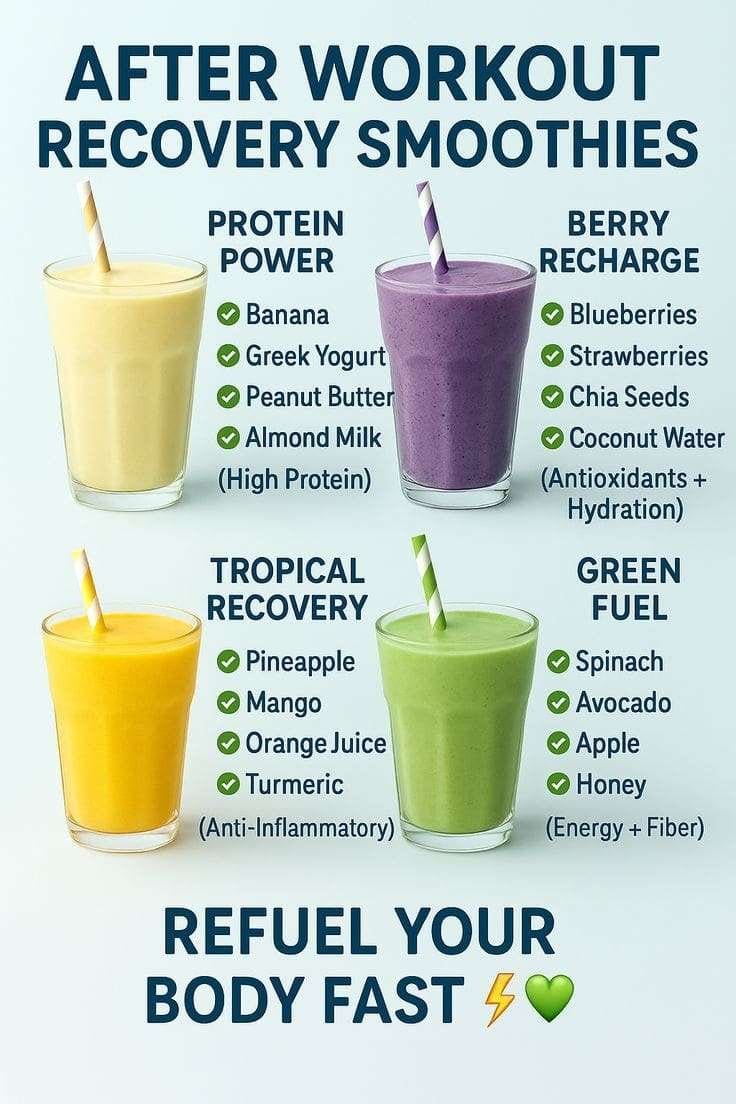
Within 30 minutes? The anabolic window
You don’t have to be obsessive about a strict 30-minute window, but there is some benefit to consuming carbohydrates and protein relatively soon after training. If your next meal is going to be delayed, prioritize a recovery drink sooner rather than later.
Before bed or later
For evening sessions, you can still use this drink quietly before bed if it fits your caloric and macronutrient targets. If your goal is fat loss, make sure the drink fits within your daily calorie allowance; otherwise opt for the lower-calorie base version.
Serving size and frequency
One serving generally suffices for a single training session’s immediate recovery needs unless your workout was extremely long or you’re participating in multiple sessions per day. For double sessions or endurance events, you can consume an additional serving or combine this drink with a small solid snack for sustained energy.
Suitability: Who should use this drink?
This drink works well for recreational exercisers, athletes, and anyone who wants a simple post-workout recovery option. You can tailor ingredients to match dietary needs such as vegan, gluten-free, or nut-free preferences.
Athletes and strength trainers
If strength and hypertrophy are your priorities, include a quality protein powder or Greek yogurt to hit a higher post-workout protein target of 20–30 g. Balanced protein and carbohydrates will help you recover efficiently and support subsequent training.
Runners and endurance athletes
Endurance athletes often need higher carbohydrate intake to replenish depleted glycogen stores, so consider adding oats, honey, or an extra banana for longer or more intense workouts. You might also want a larger volume of fluid to aid rehydration.
People trying to lose weight or manage calories
If you’re managing weight, use the base recipe without added nut butters and keep portion sizes controlled. Using unsweetened almond milk and omitting honey keeps calories down while still supporting recovery.
People with allergies or intolerances
If you have a tree-nut allergy, substitute almond milk with oat, rice, or soy milk and avoid nut butters. For dairy intolerance, choose plant-based protein powders or lactose-free whey to maintain protein content.
| Allergy/intolerance | Suggested substitutes |
|---|---|
| Nut allergy | Oat milk, rice milk, soy milk; seed butters if tolerated (sunflower seed butter) |
| Dairy intolerance | Pea, soy, or rice protein; lactose-free whey |
| Gluten sensitivity | Certified gluten-free oats, gluten-free protein powders |
| Vegan diet | Pea, rice, hemp, or soy protein; plant-based milks |
Storage and meal prep
You can make this drink fresh for best flavor and nutrient retention, but there are convenient prepping options if you’re short on time. Freeze individual smoothie packs of banana chunks and optional mix-ins, then blend with almond milk when you’re ready to drink.
Refrigeration and freezing tips
If you prepare a shake in advance, store it in a sealed container in the fridge and drink within 24 hours for best taste and safety. Freezing in ice-cube trays or zip-top bags preserves bananas well; blend frozen banana cubes with almond milk for a thick, cold texture.
Equipment and tools
A good blender simplifies the job and gives you a smooth, consistent texture that’s pleasant to drink after hard sessions. You don’t need high-end gear for basic versions, but a stronger blender helps with fibrous add-ins like spinach or oats.
| Tool | Use |
|---|---|
| Personal/immersion blender | Ideal for single servings and quick clean-up |
| Countertop blender | Best for larger batches, thicker ingredients, or nut butters |
| Shaker bottle | Works for protein-added mixes if you pre-blend into a slurry |
| Freezer bags/tray | For prepping frozen banana portions |
Troubleshooting and adjustments
If the drink feels too thick, adjust with a splash more almond milk or water and blend again. If it sits heavy on your stomach after intense training, reduce added fats (like nut butters) and favor simpler carbohydrate sources and protein powder that’s easy to digest.
Too sweet or too thin
If your drink tastes too sweet, use unsweetened almond milk and skip added honey or syrups. If it’s too thin, add more banana, a few ice cubes, or 1–2 tablespoons of oats to thicken it.
Digestive upset
If you notice bloating or discomfort, try smaller portions and avoid high-fiber add-ins immediately after intense exercise. Experiment with different proteins (whey vs plant) to find what your stomach tolerates best.
Science behind post-workout nutrition (brief overview)
After exercise your muscles are primed to absorb glucose to refill glycogen stores and to use amino acids for repair. Combining carbohydrates and protein in a single post-workout meal or drink supports both glycogen repletion and muscle protein synthesis more effectively than either macronutrient alone.
Carbohydrate-protein synergy
Carbohydrates raise insulin levels modestly, which helps shuttle amino acids and glucose into muscle cells. Protein supplies the essential amino acids needed to repair muscle, and consuming them concurrently maximizes the recovery response.
Hydration and electrolyte balance
Fluid intake after exercise replaces sweat losses and returns you to normal plasma volumes, which supports overall recovery and performance. Sodium and potassium play central roles in maintaining fluid balance and muscle function, so including a little salt or a potassium-rich banana helps re-establish that balance.
Customization ideas for different goals
Small ingredient swaps let you optimize the drink for energy, recovery, or calorie control without reinventing the base recipe. Here are easy changes you can make depending on your needs.
For more calories and sustainable energy
Add 1–2 tablespoons of nut butter, a half-cup of oats, or a second banana to increase energy density for long training days. These choices add healthy fats and complex carbs to sustain recovery and subsequent performance.
For lower calories
Stick to the base recipe with unsweetened almond milk and skip nut butters and added sweeteners. Use a smaller banana or half a banana if you want to further reduce carbohydrate calories while still gaining potassium.
For plant-based protein
Use pea protein or blended tofu for a high-quality plant-based protein source. Combine with oats or a little maple syrup to ensure you have adequate carbs, especially after endurance efforts.
Sample post-workout timeline and snack pairings
Pairing your recovery drink with a light, solid snack can be useful when training was especially long or intense. Below is an example timeline for a moderate-to-hard workout day.
| Time after workout | Recommended intake |
|---|---|
| 0–30 minutes | Drink base or protein-boost shake to start glycogen replenishment and amino acid delivery |
| 60–90 minutes | Solid snack or meal with whole-food carbs and lean protein (e.g., turkey sandwich, rice bowl) |
| 3–4 hours | Balanced meal with carbohydrates, protein, vegetables, and healthy fat |
Frequently asked questions (FAQ)
You’ll find answers to common questions about preparation, storage, and tailoring the drink to specific needs. These clarifications help you make the best choices for your goals.
Can I use frozen banana instead of fresh?
Yes, frozen banana works wonderfully and gives a thicker, colder texture that feels refreshing post-exercise. Using frozen banana also gives the drink a smoothie-like consistency that many people prefer.
How much protein should I aim for after a workout?
Aim for roughly 20–30 grams of protein after resistance training to stimulate muscle protein synthesis. If you’re a larger athlete or have higher daily protein needs, you might target the upper end of that range.
Is almond milk a good source of protein?
Unsweetened almond milk is low in protein compared to cow’s milk or soy milk. If you need more protein in your recovery drink, add protein powder, Greek yogurt (if not vegan), or a serving of nut butter.
Can I make this drink if I’m trying to lose weight?
You can include a lower-calorie base version to support recovery without excessive calories, and count it within your daily calorie budget. Focus on portion control and choose unsweetened almond milk and no added sweeteners for the leanest option.
Will this drink help with cramping after exercise?
The potassium in bananas can help support electrolyte balance, which may reduce cramping in some cases. If cramping is frequent or severe, ensure you’re also replacing sodium and staying adequately hydrated before, during, and after exercise.
How long can I store a pre-made batch?
Store a pre-made shake in the refrigerator in an airtight container and use within 24 hours for best flavor and food safety. Frozen portions can be stored for up to 1–2 months if packaged properly, though texture may change slightly.
Practical tips for busy days
Prepare frozen banana packs or measure dry protein powder into single-serve bags so you can quickly blend post-workout. Keep a small bottle of almond milk on hand in your gym bag or at your desk fridge for immediate preparation.
Common mistakes to avoid
Avoid adding too much fat immediately after workouts if your goal is rapid glycogen replenishment, because fat can slow gastric emptying. Also avoid excessive added sugars, which can spike blood glucose without providing sustained recovery benefit.
Tracking progress and performance
Monitor how you feel in the hours after consuming the drink—energy, muscle soreness, and recovery between sessions are good indicators. Adjust the volume and macronutrient ratio based on your subjective recovery and objective performance in subsequent sessions.
Cost and accessibility
This drink is generally inexpensive and accessible, especially when you use basic items like bananas and store-brand almond milk. Protein powders and specialty add-ins increase cost, but you can choose options that fit your budget and dietary preferences.
Final tips and recommendations
Always prioritize hydration alongside your recovery nutrition, and be mindful of your total daily intake when adding recovery drinks to regular meals. Customize the drink so it fits your taste and training demands; small, consistent improvements to post-workout nutrition lead to real performance gains over time.
If you want, I can give you a printable shopping list, more recipe variations tailored to specific sports, or a 7-day post-workout drink plan to match your training schedule.