
Best Juices for Energy help support hydration, deliver fast-absorbing nutrients, and provide a natural boost without relying on caffeine or processed drinks. The right combinations of fruits and vegetables can improve focus, reduce fatigue, and keep your energy levels steady throughout the day.
What Makes the Best Juices for Energy
The best juices for energy focus on combining ingredients that deliver quick nutrients while supporting steady energy levels throughout the day. By using the right mix of vegetables, fruits, and natural boosters, you can avoid energy crashes and create simple juice routines that actually work long term.
How juicing affects your energy
Juicing concentrates nutrients and natural sugars while removing most fiber, which changes how your body absorbs what you drink. That means a juice can deliver a quick supply of vitamins, minerals, and antioxidants to support cellular energy production and blood circulation, but it can also lead to rapid blood-sugar changes if not balanced.
You’ll get rapid hydration and an influx of micronutrients that support mitochondrial function (the engines of your cells), blood oxygen transport, and nervous-system signaling. Knowing which ingredients to combine and when to drink them helps you maximize benefits while reducing energy crashes.
Quick absorption vs. sustained release
When you juice, your gut receives nutrients in a more readily absorbable form than whole produce. That’s perfect when you need an immediate pick-me-up—like before a workout or when you’re sleep-deprived. However, because juicing removes most fiber, blood sugar can spike and fall more quickly than with whole foods, so pairing juices with protein or healthy fats or choosing low-glycemic combinations helps keep energy steady.
What supports cellular energy
Key supports for energy production include B vitamins, iron, magnesium, potassium, vitamin C, and nitrates (from leafy greens and beets). Antioxidants and anti-inflammatory compounds (e.g., polyphenols, carotenoids, curcumin) protect and optimize cellular function so energy systems run smoothly.
Key nutrients for energy
Understanding which nutrients impact energy helps you choose the right ingredients. Below is a quick reference to the most relevant nutrients and common produce sources.
| Nutrient | Why it matters for energy | Good juice ingredients |
|---|---|---|
| Vitamin B12* | Essential for red blood cell formation and nerve function (not in plants) | Not present in juices — consider fortified foods or supplements if needed |
| Folate (B9) | Supports cell division and red blood cell production | Spinach, romaine, beet greens |
| B6 (pyridoxine) | Involved in energy metabolism and neurotransmitter synthesis | Bananas (better blended), avocados (blends), potatoes (not juiced often) |
| Vitamin C | Aids iron absorption; supports adrenal function | Citrus, kiwi, strawberries, bell peppers |
| Iron (non-heme) | Carries oxygen in blood; low iron = fatigue | Spinach, beet greens, parsley (combine with vitamin C for absorption) |
| Magnesium | Supports ATP production and muscle relaxation | Leafy greens, almonds (not juiceable), banana (blend), pumpkin seeds (add as powder) |
| Potassium | Electrolyte for nerve and muscle function | Bananas (blend), beets, oranges, spinach, cucumber |
| Dietary nitrates | Improve blood flow and oxygen delivery | Beets, arugula, spinach |
| Antioxidants | Reduce oxidative stress; support recovery | Berries, grapes, pomegranate, carrots |
| Simple carbohydrates | Provide quick fuel | Apples, grapes, mango, pineapple (use in moderation) |
*B12 is generally absent in plant-based juices. If you follow a vegan diet, you’ll need a B12 source elsewhere.
Types of juices to boost energy
Not all juices serve the same purpose. Different combinations target quick boosts, steady afternoon energy, pre-workout performance, or recovery after exercise. Below are categories and how to use them.
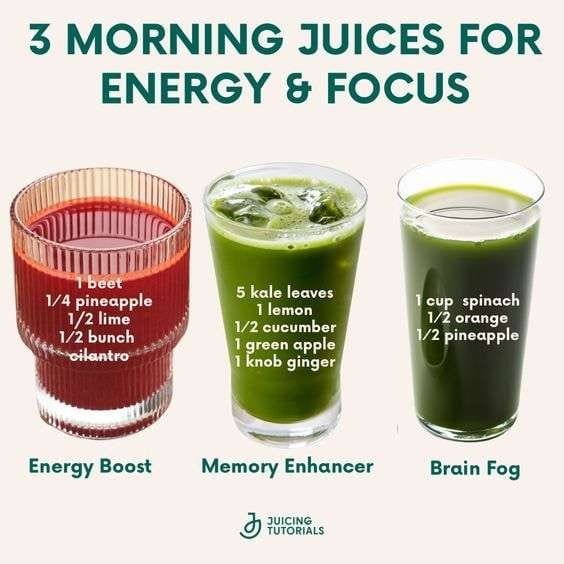
Morning wake-up juices
Morning juices can help you rehydrate and deliver vitamin C, natural sugars, and B vitamins that kick-start mental clarity. Aim for a balance of citrus, leafy greens, and a vegetable base to avoid a mid-morning crash.
Midday pick-me-up juices
For mid-afternoon sluggishness, choose low-to-moderate glycemic blends with greens, cucumber, celery, and a small amount of fruit. These support hydration and steady blood sugar without causing a crash.
Pre-workout energy juices
Pre-workout juices should include easily digestible carbs and nitrates (beets) to support blood flow and endurance. Drink 30–60 minutes before exercise.
Post-workout recovery juices
After training, you’ll want carbohydrates to replenish glycogen plus anti-inflammatory and antioxidant ingredients to aid recovery. Include tart cherries, pineapple, ginger, and some protein (see pairing recommendations).
Juice recipes and benefits
These recipes focus on energy. Quantities serve roughly 1–2 people; adjust for portion size, juicer yield, and your calorie needs. Each recipe lists the purpose and estimated calorie range.
| Juice | Ingredients | Purpose | Estimated calories |
|---|---|---|---|
| Morning Zing | 2 oranges, 1/2 lemon, 2 carrots, 1-inch ginger | Wake-up boost, vitamin C, anti-inflammatory | 120–170 |
| Green Nitrate Lift | 1 small beet, 2 cups spinach, 1 cucumber, 1 green apple, 1/2 lemon | Nitrate-rich for blood flow and endurance | 90–140 |
| Midday Calm | 2 celery stalks, 1 cucumber, 1 green apple, handful parsley | Hydration and steady energy | 60–110 |
| Pre-Workout Beet Punch | 1 medium beet, 1 apple, 1/2 cup pineapple, squeeze lime | Quick carbs + nitrates for performance | 140–200 |
| Recovery Tropic | 1 cup tart cherries (or juice), 1/2 pineapple, 1-inch ginger | Anti-inflammatory, glycogen replenishment | 130–190 |
| Anti-Fatigue Carrot-Citrus | 3 carrots, 1 orange, 1/2 lemon, pinch turmeric | Vitamin A, C, anti-inflammatory support | 110–160 |
How to make these juices
- Wash all produce thoroughly. Use organic when possible for high-absorption skin-on items.
- Cut into sizes that fit your juicer chute.
- Juice softer fruits last to help push through pulp.
- Stir and taste—add lemon or a small sweet fruit if it’s too earthy.
- Drink within 15–30 minutes for best nutrient benefit and taste, or follow storage tips below.
Juicer types and how to choose
The juicer you pick affects nutrient yield, texture, shelf life, cost, and cleanup time. Here’s a simple comparison.
| Juicer type | How it works | Pros | Cons |
|---|---|---|---|
| Centrifugal | High-speed blades spin to separate juice | Fast, affordable, good for hard produce | More foam, faster oxidation, lower yield |
| Masticating (single gear) | Slowly crushes and presses produce | Higher yield, less heat, better for leafy greens | Slower, more expensive |
| Twin-gear (triturating) | Two gears crush and press at very low speed | Best yield, preserves enzymes, good for leafy & wheatgrass | Most expensive, slower, complex cleanup |
| Citrus press | Manual/automatic presses citrus only | Excellent for citrus juice, efficient | Limited to citrus |
Choosing the right juicer for your goals
If you mainly juice leafy greens and want maximum nutrients, choose a masticating or twin-gear juicer. If you want speed and occasional juicing for apples or carrots, a centrifugal model works. For citrus-centric routines, add or use a dedicated citrus press.
Juicing vs blending
Juicing and blending each have benefits. Juicing removes most fiber and delivers concentrated nutrients quickly, while blending retains the fiber and provides slower digestion.
| Factor | Juicing | Blending |
|---|---|---|
| Fiber | Low | High |
| Absorption speed | Fast | Slower, steadier |
| Satiety | Lower | Higher |
| Best for | Quick nutrient delivery/pre-workout | Meal replacement, longer energy |
| Cleanup | Depends on machine | Blender is easier |
If you want sustained energy, you can blend your juice back into smoothies or add protein, nuts, or seeds to slow absorption.
Sugar, insulin, and safety considerations
Juices can be high in natural sugars, especially fruit-centric ones. You’ll want to be mindful if you have diabetes, insulin resistance, or are monitoring carbohydrate intake.
- Limit fruit to 1 small portion per juice and prioritize vegetables.
- Pair juice with protein or a small source of healthy fat (nuts, Greek yogurt, a protein shake) to stabilize blood sugar.
- If you take medication for diabetes, check blood sugar more frequently when starting a juicing regimen.
- For those with kidney issues, watch minerals like potassium and oxalates in high-oxalate greens (e.g., spinach, beet greens).
Timing: when to drink juice for energy
Timing affects how juice impacts your day.
- Morning: Drink a small-to-moderate juice with breakfast or as part of it to rehydrate and supply vitamins.
- Pre-workout: 30–60 minutes before exercise for nitrates and quick carbs.
- Mid-afternoon: Use a low-sugar green juice paired with a protein snack to combat the slump.
- Post-workout: Within 30–60 minutes, include carbs and anti-inflammatory ingredients; add protein for muscle repair.
You don’t need to replace full meals with juices unless you’re following a planned, nutritionally complete regimen that includes protein and adequate calories.
Boosters and add-ins to supercharge your juices
Adding small amounts of certain herbs, powders, or raw foods can significantly amplify the energy benefits. Below is a guide.
| Booster | Benefit | Suggested amount |
|---|---|---|
| Ginger | Anti-inflammatory, aids digestion, reduces nausea | 1/2–1 inch |
| Turmeric (fresh or powder) | Anti-inflammatory, may improve recovery | 1/2–1 inch fresh or 1/4–1/2 tsp powder + pinch black pepper |
| Lemon | Vitamin C, flavor brightener, supports iron absorption | 1/2–1 lemon |
| Cayenne | May boost circulation and thermogenesis | Pinch to 1/4 tsp |
| Spirulina | High in B vitamins, iron, and protein | 1/2–1 tsp powder |
| Chlorella | Detox support, chlorophyll; watch for allergies | 1/2–1 tsp |
| Wheatgrass | Concentrated chlorophyll and nutrients | 1–2 oz shot |
| Protein powder | Prevents muscle breakdown when added post-workout | 15–30 g per serving |
| MCT oil | Quick source of fat for sustained energy | 1 tsp–1 tbsp (start small) |
Use boosters sparingly to avoid overpowering flavor and to assess tolerance. If you’re on medications, check interactions (e.g., turmeric and blood thinners).
Storage and shelf life
Fresh juice oxidizes, losing nutrients and flavor. How you store juice affects nutrient retention and safety.
- Drink fresh when possible, ideally within 15–30 minutes.
- If you must store, use airtight glass containers filled to the top to limit air contact. Refrigerate immediately.
- Cold-pressed and masticated juices last longer (typically up to 48–72 hours when refrigerated) compared to high-speed centrifugal juices (best within 24 hours).
- Freezing is an option: freeze in small portions and thaw in the fridge before drinking; some texture and taste will change.
- Avoid metal or plastic containers for long-term storage; choose glass or BPA-free containers with tight lids.
Making juicing sustainable and affordable
Juicing can seem expensive, but with planning you can make it sustainable and cost-effective.
- Buy seasonal produce and local farmer’s-market bargains.
- Use vegetable scraps for broths or compost to reduce waste.
- Batch juice leafy greens with milder produce to stretch them further.
- Rotate ingredients to avoid boredom and nutrient gaps.
- Use whole fruit when it’s affordable; balance fruits with vegetables to keep costs manageable.
Grocery list for a week of energy-focused juicing
This sample list supports a week of daily juices (one per day) and occasional protein snacks.
| Category | Items | Suggested quantity |
|---|---|---|
| Leafy greens | Spinach, kale, romaine | 4–6 bunches |
| Root vegetables | Carrots, beets | 6–10 carrots, 4 beets |
| Hydrating vegetables | Cucumber, celery | 6 cucumbers, 1 bunch celery |
| Citrus/fruit | Apples, oranges, lemons, berries | 8 apples, 6 oranges, 6 lemons, 2 cups berries |
| Herbs | Parsley, mint | 2 bunches |
| Boosters | Ginger, turmeric, cayenne | 2–4 inches ginger, 2–4 inches fresh turmeric |
| Optional | Pineapple, tart cherries | 1 pineapple, 1 cup cherries |
| Containers | Glass jars, labels | As needed |
Buy what you can use within 3–4 days for peak freshness. Freeze extras for smoothies.
Common myths and FAQs
Addressing common misconceptions helps you use juicing effectively.
- Myth: Juicing detoxes your body completely. Reality: Your liver and kidneys perform detoxification. Juice can support detox pathways by providing nutrients but isn’t a magic cleanse.
- Myth: Juicing alone will cause rapid weight loss. Reality: Juices can reduce calorie intake temporarily but may cause rebound hunger without adequate protein and fiber.
- Myth: All fruit juices are healthy. Reality: Fruit juices can be high in sugar; balance them with vegetables and protein.
- Myth: More juice equals more nutrients. Reality: Excessive intake of certain compounds (e.g., vitamin A in carrot juice) can be problematic. Moderation matters.
If you’re pregnant, breastfeeding, diabetic, have kidney disease, or take medications, consult your healthcare provider before major juicing changes.
Troubleshooting common juicing problems
You’ll run into a few common issues. Here’s how to fix them.
- Bitter or metallic taste: Use a sweeter fruit like apple, or add lemon to balance bitterness from greens or beets.
- Juice too watery: Add carrots, beets, or apples for body; use less cucumber.
- Fast separation/foam: Allow juice to settle, skim foam off, or choose a slower juicer.
- Low yield: Feed produce slowly, cut into smaller pieces, or alternate soft and hard items to push pulp through.
- Cleanup dread: Clean right away or fill with water and run the juicer to avoid dried residue.
Safety and contraindications
Be mindful of these safety points:
- Oxalate load: Spinach, beet greens, and Swiss chard are high in oxalates; if you have a history of kidney stones, rotate greens and consult your doctor.
- Vitamin K interactions: Kale and other leafy greens are high in vitamin K and can interfere with blood thinners like warfarin. Maintain consistent vitamin K levels and consult your doctor.
- Gastrointestinal sensitivity: Start small if you have IBS or sensitive digestion.
- Allergies: Use caution with unfamiliar ingredients like spirulina, wheatgrass, or chlorella.
- Food safety: Keep juice refrigerated and discard if it smells off or tastes fermented.
Sample 7-day juicing plan for energy
This sample plan combines juices with whole-food snacks or small meals to maintain nutrients and satiety. Each day includes one juice and a suggested pairing.
Day 1 — Morning Zing
- Juice: 2 oranges, 2 carrots, 1/2 lemon, 1-inch ginger
- Pairing: Greek yogurt or a small handful of almonds
Day 2 — Green Nitrate Lift
- Juice: 1 beet, 2 cups spinach, 1 cucumber, 1 green apple, 1/2 lemon
- Pairing: Hard-boiled egg or protein shake
Day 3 — Midday Calm
- Juice: 2 celery stalks, 1 cucumber, 1 green apple, parsley
- Pairing: Hummus and whole-grain crackers
Day 4 — Pre-Workout Beet Punch
- Juice: 1 beet, 1 apple, 1/2 cup pineapple, lime
- Pairing: Banana or small oatmeal bowl before intense workouts
Day 5 — Recovery Tropic
- Juice: 1 cup tart cherries, 1/2 pineapple, ginger
- Pairing: Protein smoothie or cottage cheese
Day 6 — Anti-Fatigue Carrot-Citrus
- Juice: 3 carrots, 1 orange, 1/2 lemon, pinch turmeric
- Pairing: Avocado on toast or a boiled egg
Day 7 — Custom Green Smoothie (blended)
- Blend: 1 banana, 1 cup spinach, 1/2 avocado, 1 scoop protein powder, water or unsweetened plant milk
- Pairing: Handful of nuts or seeds
Adjust portions and pairings to your activity levels, calorie needs, and taste preferences.
Practical tips for long-term success
- Start slow: Introduce one juice per day rather than a full juice-only routine.
- Track how you feel: Note energy levels, mood, sleep, and digestion to find what works.
- Rotate ingredients: Prevent overexposure to any single compound and broaden nutrient intake.
- Combine strategies: Use juices as part of a balanced diet that includes protein, healthy fats, whole grains, and fiber-rich vegetables.
- Keep it tasty: If you don’t enjoy the flavor, you’ll stop. Adjust sweetness, acidity, and spice to your liking.
Final notes and next steps
If you want more energy without relying on stimulants, juicing can be a useful tool when used correctly. Focus on balance: pair juices with protein or healthy fats, choose low-sugar vegetable bases, and include nitrate-rich and antioxidant ingredients to support blood flow and cellular energy. Start with a small, sustainable routine—one juice a day or pre-workout shots—and build from there.
Actionable next steps:
- Choose one juice recipe from this article and try it tomorrow morning.
- Pick a juicer type based on how often you’ll use it and which ingredients you prefer.
- Plan a 3-day trial: one juice per day paired with balanced meals, and track your energy and mood.
If you want, you can tell me your typical daily schedule and food preferences and I’ll create a personalized 7-day juicing and meal plan to boost your energy.
Recommended Book:
Juicing for Energy: Fight fatigue with nutrient-dense blends
Disclaimer
This content is for informational and educational purposes only and is not intended as medical advice. Always consult a qualified healthcare professional before making changes to your diet, especially if you have a medical condition, are pregnant, or are taking medication
As an Amazon Associate, we earn from qualifying purchases