
Juicing vs Blending is one of the most common questions people ask when looking for simple ways to increase their intake of fruits and vegetables. While both methods can help you enjoy nutrient-rich ingredients, they work very differently and offer unique benefits. Understanding the differences between Juicing vs Blending can help you decide which option better suits your health goals, dietary preferences, and daily routine. Whether your focus is weight management, digestion, convenience, or overall wellness, this guide explores everything you need to know about Juicing vs Blending.
Juicing vs Blending: Which Option Is Right for You?
Juicing vs Blending is a common debate among people looking for simple ways to increase their fruit and vegetable intake. While both methods can be part of a healthy lifestyle, they offer different benefits that may appeal to different goals and preferences.
Some people choose juicing because it creates a smooth drink that is quick and easy to consume. Others prefer blending because it retains the fiber found in whole fruits and vegetables. Understanding the differences between Juicing vs Blending can help you decide which approach better fits your daily routine, nutritional needs, and wellness goals.
In this guide, we’ll compare Juicing vs Blending in terms of nutrition, fiber, convenience, cost, and overall health benefits. By the end, you’ll have a clearer understanding of Juicing vs Blending and which option may work best for your lifestyle.
Juicing vs Blending: Which Is Healthier?
For most people, blending offers more everyday nutritional benefits because it retains the fiber found in whole fruits and vegetables. However, juicing can still be a valuable option depending on your goals and preferences.
Quick Comparison
| Method | Main Advantage | Best For |
|---|---|---|
| Blending | Retains fiber and creates a more filling drink | Everyday nutrition, meal replacements, and satiety |
| Juicing | Creates a smooth, easy-to-drink beverage | Increasing fruit and vegetable intake or enjoying concentrated flavors |
| Best Choice | Depends on your goals and lifestyle | Many people benefit from using both methods |
The Bottom Line
If your primary goal is overall nutrition and fullness, blending is often the better choice because it keeps the fiber naturally found in fruits and vegetables. If convenience, taste, or increasing produce intake is your priority, juicing can also be an excellent addition to a healthy lifestyle.
Many people find that combining both approaches provides the greatest flexibility. Smoothies can work well as filling breakfasts or snacks, while fresh juices can be a refreshing way to enjoy a variety of fruits and vegetables throughout the day.
How Juicing vs Blending Works
Understanding Juicing vs Blending starts with knowing what happens to fruits and vegetables during each process.
What Is Juicing?
Juicing separates the liquid from the pulp of fruits and vegetables. The result is a smooth drink that contains many of the nutrients and flavors from the produce while removing most of the fiber.
Common types of juicers include:
- Centrifugal juicers
- Masticating juicers
- Cold-press juicers
What Is Blending?
Blending processes the entire fruit or vegetable, including the pulp and fiber. The result is a thicker drink, often called a smoothie, that contains all parts of the original ingredients.
Common types of blenders include:
- High-speed blenders
- Personal blenders
- Multi-purpose kitchen blenders
The Main Difference
The biggest difference in Juicing vs Blending is fiber.
Juicing removes most of the pulp, creating a lighter drink that is easy to consume. Blending keeps the pulp and fiber, creating a thicker drink that may help you feel fuller for longer.
Which Is More Convenient?
Both methods can fit into a healthy lifestyle. Juicing produces a smooth beverage that many people find refreshing, while blending allows you to use the entire fruit or vegetable with minimal waste.
Choosing between Juicing vs Blending often comes down to your personal preferences, nutrition goals, and daily routine.
What Is Juicing?
Juicing is the process of extracting liquid from fruits and vegetables while separating most of the pulp and fiber. The result is a smooth, easy-to-drink beverage that concentrates the flavors of the ingredients used.
Common Types of Juicers
Centrifugal Juicers
- Fast and convenient.
- Popular among beginners.
- Suitable for many fruits and vegetables.
Masticating Juicers
- Operate at a slower speed.
- Often preferred for leafy greens.
- Popular among regular juicing enthusiasts.
Cold-Press Juicers
- Designed to extract juice while minimizing heat.
- Commonly used by people who juice frequently.
What Happens to the Fiber?
One of the biggest differences in Juicing vs Blending is that juicing removes most of the pulp and fiber. This creates a lighter drink that many people find refreshing and easy to consume.
Why Do People Choose Juicing?
People often choose juicing because it allows them to enjoy a variety of fruits and vegetables in a convenient form. It can also be an easy way to add more produce to a daily routine, especially for those who struggle to eat enough fruits and vegetables.
What Is Blending?
Blending combines whole fruits and vegetables into a smooth drink while keeping all of the pulp and fiber. Unlike juicing, nothing is separated or discarded during the process.
Common Types of Blenders
Personal Blenders
- Compact and convenient.
- Ideal for single servings.
- Popular for quick smoothies.
Traditional Blenders
- Suitable for families and larger batches.
- Can handle a wide variety of ingredients.
High-Performance Blenders
- Designed for frequent use.
- Create smoother textures.
- Often used for smoothies, soups, and sauces.
Why Do People Choose Blending?
One of the main advantages of blending is that it retains the fiber naturally found in fruits and vegetables. This creates a thicker drink that many people find more filling than juice.
Blending also allows you to include ingredients that are difficult to juice, such as avocados, bananas, oats, seeds, nut butters, and yogurt.
Benefits of Blending
People often choose blending because it:
- Retains fiber.
- Creates more filling drinks.
- Produces less food waste.
- Allows for a wider variety of ingredients.
- Can be used to make smoothies, meal replacements, and snacks.
For many people comparing Juicing vs Blending, the ability to keep the entire fruit or vegetable is one of the biggest advantages of blending.
Nutritional Comparison: Juicing vs Blending
When comparing Juicing vs Blending, both methods can help increase your intake of vitamins, minerals, and beneficial plant compounds. The main difference is how those nutrients are delivered.
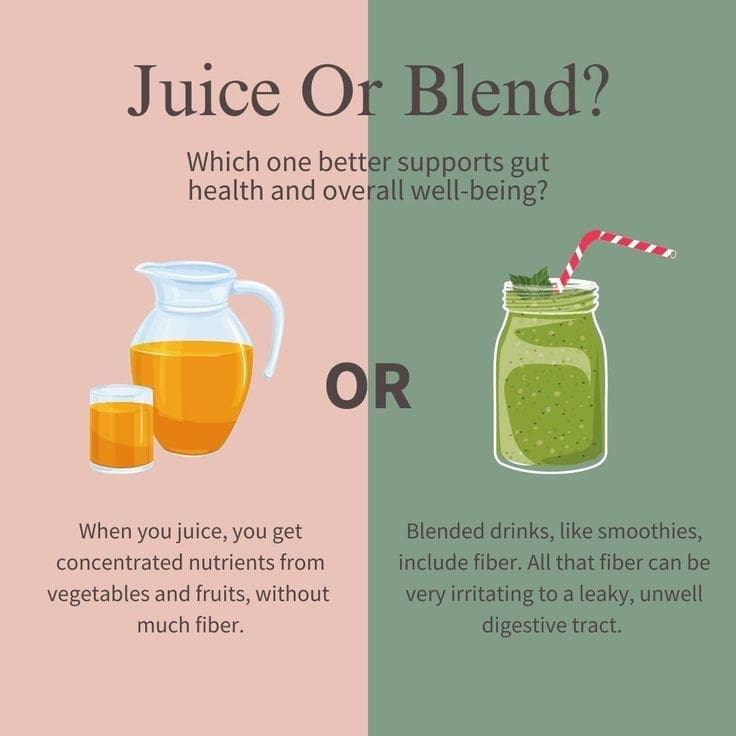
Juicing
Juicing creates a smooth drink by removing most of the pulp and fiber. Many people enjoy juice because it is light, refreshing, and easy to consume.
Benefits of juicing include:
- Convenient way to increase fruit and vegetable intake.
- Smooth texture that some people prefer.
- Easy to incorporate into a busy routine.
Blending
Blending uses the entire fruit or vegetable, including the fiber. This creates a thicker drink that many people find more filling.
Benefits of blending include:
- Retains the fiber found in whole produce.
- Can support fullness and satisfaction.
- Allows a wider range of ingredients, including nuts, seeds, oats, and yogurt.
Which Retains More Nutrition?
Both methods provide valuable nutrients, but blending keeps the entire fruit or vegetable intact. Because no pulp is removed, many people consider blending the more complete option from a nutritional perspective.
The Bottom Line
The winner in Juicing vs Blending depends on your goals. If you prefer a lighter drink and want an easy way to enjoy more produce, juicing can be a great choice. If retaining fiber and creating a more filling drink is your priority, blending may be the better option.
Fiber, Sugar, and Fullness: A Key Difference Between Juicing vs Blending
One of the biggest differences in Juicing vs Blending is how each method handles fiber.
Blending Retains Fiber
Because blending uses the entire fruit or vegetable, the natural fiber remains in the finished drink. Fiber can help create a thicker texture and may help you feel fuller for longer.
Juicing Removes Most Fiber
Juicing separates the liquid from much of the pulp. The result is a lighter drink that is often easier to consume but contains less fiber than a smoothie made from the same ingredients.
What About Sugar?
Both juices and smoothies can contain natural sugars from fruits and vegetables. The difference is that smoothies retain the fiber, while juices remove much of it.
For people looking to reduce sugar intake, vegetable-forward recipes that include ingredients such as spinach, kale, cucumber, celery, and lemon can be a good choice.
Which Is Better for Fullness?
In general, smoothies tend to be more filling because they retain fiber and have a thicker texture. This makes blending a popular option for breakfasts, snacks, and meal replacements.
Practical Tips
- Choose blending if your goal is a more filling drink.
- Choose juicing if you prefer a lighter beverage.
- Include plenty of vegetables regardless of the method you choose.
- Focus on variety and balance rather than relying on a single ingredient.
When comparing Juicing vs Blending, fiber is often the deciding factor for many people, making blending the preferred option for those who prioritize fullness and everyday nutrition.
Juicing vs Blending: Does Absorption Matter?
When comparing Juicing vs Blending, many people wonder whether one method helps the body absorb nutrients more effectively than the other.
Both methods can provide valuable vitamins, minerals, and plant compounds from fruits and vegetables. The main difference is that blending retains the fiber, while juicing removes most of it.
Some nutrients may become easier to access when fruits and vegetables are broken down through blending or juicing. However, both methods can be effective ways to increase your intake of nutrient-rich foods.
A Simple Tip
Including healthy fats such as avocado, nuts, seeds, or a small amount of olive oil alongside your meal or smoothie can help support the absorption of certain nutrients found in fruits and vegetables.
The Takeaway
For most people, the differences in nutrient absorption between Juicing vs Blending are less important than consistently eating a variety of fruits and vegetables. The best choice is usually the one that helps you maintain healthy habits over the long term.
Health Outcomes: Juicing vs Blending
When comparing Juicing vs Blending, both methods can help increase fruit and vegetable intake, which is an important part of a healthy lifestyle.
Weight Management
Blending is often preferred for weight management because smoothies retain fiber, which can help create a greater feeling of fullness. Juices can still be enjoyed as part of a balanced diet but may be less satisfying for some people.
Gut Health
Fiber plays an important role in digestive health. Because blending retains the fiber found in fruits and vegetables, many people choose smoothies when gut health is a priority.
Heart Health
Both juices and smoothies can contribute beneficial nutrients from fruits and vegetables. Ingredients such as berries, leafy greens, citrus fruits, and beets are popular choices for heart-conscious eating patterns.
Blood Sugar Considerations
Smoothies generally contain more fiber than juices, which may help create a more balanced drink. People concerned about sugar intake often choose vegetable-forward recipes and limit highly sweetened ingredients.
Which Option Is Better?
For everyday nutrition, many people find blending offers more long-term benefits because it retains the fiber naturally found in whole foods. However, juicing can still be a convenient way to enjoy a wide variety of fruits and vegetables.
The most important factor is consistency. Whether you choose juicing, blending, or a combination of both, increasing your intake of nutrient-rich produce is a positive step toward better overall health.
Who Should Choose Juicing and Who Should Choose Blending?
When comparing Juicing vs Blending, the best choice often depends on your goals, preferences, and lifestyle.
Juicing May Be a Better Choice If You:
- Prefer lighter drinks.
- Struggle to eat enough fruits and vegetables.
- Enjoy fresh juice as a quick snack or refreshment.
- Want an easy way to add more produce to your day.
Blending May Be a Better Choice If You:
- Want to retain the fiber found in whole fruits and vegetables.
- Prefer a more filling drink.
- Use smoothies as a meal replacement or substantial snack.
- Want to include ingredients such as oats, yogurt, nuts, seeds, or nut butters.
What About Special Diets?
People with specific health concerns or dietary requirements should choose ingredients carefully and seek professional guidance when appropriate.
The Best Solution for Many People
The good news is that you don’t have to choose only one method. Many people enjoy both juices and smoothies as part of a balanced lifestyle.
For example:
- A smoothie for breakfast.
- A fresh juice as an afternoon refreshment.
- Whole fruits and vegetables throughout the day.
Final Recommendation
For everyday nutrition, blending is often the preferred option because it retains fiber and can be more filling. However, juicing remains a convenient and enjoyable way to increase fruit and vegetable intake.
When it comes to Juicing vs Blending, the best choice is the one that fits your routine and helps you consistently consume more nutrient-rich foods.
Practical Recipes and Simple Tips
One of the best ways to compare Juicing vs Blending is to try both methods and see which fits your lifestyle and preferences.
Juice Recipe: Carrot, Apple, and Ginger
Ingredients
- Carrots
- Apple
- Fresh ginger
Why Try It?
A simple, refreshing juice that combines natural sweetness with a hint of spice.
Juice Recipe: Beet and Citrus
Ingredients
- Beetroot
- Orange
- Lemon
Why Try It?
A bright, flavorful juice that pairs earthy and citrus notes.
Juice Recipe: Green Juice
Ingredients
- Spinach
- Cucumber
- Green apple
Why Try It?
A vegetable-forward option that is light and refreshing.
Smoothie Recipe: Green Protein Smoothie
Ingredients
- Spinach
- Banana
- Avocado
- Protein powder
- Water or milk
Why Try It?
A filling smoothie that works well as a breakfast or post-workout snack.
Smoothie Recipe: Berry Oat Smoothie
Ingredients
- Mixed berries
- Oats
- Greek yogurt
- Milk
Why Try It?
A satisfying blend that combines fruit, protein, and fiber.
Smoothie Recipe: Tropical Smoothie
Ingredients
- Mango
- Banana
- Chia seeds
- Milk of choice
Why Try It?
A creamy smoothie packed with tropical flavors.
A Simple 7-Day Comparison
If you’re unsure about Juicing vs Blending, try one method for a few days and then switch to the other. Pay attention to:
- Fullness
- Energy levels
- Convenience
- Taste preferences
- Overall satisfaction
This simple approach can help you discover which option fits your routine best.
Safety and Storage Tips
- Wash produce thoroughly before use.
- Refrigerate juices and smoothies promptly.
- Consume fresh preparations within a day or two whenever possible.
- Clean equipment after each use.
- Follow the manufacturer’s cleaning instructions for your juicer or blender.
For most people, the best way to evaluate Juicing vs Blending is through personal experience. Trying both methods can help you determine which one better supports your goals and daily habits.
Topics Many Juicing and Blending Guides Overlook
Food Waste and Sustainability
One of the biggest differences in Juicing vs Blending is food waste.
Because blending uses the entire fruit or vegetable, very little is discarded. Juicing, on the other hand, produces leftover pulp that many people throw away.
If you enjoy juicing, consider reusing pulp in:
- Soups
- Smoothies
- Muffins
- Homemade crackers
- Compost
Reducing waste can help you get more value from your produce while making your routine more environmentally friendly.
Convenience and Long-Term Success
The healthiest option is often the one you can maintain consistently.
Some people find blending easier because there is less waste and fewer ingredients are discarded. Others prefer juicing because they enjoy the taste and texture of fresh juice.
When comparing Juicing vs Blending, think about which method realistically fits your schedule, budget, and preferences.
You Don’t Have to Choose One
Many people assume Juicing vs Blending is an either-or decision, but that isn’t always necessary.
A balanced approach might include:
- Smoothies for breakfast.
- Fresh juice as a snack or afternoon refreshment.
- Whole fruits and vegetables throughout the day.
This flexible approach allows you to enjoy the benefits of both methods while creating a routine that is easy to maintain.
Common Myths About Juicing vs Blending
Myth: Juicing Detoxes the Body
Fact: Your body already has natural systems that help remove waste and process substances, including the liver and kidneys. While juices can be part of a healthy diet, they are not a magic detox solution.
Myth: Juice Cleanses Are the Best Way to Lose Weight
Fact: Some people may lose weight during a juice cleanse, but maintaining long-term results often requires balanced eating habits and sustainable lifestyle changes.
Myth: Blending Is Always Better Than Juicing
Fact: Blending retains fiber, which is one reason many people prefer smoothies. However, juicing can still be a convenient and enjoyable way to increase fruit and vegetable intake.
Myth: Juicing and Blending Are the Same Thing
Fact: Juicing removes most of the pulp and fiber, while blending keeps the entire fruit or vegetable. This is one of the biggest differences in Juicing vs Blending.
Myth: You Must Choose One or the Other
Fact: Many people enjoy both juices and smoothies as part of a balanced lifestyle. You don’t have to limit yourself to a single approach.
The Bottom Line
When it comes to Juicing vs Blending, there is no universal winner. The best option depends on your goals, preferences, and daily routine. For many people, combining both methods provides the greatest flexibility and variety.
Conclusion: Which Is Better, Juicing or Blending?
Juicing vs Blending is a debate that ultimately comes down to your personal goals and preferences. Both methods can help increase your intake of fruits and vegetables, but they do so in different ways.
For most people, blending offers more everyday nutritional benefits because it retains the fiber naturally found in whole foods. Smoothies can also be more filling, making them a popular choice for breakfasts, snacks, and meal replacements.
Juicing remains a valuable option for those who enjoy fresh juice and want a convenient way to consume a variety of fruits and vegetables. Many people find that incorporating both juices and smoothies into their routine provides the best balance of nutrition, convenience, and variety.
Simple Next Steps
- Try both juicing and blending to see which fits your lifestyle best.
- Focus on increasing your overall fruit and vegetable intake.
- Choose recipes that emphasize vegetables as well as fruits.
- Experiment with different ingredients to find combinations you enjoy.
- Build a routine that you can maintain consistently over time.
When comparing Juicing vs Blending, consistency matters more than perfection. The healthiest choice is the one that helps you regularly enjoy a wide variety of nutrient-rich fruits and vegetables.
Recommended Book
Juicing Without a Juicer: Simple Blender Juice Recipes for Everyday Health
Why We Recommend It
This practical guide shows how to create juice-style drinks using a blender, making it ideal for readers comparing Juicing vs Blending. It offers simple recipes, affordable ingredients, and easy techniques for increasing fruit and vegetable intake without investing in a separate juicer. It’s particularly useful for beginners who want the benefits of fresh produce while retaining more fiber in their drinks.
Frequently Asked Questions
Is juicing healthier than blending?
When comparing Juicing vs Blending, neither option is automatically healthier. Blending retains the fiber found in fruits and vegetables, while juicing creates a lighter drink that many people find easier to consume. The best choice depends on your goals and preferences.
Does juicing remove fiber?
Yes. One of the biggest differences in Juicing vs Blending is that juicing removes most of the pulp and fiber, while blending keeps the entire fruit or vegetable.
Can I lose weight with juices or smoothies?
Both juices and smoothies can be part of a healthy lifestyle. Many people prefer smoothies for weight management because they are often more filling due to their fiber content.
Which is better: juicing or blending?
For everyday nutrition, many people prefer blending because it retains fiber and creates a more satisfying drink. However, juicing remains a convenient way to enjoy a variety of fruits and vegetables.
How long do homemade juices and smoothies last?
Fresh juices and smoothies are generally best enjoyed soon after preparation. If stored properly in the refrigerator, they can often be enjoyed within 24–48 hours.
Do I need both a juicer and a blender?
No. Many people successfully use only one appliance. If you’re deciding between the two, consider your budget, available space, and whether you prefer juices or smoothies.
Can I use the pulp left from juicing?
Yes. Leftover pulp can be added to soups, smoothies, muffins, baked goods, or composted to reduce waste.
Is it okay to combine juicing and blending?
Absolutely. Many people use both methods as part of a balanced lifestyle. For example, they may enjoy smoothies for breakfast and fresh juices later in the day.
Key Takeaways
- When comparing Juicing vs Blending, blending generally retains more fiber and creates a more filling drink.
- Juicing provides a smooth and convenient way to enjoy a variety of fruits and vegetables.
- Blending keeps the entire fruit or vegetable, while juicing removes most of the pulp and fiber.
- Both methods can help increase your intake of nutrient-rich produce and support a healthy lifestyle.
- Many people find that combining Juicing vs Blending gives them the flexibility to enjoy the benefits of both approaches.
- The best choice depends on your personal goals, preferences, and daily routine.
Disclaimer: This content is for informational and educational purposes only and is not intended as medical advice. Always consult a qualified healthcare professional before making changes to your diet, especially if you have a medical condition, are pregnant, or are taking medication.
As an Amazon Associate, we earn from qualifying purchases.