
How to freeze juice without losing nutrients is something every juice lover should know. Freezing juice the right way helps preserve its vitamins, minerals, and fresh flavor. With a few simple techniques and the right containers, you can keep your homemade juices tasting vibrant and nutritious for weeks.
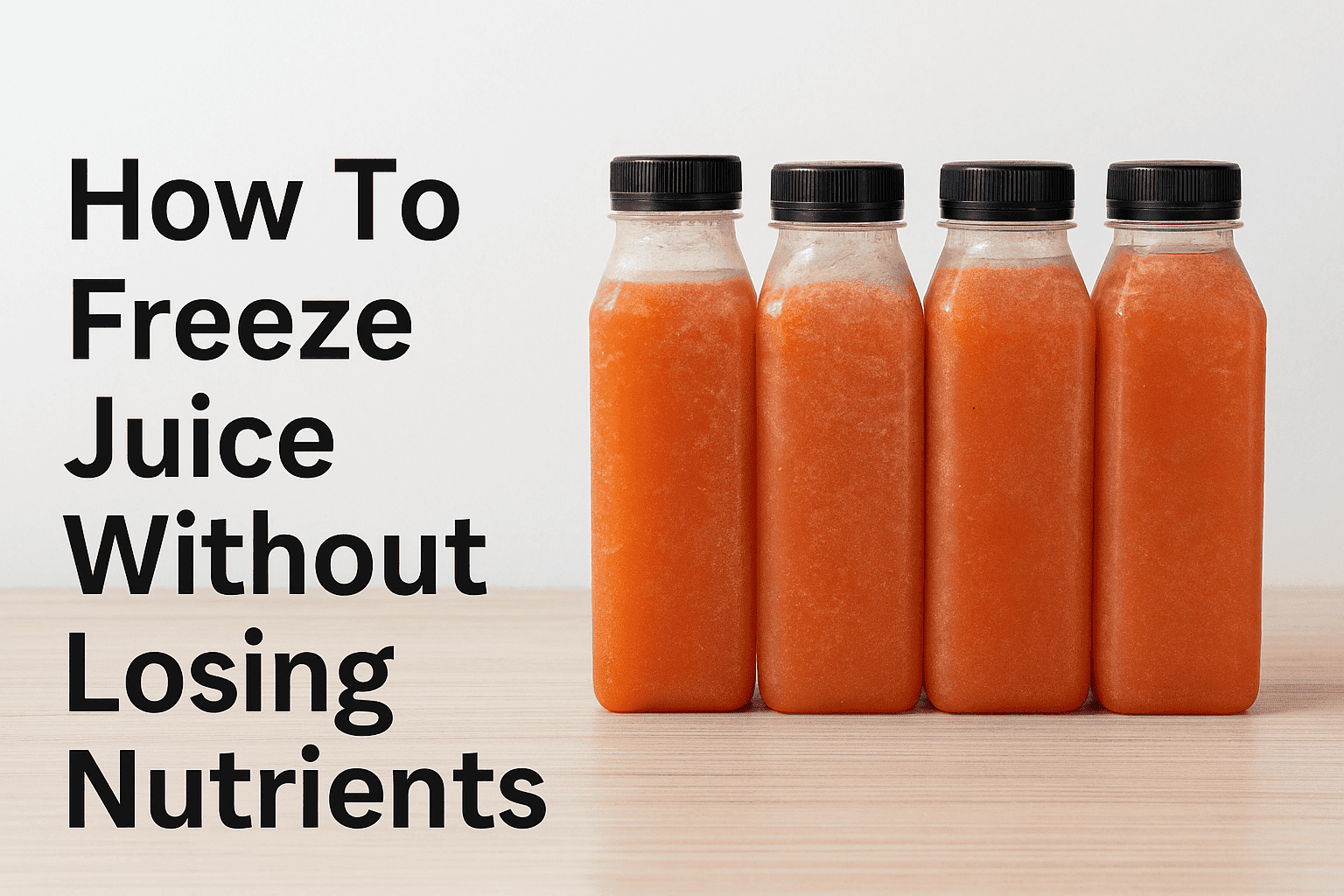
How To Freeze Juice Without Losing Nutrients
Freezing juice is one of the easiest ways to extend its shelf life while keeping flavor and nutrition close to fresh. In this guide you’ll learn practical, science-backed methods to preserve nutrients when freezing, plus step-by-step instructions and common pitfalls to avoid.
Why freezing juice is a smart option
Freezing locks in flavors and slows down chemical reactions that would otherwise degrade juice in the refrigerator. When you freeze juice correctly, you prevent microbial growth and preserve many heat-sensitive nutrients that would otherwise break down.
What you should expect after freezing
You should expect some textural changes—pulp may separate and certain volatile aroma compounds may be reduced—but if you follow the right practices the majority of vitamins and antioxidants will remain. Proper handling before, during, and after freezing makes the biggest difference.
Understanding nutrients in juice
Knowing which nutrients are present and how fragile they are will help you choose the best freezing method. Juice primarily contains water-soluble vitamins (like vitamin C and many B vitamins), minerals, antioxidants, and phytonutrients.
Vitamins most sensitive to storage
Vitamin C is easily degraded by heat, light, and oxygen, and some B vitamins can also be lost through oxidation. You’ll want to minimize exposure to air and heat during preparation and freezing to protect these nutrients.
Phytonutrients and antioxidants
Compounds such as flavonoids, carotenoids, and polyphenols give juice its health benefits and color. Many of these are fairly stable to freezing, but prolonged exposure to oxygen and light can reduce their effectiveness over time.
Enzymes and live cultures
If your juice contains active enzymes or probiotic cultures, freezing can inactivate some of those enzymes and kill some probiotic bacteria. If you rely on those benefits, consider short-term refrigeration or using frozen juice within a shorter period.
How freezing affects nutrient retention
Freezing by itself is gentle compared with heat treatments, but the process surrounding freezing influences nutrient preservation. Your goal is to reduce oxygen exposure and maintain low temperatures as quickly as possible.
The importance of freezing rate
Faster freezing forms smaller ice crystals that limit cell damage and separation of water from solids. Rapid freezing is better for preserving texture and minimizing the breakdown of delicate compounds.
Role of oxidation and light
Oxygen and light promote the breakdown of vitamin C and other sensitive molecules. Limiting headspace, removing air, and using opaque or dark containers will protect nutrients.
Effect of thawing methods
How you thaw juice influences nutrient and sensory quality. Slow thawing in the refrigerator reduces oxidation compared with leaving juice at room temperature, and gentle stirring after thawing helps reincorporate separated components.
Preparation before freezing
How you prepare juice before it hits the freezer largely determines what you’ll taste and how nutritious it will remain. Freshness and cleanliness at this stage are key.
Choose the freshest produce you can
Start with ripe, high-quality fruits and vegetables since nutrient levels decline with age. Fresher produce will yield a juice higher in vitamins and antioxidants to begin with, so freezing retains a higher baseline.
Wash and handle produce carefully
Rinse produce thoroughly to remove dirt and residues; use a brush for firm-skinned items. Clean handling prevents microbial contamination and reduces the need for preservatives that might alter flavor or nutrition.
Decide whether to strain or keep pulp
Keeping pulp preserves fiber and some bound phytonutrients, while straining can produce a smoother texture that freezes more uniformly. If you plan to use frozen juice primarily for cooking or smoothies, keeping pulp is often preferable.
Consider acidity and sugar adjustments
Acidic juices (citrus, pineapple) inhibit bacterial growth and maintain color, while higher sugar content can blunt freezing and texture changes. You can slightly adjust sweetness or acidity if desired, but avoid excessive additives that change nutritional value.
Best containers and packaging
Choosing the right container reduces freezer burn, limits oxygen exposure, and minimizes flavor transfer. You’ll want something durable, airtight, and as full as possible to reduce headspace.
Container comparison table
| Container type | Pros | Cons | Best use |
|---|---|---|---|
| Glass jars (wide-mouth, freezer-safe) | Inert, no flavor transfer, reusable, good barrier | Can break if overfilled or thermal shock, heavier | Long-term storage, pure juices |
| Rigid plastic bottles (BPA-free) | Lightweight, shatterproof, convenient | May absorb flavors, less oxygen barrier than glass | Short- to medium-term storage |
| Silicone molds/trays | Flexible, easy to pop out, good for portioning | Not fully airtight, may allow odor transfer | Freezing cubes or portions |
| Freezer bags (vacuum or heavy-duty) | Saves space, can remove air, cheap | Prone to punctures, not rigid for fragile items | Vacuum-sealed juice pouches or laid-flat storage |
| Ice cube trays (plastic/silicone) | Great for small portions, easy to thaw | Small portions may oxidize faster on thawing | Smoothies, cocktails, recipes |
Tips for choosing containers
Pick containers rated for freezing to avoid cracking. If using glass, leave adequate headspace for expansion (about 1 inch for wide-mouth jars). Use opaque or dark containers when possible to reduce light exposure.
Step-by-step freezing methods
Different freezing approaches suit different uses—single-serve portions, large batches, or ingredient cubes for cooking. Choose a method that matches how you’ll use the juice later.
Quick-freezing method (best for whole-batch storage)
- Cool freshly made juice quickly in the refrigerator for 30–60 minutes.
- Transfer to freezer-safe containers, leaving 1 inch of headspace to allow for expansion.
- Remove as much air as you can, either by tapping the container gently while closing or using a vacuum sealer for plastic pouches.
- Place containers in the coldest part of the freezer and arrange so air can circulate around them.
Quick cooling before freezing reduces the time juice spends in the temperature danger zone and helps preserve nutrients.
Freezing in ice cube trays (best for portion control)
- Pour juice into silicone or BPA-free plastic ice cube trays, leaving cube cavities full to reduce air contact.
- Freeze until solid (several hours).
- Pop cubes out and transfer them into a labeled, airtight freezer bag. Remove as much air as possible before sealing.
Cube freezing is excellent for smoothies, sauces, or small beverage portions and helps you thaw only what you need.
Flash-freezing and vacuum sealing (best for nutrient preservation)
- Spread shallow pans of juice (or small containers) in a single layer for rapid freezing.
- Once frozen solid, transfer pieces into vacuum-seal bags or airtight containers and remove air using a vacuum sealer.
Flash-freezing reduces ice crystal size; vacuum sealing minimizes oxidation and freezer burn for longer storage life.
Partial pre-freeze method for jars (reduce expansion risk)
- Partially freeze juice in a shallow container until it becomes slushy (about 20–40 minutes depending on volume).
- Transfer slushy juice into jars leaving minimal headspace, then finish freezing upright.
This prevents glass breakage due to sudden expansion by reducing liquid volume before full freezing.
Thawing and usage
How you thaw the juice can preserve or damage nutrients. Use gentle, cold methods to prevent oxidation and loss of volatile aromas.
Refrigerator thawing (recommended)
Thaw juice in the refrigerator overnight or for several hours. This slow, cold method minimizes oxidation and microbial risk and keeps the flavour profile closest to fresh.
Cold-water thawing (faster, safe)
If you need a faster method, place sealed containers or bags in a bowl of cold water and change the water every 30 minutes until thawed. Never use hot water or microwave for thawing, as heat accelerates nutrient loss.
Room-temperature thawing (not recommended for long)
Thawing at room temperature speeds oxidation and can promote bacterial growth, especially in non-acidic juices. Only use room-temperature thawing for short periods (less than an hour) if you plan to consume immediately.
Reincorporating separated pulp
It’s normal for pulp and liquid to separate after freezing. After thawing, give the juice a vigorous stir or shake. If separation is extensive, a short spin in a blender or immersion blender will restore texture and integrate nutrients.
Tips to minimize nutrient loss
Small steps add up to significant preservation of vitamins, antioxidants, and flavor. Focus on limiting oxygen, light, heat, and time.
- Minimize headspace in containers to reduce oxidation.
- Cool juice quickly before freezing; avoid freezing warm liquids.
- Use airtight, freezer-safe containers or vacuum seal bags.
- Consider adding a small splash of lemon or lime to increase acidity for certain juices; higher acidity helps preserve color and vitamin C stability.
- Freeze in smaller portions to reduce repeated thawing and refreezing.
- Label containers with date and content so you use older batches first.
- Store at consistent freezer temperatures (preferably below −18°C / 0°F).
- Use opaque or dark-colored containers to reduce light exposure.
Common mistakes to avoid
Avoiding common errors will help you retain nutrients and enjoy better flavor from frozen juice. Many of these mistakes are easy to fix.
Overfilling containers
Never fill containers to the brim with warm liquid; expansion can crack jars or burst bags. Leave proper headspace to accommodate freezing expansion.
Repeated thawing and refreezing
Each freeze-thaw cycle damages cell structure and increases oxidation, which reduces nutrients and quality. Freeze in portions sized for single uses to avoid this.
Freezing hot juice
Putting hot or warm juice directly into the freezer can raise the freezer temperature, slow freezing rate, and produce larger ice crystals. Cool juice first in the refrigerator.
Using non–freezer-safe containers
Containers that aren’t freezer-safe can crack, leach chemicals, or allow air ingress. Use only material rated for freezer use and food-safe.
Shelf life and best-by times
How long frozen juice retains acceptable quality depends on the juice type, packaging, and freezer conditions. Use this as a guide rather than a strict rule—taste and smell remain your best indicators.
Typical freezer storage times table
| Juice type | Best quality if used within | Notes |
|---|---|---|
| Citrus juices (lemon, lime, orange) | 6–12 months | High acidity preserves quality; may lose some aroma over time |
| Vegetable juices (carrot, beet) | 6–8 months | Denser juices may change texture but retain nutrients well |
| Green juices (kale, spinach) | 3–6 months | Chlorophyll and some enzymes degrade faster; use sooner |
| Mixed fruit juices | 6–9 months | Sugar content helps preservation; color may fade |
| Cold-pressed juices | 3–6 months (vacuum-sealed) | Best if flash-frozen and vacuum sealed to limit oxidation |
Signs juice has gone bad
Discard frozen juice if it smells off, shows signs of fermentation (bubbles, fizz), has an off color, or has visible mold. If it simply tastes slightly flat, it may be safe but less enjoyable.
Testing quality and nutrient indicators
You can do a few simple checks to assess whether your juice is still nutritious and palatable.
Visual and smell checks
Look for uniform color and absence of separation beyond pulp settling. Smell for fresh citrus or fruit aroma; a sour, yeasty, or off smell signals spoilage.
Taste test
Small taste tests after thawing will tell you if the juice retained flavor. If it tastes stale but not spoiled, use it for cooking or baking to avoid waste.
Measuring vitamin C at home (approximate)
While you can’t measure vitamin C precisely without lab tools, a rough sense comes from color and tartness—vitamin C loss often correlates with faded color and weaker tang.
Frequently asked questions
This section answers the most common questions you might have about freezing juice.
Can you freeze juice with added sugar or honey?
Yes. Added sugar or honey may lower the freezing point slightly and can help preserve flavor, but avoid excessive sweeteners that alter nutritional goals. Keep portions small to limit refreezing.
Is it safe to freeze juice that was pasteurized?
Yes, pasteurized juice freezes well. Freezing won’t make it unsafe; it simply preserves it for a longer period. Pasteurization followed by proper freezing gives a long shelf life.
Will freezing destroy vitamin C?
Freezing itself largely preserves vitamin C, but exposure to heat, oxygen, and light before freezing can reduce levels. Freeze quickly and minimize air to keep vitamin C intact.
How long can you keep frozen juice?
Follow the general guidelines above—most juices are best within 3–12 months, depending on type. For maximum nutritional value, aim to use frozen juice within 6 months.
Can you freeze smoothies or protein shakes?
Yes, but texture may change upon thawing and separation is common. If your smoothies contain dairy or probiotics, freezing may reduce live cultures. Blend again after thawing.
Using frozen juice in recipes
Frozen juice is versatile and can replace fresh juice in many recipes, sometimes offering even better convenience. You’ll want to match thawing methods to the recipe.
Smoothies and shakes
Drop frozen juice cubes directly into a blender along with other frozen ingredients for instant smoothies. This keeps things cold and minimizes nutrient loss during thawing.
Cooking and baking
Frozen juice works well in sauces, marinades, syrups, and baking where texture changes matter less. Small reductions in volatile aroma compounds are often unnoticeable when cooked.
Cocktails and mocktails
Juice cubes and partially frozen juice add chilled flavor without diluting drinks. Use citrus cubes to add visual appeal and a burst of flavor.
Final recommendations and checklist
To make freezing juice as successful as possible, follow this checklist when you’re ready to freeze a batch.
- Use fresh, ripe produce.
- Cool juice quickly before freezer placement.
- Choose freezer-safe, airtight containers and minimize headspace.
- Consider vacuum sealing for longer-term storage.
- Freeze in portion sizes that match typical single-use servings.
- Thaw slowly in the refrigerator or quickly in cold water when needed.
- Stir or blend after thawing to re-emulsify separated components.
- Label containers with date and type so you can rotate stock.
If you follow these steps, your frozen juice will retain much of its original nutrition, flavor, and usefulness for months, saving you time and reducing waste.
Summary
Freezing juice is a practical way to preserve vitamins and flavor when you apply the right techniques. By cooling quickly, limiting oxygen and light exposure, choosing appropriate containers, freezing in portions, and thawing gently, you’ll retain most water-soluble vitamins and antioxidants. Use vacuum sealing or flash-freezing for longer storage and always use your senses—sight, smell, and taste—to judge final quality. With a little preparation, your frozen juice can be a convenient, nutritious staple in your kitchen.
Disclaimer.
This content is for informational and educational purposes only and is not intended as medical advice. Always consult a qualified healthcare professional before making changes to your diet, especially if you have a medical condition, are pregnant, or are taking medication.
As an Amazon Associate, we earn from qualifying purchases.