
Introduction — What Juicing for Weight Loss Really Means
Juicing for Weight Loss is a popular approach for people looking to lose 5–20 lbs while increasing nutrient intake without complicated dieting. The goal is simple: use nutrient-dense juices to support calorie control, improve consistency, and boost overall diet quality.
Juicing for Weight Loss focuses on adding low-calorie, vegetable-forward juices that help reduce total daily intake while still providing essential vitamins and minerals. It’s not a magic fix — results come from consistency and a balanced approach.
Quick definitions (simple):
- Juicing — extracting liquid nutrients from fruits and vegetables while removing most fiber
- Cold-pressed juicing — slower method that helps preserve more nutrients
- Juice cleanse — short-term plan using mostly juices
- Nutrient-dense drink — high vitamins and minerals with relatively low calories
What you’ll get in this guide:
- Simple recipes for weight loss
- A practical 7-day plan
- Clear tips to stay consistent
- Basic safety guidance
Keep expectations realistic: juicing works best when it supports a calorie-controlled diet, not replaces it completely.
How Juicing Affects Weight Loss: What Works and What Doesn’t
Juicing for Weight Loss works when it helps create a calorie deficit. For example, replacing a high-calorie meal with a lower-calorie juice can reduce daily intake and support gradual weight loss.
What Works
- Calorie control — swapping a 500–600 kcal meal for a 200–300 kcal juice creates a deficit
- High nutrient intake — provides vitamins A, C, K, potassium, and antioxidants
- Quick and convenient — easier to stay consistent compared to complex diets
- Supports inflammation control — ingredients like beetroot and greens may help reduce inflammation
What Doesn’t
- No fiber — juices remove most fiber, reducing fullness
- Sugar spikes — fruit-heavy juices can cause energy crashes
- Not a full replacement — lacks protein and fats needed for balanced nutrition
Simple Fixes
- Choose vegetable-heavy juices
- Pair juice with protein or healthy fat
- Avoid relying on juice alone
Bottom Line
Juicing for Weight Loss can help reduce calories and improve nutrition, but it only works when combined with a balanced diet.
Cold-Pressed Juicing, Juicers & Beginner Techniques
Juicing for Weight Loss is easier when you understand the basics. The type of juicer and how you use it can affect results, consistency, and cost.
Juicer Types (Simple Comparison)
- Masticating (cold-press) — better for greens, higher juice yield, quieter
- Centrifugal — faster and cheaper, but lower yield on leafy greens
- Twin-gear — highest yield, but expensive and harder to clean
Beginner Workflow (Keep it simple)
- Wash produce properly
- Chop into small pieces
- Use a veg-heavy ratio (more greens, less fruit)
- Juice slowly for better yield
- Clean immediately after use
Storage Basics
- Store in airtight glass bottles
- Fill to the top to reduce air
- Keep in fridge and drink within 24–48 hours
What Actually Matters
- Consistency beats perfect equipment
- A basic juicer is enough to start
- Focus on low-sugar, vegetable juices
Bottom Line
Use what you have, keep it simple, and stay consistent — that’s what actually drives results.
Juicing for Weight Loss — 7-Day Schedule
Juicing for Weight Loss works best when you follow a simple, repeatable structure. This 7-day plan focuses on low-calorie juices + balanced meals to support steady fat loss.
7-Day Plan
- Day 1 — Morning juice + green juice midday + balanced dinner (protein + veg)
- Day 2 — Morning juice + light afternoon juice + balanced dinner
- Day 3 — Morning juice + slightly sweeter juice + add protein snack if needed
- Day 4 — Focus on low-sugar vegetable juices + high-fiber dinner
- Day 5 — Add variety, keep portions controlled, track weight
- Day 6 — Repeat simple plan + light exercise (20–30 mins)
- Day 7 — Reduce juices, return to balanced meals
Simple Rules
- Stick to 1–2 juices per day
- Keep juices vegetable-heavy
- Always include protein in meals
Track Progress
- Weigh once per week
- Track energy (1–10)
- Adjust if you feel low energy
When to Stop
- Dizziness
- Weakness
- Unusual fatigue
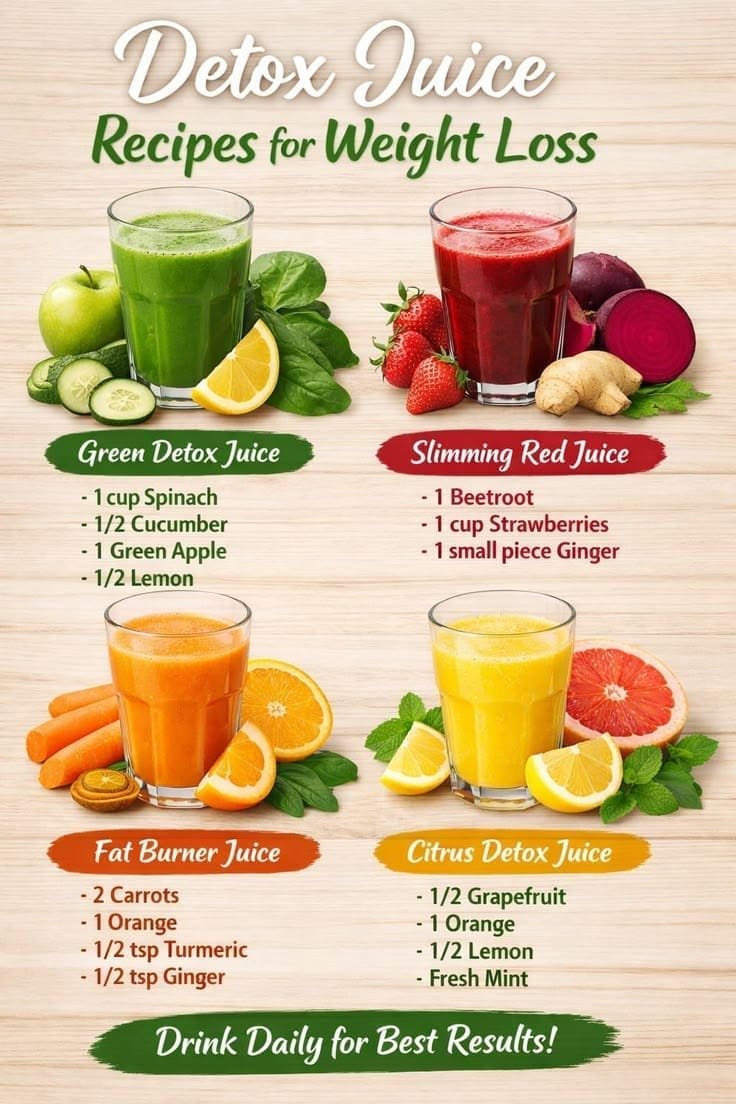
Juicing for Weight Loss: 12 Fat-Loss Juice Recipes
These Juicing for Weight Loss recipes focus on low-to-moderate sugar, better satiety, and simple ingredients you can actually stick to.
12 Simple Fat-Loss Recipes
- Carrot Ginger Glow — carrots, apple, ginger (~180 kcal)
- Green Detox — kale, cucumber, apple, celery, lemon (~160 kcal)
- Beet Boost — beet, carrot, lemon (~140 kcal)
- Pineapple Mint — pineapple, cucumber, mint (~180–220 kcal)
- Aloe Cleanser — aloe, cucumber, apple, lime (~120 kcal)
- Apple Cinnamon — apples, cinnamon (~200 kcal)
- Ginger Lemon — carrot, ginger, lemon (~150 kcal)
- Metabolic Bomb — beet, carrot, orange (~230 kcal)
- Turmeric Pineapple — pineapple, turmeric, cucumber (~190 kcal)
- Celery Cucumber — celery, cucumber, lime (~80–100 kcal)
- Spinach Lemon — spinach, apple, lemon (~140 kcal)
- Beet Ginger Recovery — beet, apple, ginger (~170 kcal)
How to Use Them
- Stick to 1–2 juices per day
- Choose low-sugar options (greens, cucumber, celery)
- Rotate recipes to stay consistent
Important
- Juices are low in protein and fiber
- Pair with protein (15–25g) to reduce hunger
- Avoid relying on fruit-heavy juices
Simple Upgrade (Optional)
Turn any juice into a smoothie by adding:
- Protein powder
- Chia or flax seeds
This improves fullness and helps avoid energy crashes.
Bottom Line
Keep recipes simple, rotate them, and focus on consistency — that’s what drives weight loss.
Juice Cleanse & Detox: Safety and What to Know
Juicing for Weight Loss often includes cleanses, but keep expectations realistic. Short cleanses can help reset habits, but they are not a long-term solution.
What Actually Happens
- Short-term weight loss is mostly water and calorie reduction
- You may feel an initial energy boost, followed by dips
- Benefits come more from calorie control, not “detox”
Safety First
- Diabetics — avoid fruit-heavy juices; monitor blood sugar closely
- Gastritis — use low-acid options (cucumber, aloe); avoid citrus if sensitive
- Medications — some juices can interact (e.g., high vitamin K foods)
Who Should Avoid Cleanses
- Pregnant or breastfeeding
- Type 1 diabetes
- History of eating disorders
- On certain medications
Simple Rules
- Keep cleanses short (1–3 days max)
- Use vegetable-heavy juices
- Don’t rely on juice alone long-term
Juicing vs Smoothies: Nutritional Comparison & When to Choose Each
Juicing and smoothies both have their place. The difference comes down to fiber, calories, and how full you feel after.
Key Differences
- Juice (12 oz)
- ~150–220 kcal
- ~0–1 g fiber
- Faster absorption
- Smoothie (12 oz)
- ~300–400 kcal (with protein)
- ~6–8 g fiber
- More filling
When to Choose Each
- Choose juice
- Lower calories
- Quick nutrient boost
- When paired with protein
- Choose smoothies
- Meal replacement
- Better for fullness
- More stable energy
Easy Conversions
- Juice → Smoothie
Blend same ingredients + protein + healthy fat - Smoothie → Juice
Strain or use a juicer (less fiber, faster digestion)
Simple Tip
Fruit-heavy juices can easily go over 300 kcal + high sugar
→ Swap fruit for cucumber or greens to keep it weight-loss friendly
What matters
Use juice for simplicity and calorie control. Use smoothies when you need something that actually fills you up.
Common Juicing Misconceptions, Risks & Corrections
Juicing for Weight Loss is often misunderstood. Here’s what’s actually true vs hype.
Myth: Juice “detoxes” your body
Reality: Your liver and kidneys already handle detox.
Juice can support hydration and nutrients — not replace real detox functions.
Myth: All juices are healthy
Reality:
- Fruit-heavy juices = high sugar spikes
- Vegetable juices = more stable energy
Fix: go veg-heavy or add protein
Blood Sugar Impact
- Fruit-only juice → quick spike → crash
- Veg-based juice → steadier response
Simple fix:
Pair juice with protein or healthy fat
Real Risks
- Low fiber → less fullness
- Tooth enamel damage → rinse after drinking
- Nutrient gaps → low protein, B12, iron if overdone
What Works Instead
- Use juice as a support tool, not full diet
- Add protein (15–25g) daily
- Keep juices low-sugar and balanced
Simple takeaway
Juicing for Weight Loss works when you keep it practical — not extreme.
Personalized Juicing Plans & Long-Term Strategy
Juicing for Weight Loss works best when it’s tailored to your routine, not forced into a one-size plan.
Simple 4-Week Framework
- Week 1 — Transition
Add 1 juice per day, don’t change everything at once - Week 2 — Calorie focus
Use juices to reduce total calories - Week 3 — Mix approach
Combine juices with whole foods or smoothies - Week 4 — Maintenance
Set a routine you can actually stick to
How to Personalize
- Create a small calorie deficit (300–700 kcal)
- Aim for 0.5–2 lb per week
- Adjust based on activity:
- Low activity → lower-calorie juices
- Active → add protein snacks or smoothies
Make It Sustainable
- Use juices 2–4 times per week long-term
- Replace meals with protein smoothies, not just juice
- Keep variety so you don’t get bored
Don’t Skip This
- Add 2–3 resistance workouts per week
- Helps keep muscle while losing fat
- Prevents that “skinny but weak” outcome
Juicing only works long-term when it fits your life — not the other way around.
Frequently Asked Questions
What juice is good for gastritis?
Low-acid blends like cucumber, aloe vera, and small amounts of peeled apple or pear work best. Avoid citrus and spicy ingredients if symptoms flare.
What is the best green juice for diabetics?
Vegetable-forward juices (spinach, kale, cucumber, celery) with minimal fruit. Add protein or healthy fat to help control blood sugar.
Can juicing help lower cholesterol?
It can support cholesterol reduction when combined with a healthy diet, but juice alone is not enough. Whole foods with fiber are still key.
Can diabetics do a juice cleanse?
Generally not recommended without medical supervision. If done, keep it short and vegetable-based with close monitoring.
How long should a juice cleanse last?
1–3 days max. Longer cleanses increase risk of nutrient gaps and energy issues.
Conclusion — Next Steps
- Start with 1 juice per day
- Keep it vegetable-heavy
- Add protein to stay full
- Track weight and energy weekly
- Keep it simple and consistent
Key Takeaways
- Juicing for Weight Loss helps create a calorie deficit when used properly
- Vegetable-based juices are better for fat loss and blood sugar control
- Pair juices with protein to reduce hunger and avoid crashes
- Keep cleanses short and avoid extreme approaches
- Focus on consistency, not perfection
Recommended Book:
Juicing for Weight Loss: Burn Fat, Boost Energy & Feel Great Every Day – Simple recipes and a clear routine to help you lose weight and stay consistent.
As an Amazon Associate, we earn from qualifying purchases
Disclaimer
This content is for informational and educational purposes only and is not intended as medical advice. Always consult a qualified healthcare professional before making changes to your diet, especially if you have a medical condition, are pregnant, or are taking medication