
Trying to lose weight but worried that juicing will sabotage your progress with hidden sugars? These low-sugar juice recipes for weight control prove you can enjoy delicious, nutrient-packed juices without derailing your goals. Unlike fruit-heavy blends that spike blood sugar, these recipes focus on vegetables and low-glycemic fruits that support fat burning. In this guide, you’ll discover 10 proven low-sugar juice recipes and practical tips for making juicing work for your weight loss journey.
Low-Sugar Juice Recipes For Weight Control
This article gives you practical guidance and a variety of low-sugar juice recipes designed to complement a weight-control plan. You’ll learn which ingredients to favor, how to make juices that are lower in sugar, and how to use juice sensibly so it helps rather than hinders your progress.
Why choose low-sugar juices for weight control?
You may think all juices are healthy, but many are high in sugar and calories. Choosing low-sugar juices helps you control calorie intake while still getting nutrients, flavor, and hydration. When you select the right ingredients and portion sizes, juices can be a useful addition to a balanced plan.
How juices affect appetite, blood sugar, and weight
Juices made primarily from vegetables have less sugar and more volume for fewer calories, which can help with satiety. Fruit juices can spike blood sugar more quickly than whole fruit because the fiber is removed. You should understand that juices are not a magic solution for weight loss; they’re a tool that can fit into an overall energy-controlled, nutritious approach.
The most important principles to follow
- Favor vegetables over fruits to reduce natural sugar content.
- Limit high-sugar fruits and use them sparingly as flavor enhancers.
- Keep serving sizes modest — 150–250 ml (5–8 fl oz) per serving is typical.
- Pair juice with protein or healthy fats when possible to improve satiety and slow glucose absorption.
Ingredients to favor and avoid
Choose ingredients that provide vitamins, minerals, volume, and flavor with low sugar content. Avoid or limit ingredients that pack a lot of sugar per serving.
Ingredients to favor
You’ll find these low-sugar, nutrient-dense items good for weight-control juices:
- Leafy greens (kale, spinach, Swiss chard)
- Cucumber
- Celery
- Zucchini
- Bell peppers
- Tomatoes
- Lemon and lime (small amounts for flavor)
- Ginger and turmeric (for flavor and anti-inflammatory benefits)
- Herbs (mint, parsley, cilantro)
- Green apple (used sparingly)
- Berries (a small handful for sweetness)
Ingredients to limit or avoid
These ingredients bring more sugar and calories and should be used sparingly:
- High-sugar fruits (mango, ripe banana, grapes, pineapple)
- Fruit juices (orange, apple, grape) as base
- Sweetened additives (honey, agave syrup, sweetened yogurt)
- Dried fruits (concentrated sugar)
Quick reference: Sugar content of common produce (approximate)
This table helps you compare common ingredients by grams of sugar per 100 g. Use it to pick lower-sugar options.
| Ingredient | Sugar (g per 100 g) | Suitability for low-sugar juice |
|---|---|---|
| Cucumber | 1.7 | Excellent |
| Celery | 1.8 | Excellent |
| Spinach | 0.4 | Excellent |
| Kale | 0.9 | Excellent |
| Zucchini | 2.5 | Very good |
| Tomato | 2.6 | Very good |
| Green apple | 10.4 | Use sparingly |
| Lemon | 2.5 | Use for flavor |
| Lime | 1.7 | Use for flavor |
| Strawberries | 4.9 | Moderate, small amount |
| Blueberries | 10.0 | Use sparingly |
| Pineapple | 10.0 | Avoid for low-sugar focus |
| Mango | 14.0 | Avoid for low-sugar focus |
| Carrot | 4.7 | Use sparingly |
Note: Values are approximate; variety and ripeness affect sugar content.
Juicer vs. blender: which is better for weight control?
You should choose based on your goals. A juicer separates liquid from fiber, giving you a smooth, low-volume drink that may be quickly absorbed. A blender keeps the fiber, making a smoothie that is more filling and can help control appetite. For weight control, you’ll often be better served by blended drinks when you want a meal replacement; use juiced drinks as small nutrient boosts or appetite-suppressing beverages.
How to measure and manage sugar and calories in juice
You can estimate sugar and calories by adding the nutritional content of each ingredient based on amounts used. Keep portion sizes small and favor low-sugar vegetables. Aim to keep a single juice serving under 150–180 calories and 8–12 g of sugar if using a juice as a beverage between meals.
Practical tips to lower sugar in your juices
- Use more vegetables than fruit (75% vegetables, 25% fruit or less).
- Add citrus only for flavor — its acid balances taste and can make juices seem sweeter without much sugar.
- Incorporate spices and herbs (ginger, cinnamon, mint) to enhance flavor.
- Add a small amount of healthy fat (a teaspoon of chia seeds, a quarter avocado in a blended drink) to increase fullness.
- Drink your juice with a protein-containing snack if you plan to use it between meals.
How much juice should you drink?
You should limit juice to one small serving per day if using it as a supplement to a balanced diet. If you replace a meal, a blended drink that includes protein and fiber is preferable. Avoid relying solely on juice for caloric restriction; whole foods are essential for nutrients and sustainable satiety.
Safety considerations and interactions
You should be aware of these safety points:
- High vitamin K in leafy greens can interact with blood thinners (warfarin). Maintain consistent intake and consult your provider.
- Green juices can be high in nitrates; this is generally safe for healthy individuals but ask your clinician if you have specific conditions.
- If you have diabetes or take glucose-lowering medications, monitor blood sugar and consult a professional before changing your juice intake.
- Fresh juice can oxidize and lose nutrients; consume quickly or store properly.
Low-Sugar Juice Recipes
Each recipe below is intended for one small serving (about 200 ml / 6–8 fl oz unless noted). Most recipes are prepared with a juicer; a blender variation is included where helpful. Estimated calories and sugars are approximate.
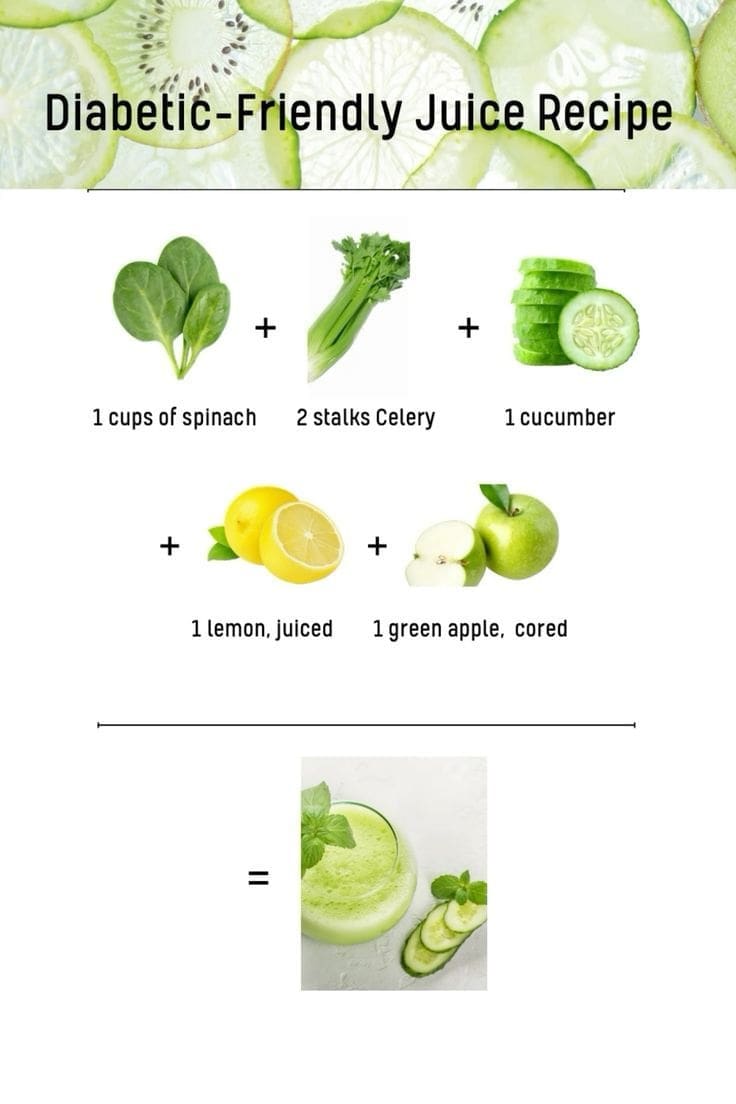
1. Green Garden Starter
You’ll get a very low-sugar, mineral-rich juice that’s crisp and hydrating.
Ingredients:
- 2 cups spinach
- 1 medium cucumber
- 2 stalks celery
- 1/2 green apple (optional)
- 1/2 lemon, peeled
- Small knob fresh ginger (about 1/2 inch)
Instructions:
- Pass all ingredients through a juicer. Stir and serve over ice. Estimated per serving: 55–75 kcal, sugar 6–8 g (less if you omit apple).
Benefits and notes:
- High volume with low sugar; ginger adds metabolism-supporting flavor.
- Use a blender if you want more fiber — blend and strain minimally.
2. Cucumber-Mint Refresher
This juice is cooling and very low in sugar, great for hot days.
Ingredients:
- 1 large cucumber
- 8 fresh mint leaves
- 1/2 lime, peeled
- Small handful of parsley (optional)
Instructions:
- Juice cucumber, mint, parsley, and lime together. Serve cold. Estimated per serving: 25–40 kcal, sugar 2–4 g.
Benefits and notes:
- Excellent hydration, minimal sugars. Mint supports a refreshing taste that feels sweet without added sugar.
3. Garden Tomato Zing
You’ll enjoy a savory juice that’s low in sugar and satisfying.
Ingredients:
- 2 large tomatoes
- 1 red bell pepper
- 1 stalk celery
- 1/4 small red onion (optional)
- 1/2 lemon, peeled
- Pinch of black pepper
Instructions:
- Juice all ingredients and stir well. Add black pepper to taste. Estimated per serving: 40–60 kcal, sugar 6–7 g.
Benefits and notes:
- Savory option that works for brunch or as a side to a protein-based meal.
4. Kale-Apple Bright
Use low-sugar green apple sparingly to add sweetness.
Ingredients:
- 2 cups kale (stems removed)
- 1/4 green apple
- 1 small cucumber
- 1/2 lemon, peeled
- 1 small piece ginger
Instructions:
- Juice kale, apple, cucumber, lemon, and ginger. Estimated per serving: 60–80 kcal, sugar 7–9 g.
Benefits and notes:
- Kale provides vitamins and antioxidants; apple gives mild sweetness without too much sugar.
5. Berry-Lime Spark
A small serving of berries can add antioxidant power without excessive sugar.
Ingredients:
- 1/3 cup strawberries
- 1/4 cup raspberries
- 1/2 lime, peeled
- 1/2 cup water or coconut water (unsweetened)
Instructions:
- Blend all ingredients until smooth, then strain if preferred. Estimated per serving: 60–80 kcal, sugar 6–8 g.
Benefits and notes:
- Flavorful and antioxidant-rich. Keep berry quantity small to keep sugar moderate.
6. Celery-Grapefruit Balance
Grapefruit is used in small amount to add refreshing tartness.
Ingredients:
- 3 stalks celery
- 1/2 grapefruit, peeled and seeded
- 1/2 cucumber
- Small sprig of mint
Instructions:
- Juice celery, grapefruit, cucumber, and mint. Serve chilled. Estimated per serving: 50–70 kcal, sugar 6–9 g.
Benefits and notes:
- Slightly higher sugar due to grapefruit; use smaller grapefruit portions if needed.
7. Beet-Root with Citrus (small portion)
Beets are nutritious but contain more sugar; keep portions small.
Ingredients:
- 1 small beet (or 1/2 large)
- 1 small carrot
- 1/2 apple (green)
- 1/2 lemon, peeled
Instructions:
- Juice all ingredients and stir. Serve in a small glass. Estimated per serving: 90–120 kcal, sugar 12–14 g.
Benefits and notes:
- Beets support performance and blood flow; keep serving small to manage sugar.
8. Spicy Green Kick
You’ll get a bold, metabolism-friendly flavor.
Ingredients:
- 2 cups spinach
- 1 small cucumber
- 1/2 green apple (optional)
- 1 tsp grated fresh turmeric
- Pinch cayenne (optional)
Instructions:
- Juice greens, cucumber, and apple. Stir in turmeric and cayenne. Estimated per serving: 50–75 kcal, sugar 6–8 g.
Benefits and notes:
- Turmeric and cayenne add anti-inflammatory and thermogenic effects, respectively.
9. Avocado-Cucumber Smoothie (blended)
This is more of a blended drink with healthy fats for satiety.
Ingredients:
- 1/4 avocado
- 1 small cucumber
- 1 cup spinach
- 1/2 lime (juice)
- 1 cup unsweetened almond milk
- Pinch salt and pepper
Instructions:
- Blend all ingredients until smooth. Serve chilled. Estimated per serving: 180–220 kcal, sugar 2–4 g (mostly from almond milk and lime).
Benefits and notes:
- Healthy fats and fiber make this suitable as a small meal replacement.
10. Carrot-Ginger Lite (small serving)
Carrots add natural sweetness; keep portion small to control sugar.
Ingredients:
- 2 small carrots
- 1/2 apple (green)
- Small knob fresh ginger
- 1/2 lemon
Instructions:
- Juice carrots, apple, ginger, and lemon. Serve immediately. Estimated per serving: 85–105 kcal, sugar 10–12 g.
Benefits and notes:
- A flavorful treat; reduce apple to lower sugar.
11. Green Tea-Cucumber Cooler (blend)
This low-sugar option blends hydrating elements with antioxidants.
Ingredients:
- 1 cup chilled brewed green tea (unsweetened)
- 1/2 cucumber
- 1/2 lemon (juice)
- 6 mint leaves
- Ice
Instructions:
- Blend cucumber, lemon, mint, and 1/2 cup green tea. Pour over ice and top with remaining tea. Estimated per serving: 10–25 kcal, sugar 1–2 g.
Benefits and notes:
- Very low calorie and hydrating; green tea adds mild metabolism support.
12. Tomato-Basil Gazpacho Juice (savory)
A thick, veggie-forward juice that’s low in sugar.
Ingredients:
- 3 tomatoes
- 1/2 red bell pepper
- 1 small cucumber
- 4 basil leaves
- 1 tsp red wine vinegar
- Pinch sea salt
Instructions:
- Juice or blend ingredients until smooth. Chill and serve. Estimated per serving: 50–70 kcal, sugar 6–8 g.
Benefits and notes:
- Savory and filling; works well as part of a lunch.
Summary table of recipes (calories and sugars approximate)
| Recipe | Est. Calories | Est. Sugar (g) | Notes |
|---|---|---|---|
| Green Garden Starter | 55–75 | 6–8 | Very low sugar |
| Cucumber-Mint Refresher | 25–40 | 2–4 | Extremely low sugar |
| Garden Tomato Zing | 40–60 | 6–7 | Savory option |
| Kale-Apple Bright | 60–80 | 7–9 | Moderate sugar |
| Berry-Lime Spark | 60–80 | 6–8 | Antioxidant-rich |
| Celery-Grapefruit Balance | 50–70 | 6–9 | Tart and hydrating |
| Beet-Root (small) | 90–120 | 12–14 | Use sparingly |
| Spicy Green Kick | 50–75 | 6–8 | Thermogenic spices |
| Avocado-Cucumber Smoothie | 180–220 | 2–4 | Meal-replacement style |
| Carrot-Ginger Lite | 85–105 | 10–12 | Treat-style juice |
| Green Tea-Cucumber Cooler | 10–25 | 1–2 | Ultra-low calorie |
| Tomato-Basil Gazpacho | 50–70 | 6–8 | Savory and filling |
How to make juices more filling and weight-friendly
You can take simple steps to make your juices more satiating:
- Pair a small juice with a high-protein snack (Greek yogurt, boiled egg, a handful of nuts).
- Use blended drinks with added protein powder (unsweetened whey, pea protein) when replacing a meal.
- Add seeds (chia, flax) to blended drinks — they thicken and add fiber and healthy fat.
- Consume juice with or after a small meal rather than as a standalone large meal.
When to use juice for best weight-control results
You should consider using low-sugar juices:
- As a flavorful way to increase vegetable intake.
- As a mid-morning or mid-afternoon beverage to curb cravings when paired with protein or fat.
- As a small pre-workout drink for hydration and light energy (keep sugars low).
- Avoid replacing multiple meals with juice unless guided by a professional and the juice is nutrient-complete.
Storage and freshness tips
You’ll get the best nutrients and flavor when juice is consumed immediately. If you must store:
- Keep juice in an airtight glass container filled to the top to minimize oxidation.
- Refrigerate and use within 24–48 hours; some nutrients degrade with time.
- Add a squeeze of lemon to slow browning and oxidation.
- For longer storage, freeze in ice cube trays and thaw quickly before use.
Equipment and prep tips
You’ll streamline juicing by doing a little prep:
- Wash and chop produce into sizes recommended by your juicer or blender.
- Buy or grow fresh herbs and store them in slightly damp paper towels in the fridge.
- Cold-press juicers preserve more nutrients and can make smoother juices, but centrifugal juicers are faster.
- Use a high-speed blender for smoothies and strain only if you prefer a thinner texture.
Sample 3-day low-sugar juice plan (illustrative)
This short plan shows how to integrate juices with meals for balance.
Day 1
- Morning: Avocado-Cucumber Smoothie (blended) as breakfast replacement (if you need a meal).
- Mid-morning: Small Green Garden Starter if you want a light boost.
- Lunch: Large salad with protein and a small Tomato-Basil Gazpacho on the side.
- Afternoon: Cucumber-Mint Refresher.
Day 2
- Morning: Greek yogurt with berries and a small handful of nuts.
- Mid-morning: Green Tea-Cucumber Cooler.
- Lunch: Grilled chicken with mixed vegetables.
- Afternoon: Celery-Grapefruit Balance after exercise.
Day 3
- Morning: Oatmeal with seeds and a small piece of fruit.
- Mid-morning: Kale-Apple Bright (small).
- Lunch: Fish with leafy greens.
- Afternoon: Berry-Lime Spark as a treat.
Note: Adjust portions and frequency based on your calorie needs and preferences.
Troubleshooting common issues
- Juice tastes bland: Add citrus, fresh herbs, or a tiny amount of green apple for sweetness.
- You feel hungry soon after juice: Replace with a blended drink that includes protein or pair the juice with a protein source.
- Stomach upset after green juices: Reduce high-nitrate juices and introduce them gradually.
Shopping list for low-sugar juicing
You’ll want a mix of vegetables, a few low-sugar fruits, herbs, and optional extras. Here’s a compact list:
- Cucumbers, celery, tomatoes
- Leafy greens: spinach, kale
- Bell peppers
- Zucchini
- Lemons, limes
- Green apple (small quantity)
- Small berries (strawberries, raspberries)
- Ginger, turmeric
- Fresh herbs: mint, parsley, basil
- Avocado (for blended drinks)
- Unsweetened almond milk, protein powder (optional)
Final safety reminders
You should always check with a healthcare provider if:
- You have metabolic or chronic conditions (diabetes, kidney disease).
- You take medications affected by vitamin K or other nutrients.
- You plan major dietary changes or prolonged juice-only days.
Final tips for success
- Keep portions small and prioritize vegetables.
- Use juices to complement whole foods, not replace them entirely.
- Track how different juices affect your appetite and blood sugar.
- Stay consistent with overall calorie control and physical activity for sustainable weight control.
If you use the recipes and principles here, you’ll be able to include satisfying, low-sugar juices in a way that supports your weight goals without sacrificing flavor or nutrition.