
Quality sleep plays a major role in overall health, and what you consume during the day can impact how well you rest at night. The connection between juicing and better sleep lies in key nutrients that support relaxation, hormone balance, and digestion. When chosen wisely, fresh juices can help prepare your body for deeper, more restful sleep.
The Connection Between Juicing And Better Sleep
You might already know that what you eat affects your energy, mood, and overall health. Food and drink also influence sleep — both directly through specific nutrients and indirectly by changing hormone levels, blood sugar, hydration, and inflammation. This article explains how juicing can play a role in improving sleep, what to include (and avoid), evidence from research, practical tips, recipes, and safety considerations so you can make informed choices.
How sleep works (a quick overview)
Before you design a juice plan, it helps to understand the basics of sleep regulation. Two main systems govern sleep: the circadian rhythm, driven by the brain’s internal clock and light exposure, and sleep pressure (homeostatic drive), which increases with time awake. Hormones like melatonin help signal sleep onset, while cortisol (a stress hormone) promotes alertness. Blood sugar swings, hydration, and inflammation can also disturb sleep, and nutrients like magnesium and B vitamins are needed for neurotransmitter and melatonin synthesis. Juices can influence several of these factors.
How juicing may improve sleep — the mechanisms
Juicing can affect sleep through multiple biochemical and physiological pathways. The key mechanisms include supplying sleep-supportive nutrients, stabilizing or destabilizing blood sugar, improving circulation and blood pressure, reducing inflammation, and affecting hydration status. Below are the main pathways and how they relate to common juice ingredients.
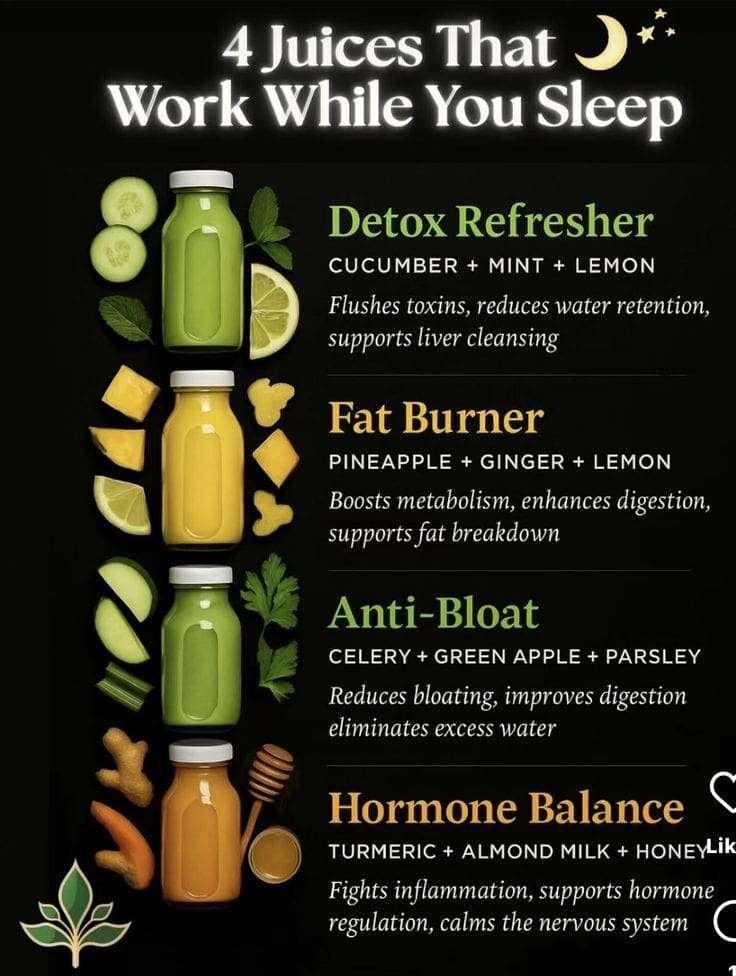
Melatonin and melatonin-rich juices
Melatonin is the hormone that signals the body it’s time to sleep. Some foods contain measurable melatonin — most notably tart cherries (Montmorency), which have been studied for sleep benefits. When you drink tart cherry juice, you can increase circulating melatonin modestly, which may shorten sleep onset time and increase total sleep time in people with mild insomnia or sleep complaints.
Tryptophan, serotonin, and their precursors
Tryptophan is an amino acid that serves as a precursor for serotonin and melatonin. Whole foods like dairy, nuts, seeds, and turkey are richer in tryptophan than most fruits and vegetables, but some juices combined with small amounts of seeds or nut milk can contribute to the tryptophan pool. Vitamin B6 is required for converting tryptophan to serotonin and then melatonin; many fruits and vegetables in juices provide B6.
Magnesium, calcium, and muscle relaxation
Magnesium plays a crucial role in muscle relaxation and the regulation of neurotransmitters that promote sleep. Juices made from leafy greens (kale, spinach), cucumber, or celery can supply magnesium and potassium, supporting relaxation and reducing muscle cramping that can wake you at night.
B vitamins and melatonin synthesis
B vitamins — especially B6 — are cofactors in converting tryptophan into serotonin and melatonin. Vegetables like spinach and fruits like bananas contain B6, though you’ll get higher amounts from whole grains and animal products. Still, juicing a variety of vegetables and fruits can contribute to your daily B vitamin intake.
Dietary nitrates, blood pressure, and sleep quality
Beetroot and certain leafy greens are rich in dietary nitrates, which convert to nitric oxide in the body. Nitric oxide improves blood vessel dilation and can lower blood pressure. Lower nighttime blood pressure and improved circulation may promote restorative sleep, especially if high daytime blood pressure or poor circulation disrupts sleep.
Antioxidants, inflammation, and sleep continuity
Chronic inflammation can fragment sleep and reduce sleep quality. Many fruits and vegetables are rich in antioxidants (vitamin C, polyphenols, flavonoids) that reduce oxidative stress and inflammation. Regular consumption of antioxidant-rich juices may support better sleep continuity over time.
Blood sugar regulation and glycemic load
This is one of the most important mechanisms to understand. Rapid blood sugar spikes followed by reactive drops (hypoglycemia) can cause nighttime awakenings, sweating, heart palpitations, or cortisol surges. Juices can be high in sugar and low in fiber (because pulp is often removed), meaning they can provoke rapid blood sugar changes. To use juicing for sleep, you need to manage glycemic load by choosing low-sugar ingredients, combining juice with protein or healthy fats, or using smaller portions.
Hydration and nocturia (nighttime urination)
Proper hydration supports sleep by preventing dehydration-related wakefulness. However, drinking a large volume of fluid close to bedtime may cause nocturia — waking to urinate — which interrupts sleep. You’ll want to time your juices so that hydration is balanced without provoking nighttime bathroom trips.
What the research says (summary of evidence)
Research into juicing and sleep is limited but growing. The most consistent evidence involves tart cherry juice:
- Tart cherry juice: Several randomized controlled trials and small studies indicate that Montmorency tart cherry juice can modestly increase total sleep time and improve sleep efficiency in older adults and people with insomnia symptoms. The likely mechanisms are increased melatonin and anti-inflammatory effects.
- Kiwifruit: Studies using whole kiwifruit have shown improvements in sleep onset and duration, possibly due to serotonin, antioxidants, and folate. There is less direct evidence for kiwi juice specifically, but the active compounds carry over.
- Beets and nitrates: Beetroot juice has demonstrated benefits for blood pressure and exercise recovery. Improved daytime vascular health can translate to better sleep, though direct trials on sleep outcomes are fewer.
- General fruit/vegetable intake: Observational studies suggest that higher fruit and vegetable consumption correlates with better sleep quality, likely due to a combination of micronutrients, antioxidants, and fiber. However, juice-based interventions need careful design to preserve benefits without adding excess sugars.
Overall, you’ll find promising signals but not universal proof. Responses vary by individual, and juicing strategies need to be tailored to your metabolic health and sleep problems.
Which juices and ingredients are most sleep-promoting?
Below is a table summarizing common juice ingredients, what sleep-related nutrients they provide, and any special cautions.
| Ingredient | Sleep-supporting compounds | Best use/time | Cautions |
|---|---|---|---|
| Tart cherry (Montmorency) | Melatonin, polyphenols, anti-inflammatory | 1–2 hours before bed or evening snack | Moderate sugar; choose unsweetened |
| Beetroot | Dietary nitrates, potassium | Afternoon or early evening to support BP and recovery | High oxalate; may cause urine/red coloration |
| Kiwi | Serotonin precursors, antioxidants, vitamin C | Evening snack or juice 1–2 hours before bed | Some people allergic |
| Spinach/Kale | Magnesium, calcium, B vitamins | Any time; evening if paired with protein | High oxalate (spinach) |
| Celery | Magnesium, potassium, hydration | Evening; calming and low sugar | May be low in calories |
| Carrot | Vitamin A precursors, potassium | Early evening | Moderate sugar |
| Cucumber | Hydration, trace minerals | Early evening | High water content may cause nocturia if late |
| Banana (blended rather than juiced) | Magnesium, potassium, B6, tryptophan | Small portion in evening smoothie or blended drink | Hard to extract juice; better blended |
| Almonds/almond milk (as smoothie or added) | Magnesium, healthy fat, protein | Evening with juice to slow absorption | Nut allergies; homemade almond milk better than store-bought |
| Tart cherry concentrate + low-sugar base | Melatonin + balanced glycemic load | 1–2 hours before bedtime | Watch portion size and added sugars |
Juicing vs blending (juice vs smoothie) for sleep — quick comparison
Which is better for sleep: juicing or blending? The difference often comes down to fiber, sugar delivery, and satiety. Smoothies retain fiber and slow absorption, which helps stabilize blood sugar and reduces the risk of reactive hypoglycemia that can wake you. Juicing extracts mostly liquid and nutrients but removes fiber, making some juices quicker to raise blood glucose.
Use the table below to choose what fits your goals.
| Factor | Juicing | Blending (Smoothie) |
|---|---|---|
| Fiber content | Low/removed | High/retained |
| Speed of sugar absorption | Faster | Slower |
| Satiety (keeps you full) | Lower | Higher |
| Nutrient concentration per sip | High | High-per-volume, but more filling |
| Best for sensitive blood sugar? | No, unless combined with protein/fats | Yes |
| Ideal for specific compounds (e.g., nitrates, melatonin) | Yes | Yes, but with added fiber |
If you want a sleep-promoting drink right before bed, a small, low-sugar smoothie may be safer than a high-sugar juice. For tart cherry benefits, a small portion of concentrated tart cherry juice or a blended tart cherry smoothie can work.
Practical guidelines: how to juice for better sleep
Follow these practical recommendations to use juicing as part of a sleep-support plan.
- Time your juice thoughtfully
- Drink sleep-promoting juices about 60–120 minutes before bedtime to allow melatonin rises and digestion.
- Avoid large volumes of fluid within 60 minutes of bed to reduce nocturia.
- Control portion size and sugar
- Limit juices to 6–8 ounces (180–240 mL) if they’re higher in natural sugars.
- Choose low-sugar vegetables (leafy greens, cucumber, celery) as the base and add a small portion of fruit for flavor.
- Combine with protein or healthy fat
- Pair juice with a small protein or healthy fat (handful of nuts, Greek yogurt, a spoon of nut butter) to slow sugar absorption and prevent blood sugar spikes.
- Favor whole or blended options when appropriate
- If you’re prone to blood sugar swings, prefer a blended smoothie that preserves fiber.
- Choose melatonin-rich ingredients intentionally
- Use tart cherry juice in small servings if you want a direct melatonin boost.
- Avoid stimulants in juices
- Don’t include green tea, yerba mate, coffee, or chocolate in evening drinks.
- Prioritize variety and micronutrient density
- Rotate ingredients to get a range of vitamins and minerals — leafy greens, beets, celery, carrots, and berries.
- Stay mindful of medical conditions
- If you have diabetes, kidney disease, or are on medications that interact with nutrients (e.g., warfarin, ACE inhibitors), consult your clinician before adopting a regular juicing routine.
Sleep-promoting juice recipes
Below are several recipes designed to support sleep. Quantities given are for single servings; adjust portions as needed. For best blood sugar control, pair with a small protein or healthy fat if the recipe contains more fruit.
1) Tart Cherry Evening Tonic
- Ingredients: 4–6 oz (120–180 mL) 100% tart cherry juice (unsweetened), 2–3 oz water or sparkling water
- Why it helps: Melatonin boost, antioxidant support
- When to drink: 60–90 minutes before bed
- Tip: Use concentrate diluted to control sugar; consume small portion.
2) Leafy Green Calm
- Ingredients: Handful of kale or spinach, 1/2 cucumber, 1 small green apple (optional), 1/2 lemon, small piece of ginger
- Why it helps: Magnesium, potassium, B vitamins, low sugar
- When to drink: 1–2 hours before bed
- Tip: Blend if you prefer more fiber.
3) Beet and Berry Bedtime Boost
- Ingredients: 1 small cooked beet (chilled) or 2–3 oz beet juice, 1/2 cup blueberries, 1/2 small banana (optional if blended), splash of water
- Why it helps: Nitrates for circulation, antioxidants
- When to drink: Early evening (not too close to bed if you’re sensitive to fluid)
4) Cucumber-Melon Soother
- Ingredients: 1 cup honeydew or cantaloupe (melon is high in water but contains sugar—use moderate portions), 1/2 cucumber, mint
- Why it helps: Hydration, low in stimulating compounds, pleasant flavor
- When to drink: 1–2 hours before bed
- Caution: Melon has higher sugar; keep portion moderate.
5) Banana-Almond Sleep Smoothie (better blended than juiced)
- Ingredients: 1 small banana, 1/2 cup unsweetened almond milk, 1 tbsp almond butter, pinch of cinnamon
- Why it helps: Magnesium, potassium, healthy fats, protein to stabilize blood sugar
- When to drink: 60 minutes before bed
- Tip: This is a smoothie, not a juice — ideal when you need satiety.
6) Kiwi-Cucumber Night Calm
- Ingredients: 2 kiwifruit, 1/2 cucumber, squeeze lemon, small piece of ginger (optional)
- Why it helps: Kiwi’s serotonin and antioxidants, hydration
- When to drink: Evening snack 60–90 minutes before bed
7) Golden Turmeric-Celery Cooler
- Ingredients: 2 stalks celery, 1 small orange (optional), 1/2 tsp turmeric, pinch of black pepper, small piece of ginger
- Why it helps: Anti-inflammatory properties; celery is low sugar and hydrating
- When to drink: Early evening
- Caution: If you have gallbladder issues or take blood thinners, check with your clinician.
8) Spinach-Apple-Fennel Relaxer
- Ingredients: Handful of spinach, 1 small tart apple, 1/4 fennel bulb, squeeze of lemon
- Why it helps: Magnesium, B vitamins, calming aroma of fennel
- When to drink: 1–2 hours before bedtime
A sample 7-day sleep-boosting juice plan
This sample plan balances nutrient variety with attention to sugar and timing. Drink small juices or smoothies as evening snacks or in the afternoon depending on your schedule. Pair with a protein or healthy fat in the evening when needed.
- Day 1 (Monday): Tart Cherry Tonic — 90 minutes before bed
- Day 2 (Tuesday): Leafy Green Calm — early evening with a handful of almonds
- Day 3 (Wednesday): Banana-Almond Sleep Smoothie — 60 minutes before bed
- Day 4 (Thursday): Beet and Berry Boost — early evening after dinner
- Day 5 (Friday): Kiwi-Cucumber Night Calm — 90 minutes before bed
- Day 6 (Saturday): Cucumber-Melon Soother — early evening, small portion
- Day 7 (Sunday): Spinach-Apple-Fennel Relaxer — evening snack with Greek yogurt
Track your sleep each night (time to fall asleep, total sleep time, number of awakenings) and note which drinks seem to help or hinder.
Safety considerations and contraindications
Juicing can be beneficial, but you must be cautious in certain situations.
- Diabetes or impaired glucose tolerance
- Juices can rapidly raise blood sugar. Monitor glucose levels, choose low-sugar vegetable bases, and pair juices with protein or healthy fats. Discuss any new plan with your healthcare provider.
- Kidney disease or potassium-restricted diets
- Many vegetables and fruits contain potassium. If you have kidney disease or are on potassium-restricting medications, consult your clinician before increasing intake.
- Kidney stones and oxalate content
- High-oxalate ingredients (spinach, beet greens) can raise the risk of certain kidney stones in susceptible individuals. Rotate ingredients and consult a clinician if you have a history of stones.
- Medication interactions
- Certain foods interact with medications (e.g., grapefruit and statins). While most common juice ingredients are safe, always check interactions if you take prescription medicines.
- Allergies and sensitivities
- Some people react to kiwi, celery, or other raw produce. Test new ingredients in small amounts.
- Pregnancy and breastfeeding
- You may need to avoid or limit certain compounds in large amounts (e.g., high-dose turmeric). Check with your obstetric provider.
- Microbial safety
- Fresh juice can be a vector for foodborne illness if not prepared hygienically. Wash produce thoroughly and consume juices promptly or refrigerate.
Preparing and storing juices to preserve sleep-supporting compounds
- Use fresh, ripe produce for maximum nutrients.
- Cold-press or masticating juicers tend to preserve more nutrients than high-speed centrifugal juicers, but the difference is modest compared to ingredient quality.
- If you must store juice, keep it refrigerated in an airtight container and consume within 24–48 hours. Some antioxidant degradation occurs over time.
- Add lemon or lime juice to reduce oxidation and preserve certain nutrients.
- Avoid heating juices; heat destroys heat-sensitive vitamins and melatonin.
Troubleshooting: if juice seems to worsen sleep
If you notice that your evening juice actually disturbs sleep, consider these adjustments:
- Reduce portion size — you may be getting too much sugar or fluid.
- Shift the timing earlier (2–3 hours before bed), especially for higher-sugar juices.
- Add protein or healthy fat to pair with your juice.
- Swap high-sugar fruit for leafy greens or cucumber.
- Try a blended smoothie instead of a juice to add fiber and slow absorption.
- Monitor for reflux: some citrus-based juices can increase acid reflux and disturb sleep.
Tracking results and creating a personal plan
You’ll get the best results by experimenting and tracking. Keep a simple sleep and diet log for 2–4 weeks:
- Note the juice type, ingredients, portion, and time consumed.
- Record bedtime, sleep onset time, total sleep duration, awakenings, and sleep quality on waking.
- Correlate patterns to identify which recipes improve your sleep and which ones you should avoid.
Consider using a sleep tracker or sleep diary app to quantify changes and share data with a clinician or sleep specialist if you have persistent insomnia.
Who benefits most from sleep-promoting juices?
You may find juicing especially helpful if:
- You have mild insomnia or difficulty falling asleep.
- You experience poor sleep continuity and suspect inflammation or diet-related issues.
- You prefer natural strategies and lower-dose interventions.
- You want to support blood pressure or circulation with dietary nitrates (e.g., beetroot) that may indirectly help sleep.
- You want to increase fruit and vegetable intake in a targeted way.
If you have moderate to severe insomnia, sleep apnea, restless legs syndrome, or other sleep disorders, juicing alone is unlikely to be sufficient. Use it as a complementary approach alongside behavioral sleep strategies and medical care.
Combining juicing with other sleep-friendly habits
Juicing is most effective when integrated into a broader sleep hygiene routine:
- Keep a consistent sleep-wake schedule.
- Dim lights and reduce screen exposure in the hour before bed to allow melatonin to rise naturally.
- Practice relaxation techniques (breathing, progressive muscle relaxation).
- Avoid large meals, caffeine, and intense exercise within a few hours of bedtime.
- Create a dark, cool, quiet sleeping environment.
Juices that support melatonin or relaxation can complement these practices.
Final thoughts and next steps
Juicing offers a promising, low-risk way to incorporate sleep-supporting nutrients like melatonin (from tart cherries), magnesium, nitrates (from beets), and antioxidants into your routine. To get the benefits without the drawbacks:
- Prioritize low-sugar ingredients and small portions.
- Combine juices with protein or healthy fats when possible.
- Time juice intake so it supports, rather than interrupts, sleep.
- Monitor your response and tailor your plan to your needs and medical conditions.
If you want to try a starting plan, pick one or two of the sleep-promoting recipes above and test them for a week while tracking sleep. If your sleep problems persist or are severe, consult a healthcare provider or sleep specialist for personalized guidance.
Would you like a printable one-week shopping list and meal plan based on the recipes above, or a tailored juice recipe based on your dietary restrictions and sleep goals?
Disclaimer
This content is for informational and educational purposes only and is not intended as medical advice. Always consult a qualified healthcare professional before making changes to your diet, especially if you have a medical condition, are pregnant, or are taking medication
As an Amazon Associate, we earn from qualifying purchases